English
 Pусский
 Español
 عربي
عربي

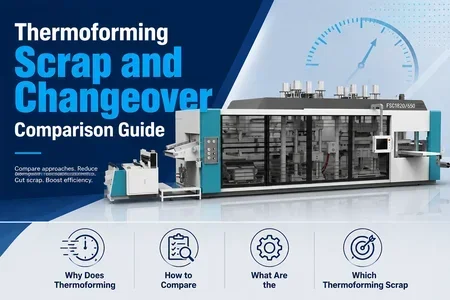
Thermoforming Scrap and Changeover Comparison Guide
Article Overview: This guide compares methods to reduce thermoforming scrap and changeover time. It covers evaluation criteria, trade-offs, and selection guidance for production managers and process engineers seeking to optimize efficiency. By understanding the differences between quick-change tooling, automated changeover, and process control add-ons, buyers can make informed decisions that align with their production mix, budget, and scrap reduction targets.
Why Does Thermoforming Scrap and Changeover Matter for Production Efficiency?
In high-volume thermoforming operations, changeover downtime and material waste directly impact profitability. Reducing thermoforming scrap and changeover time can lower cost-per-part and increase overall equipment effectiveness (OEE). Whether you run a single-line plant or a multi-station facility, the choice of approach—ranging from manual tooling changes to fully automated quick-change systems—affects both upfront investment and long-term yield.
Common sources of scrap during changeover include:
- Material rejected during startup after tool adjustments
- Off-spec parts produced until stable process conditions are reached
- Excess web waste from trimming and sheet thickness variations
By systematically evaluating solutions, buyers can align capabilities with their production mix, budget, and scrap reduction targets. The cost of scrap often goes unnoticed, but even a 5% reduction can translate to significant annual savings in high-throughput environments.
How to Compare Approaches to Thermoforming Scrap and Changeover Reduction
Two broad categories dominate the market: tooling-focused strategies and process-control strategies. Within each, specific techniques vary in complexity and cost. Below we compare common options using neutral, buyer-oriented criteria.
Option A: Quick-Change Tooling Systems
These systems use standardized mold frames, hydraulic or pneumatic clamping, and alignment guides to reduce mechanical changeover time. Typical scrap reduction: 20–40%. Investment: medium to high. Best for frequent product changes (every 2–4 hours). Quick-change tooling is widely adopted for applications like cup production, where a dedicated thermoforming scrap and changeover for cup making solution can integrate seamlessly with existing lines.
Option B: Automated Changeover with Servo Indexing
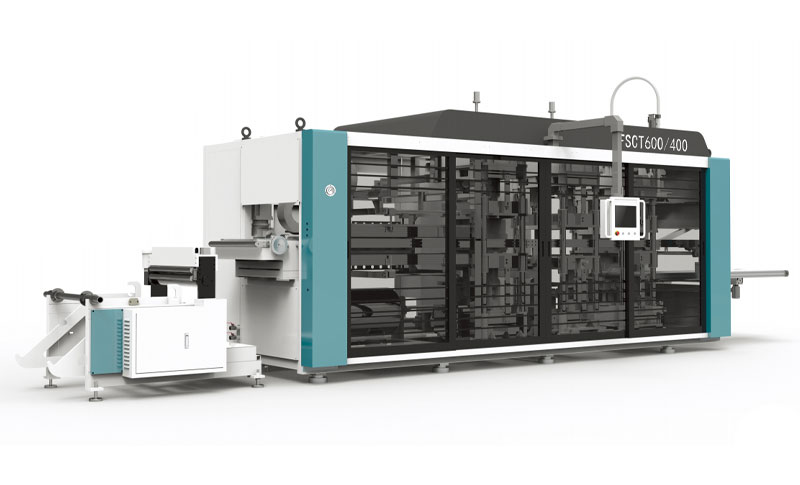
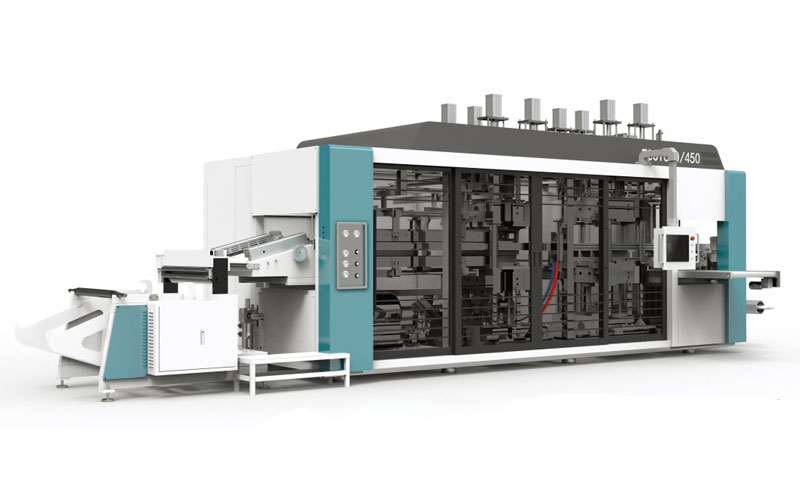
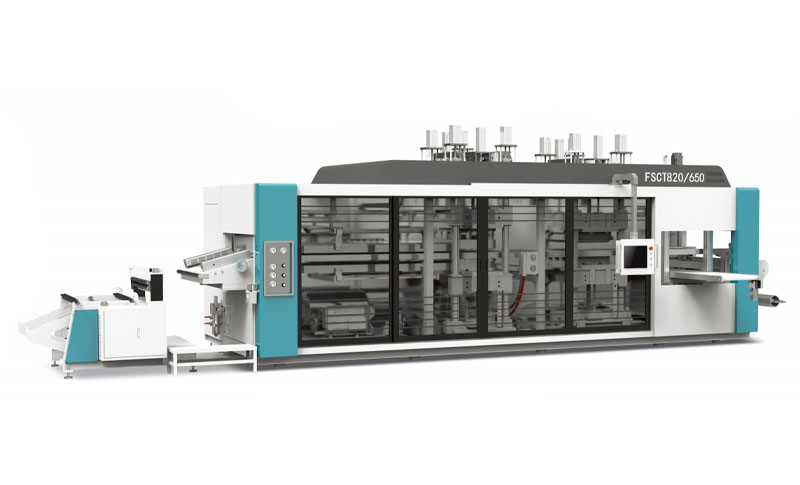
Servo-driven indexing and recipe-based parameter recall minimize manual adjustments. Changeover time drops to under 10 minutes. Scrap reduction: 30–50%. Investment: high. Best for high-volume, short-run production. This approach often pairs with a multi station thermoforming machine to maximize throughput.
Buyer note: If your product mix is stable with few changeovers, Option A may offer faster payback. For high-mix environments, Option B provides greater overall savings. Evaluate total cost of ownership including training and maintenance.
Option C: Sheet Thickness Control Systems
Real-time gauging and feedback loops adjust extruder speed to maintain uniform sheet thickness. Reduces material waste by 10–25%. Investment: medium. Complements changeover improvements by stabilizing the incoming material.
Option D: First-Article Inspection Automation
Vision systems or sensor arrays check parts immediately after changeover, reducing the volume of scrap before stable production. Scrap reduction: 15–30%. Investment: low to medium. Works best when paired with quick-change tooling, providing immediate quality feedback.
Buyer note: Combine Options A and D for a balanced approach that addresses both mechanical speed and startup waste. Option C can be added later if sheet consistency is a dominant scrap source. Many facilities see cumulative benefits when layering these methods.
What Are the Key Specification Differences?
When comparing systems, focus on these specification parameters. The table below summarizes typical ranges for key metrics across solution types. Always request validated data from suppliers, as actual performance depends on machine design, product geometry, and operator skill.
| Parameter | Quick-Change Tooling | Automated Changeover | Process Control Add-ons |
|---|---|---|---|
| Changeover Time (minutes) | 8–20 | 3–10 | No direct impact |
| Scrap Reduction (%) | 20–40 | 30–50 | 10–30 |
| Tool Change Mechanism | Hydraulic/pneumatic clamps | Servo-driven with recipe | N/A |
| Automation Level | Semi-automatic | Fully automatic | Semi-automatic |
| Relative Cost (1–5) | 3 | 5 | 2–3 |
Note: Actual performance depends on machine design, product geometry, and operator skill. Request validated data from suppliers.
Which Thermoforming Scrap and Changeover System Fits Your Needs?
Selection requires a structured decision process. Use the following steps to narrow options and avoid costly missteps.
Step 1: Baseline current changeover time and scrap rate. Measure over a representative week. Identify the biggest loss categories: mechanical downtime, startup scrap, or sheet variation.
Step 2: Define target reductions. Set specific goals for changeover time (e.g., under 15 minutes) and scrap (e.g., <5%). Prioritize improvements based on your product mix—short runs may benefit most from automated changeover, while stable runs could see better returns from process control.
Step 3: Evaluate budget and ROI horizon. Compare expected savings with investment. Use total cost of ownership including training, maintenance, and potential downtime during installation. Automated systems often have higher upfront cost but faster payback in high-mix environments.
Step 4: Test or trial candidate systems. Request on-site demonstrations or pilot runs with your own tooling. Measure scrap and changeover time under real conditions. Ask suppliers for references in similar applications to validate their claims.
For example, a facility producing disposable cups would evaluate a dedicated thermoforming scrap and changeover solution for cup making that integrates quick-change tooling with automated first-article inspection. In contrast, large multi-station lines may benefit from a multi station thermoforming machine that includes servo indexing and thickness control.
How to Evaluate Thermoforming Scrap and Changeover Methods Effectively
Buyers should prioritize these evaluation criteria to ensure the selected approach aligns with operational realities:
- Compatibility with existing tooling and auxiliary equipment. Changing mold frame standards can add hidden costs that erode expected savings. Check whether the solution fits your current machine interface.
- Ease of operator training. Automated recipe systems may require less skilled labor for everyday operation, but maintenance complexity increases. Factor in your workforce capabilities.
- Supplier support and warranties. Look for performance guarantees on scrap reduction and changeover time. Reliable after-sales service can prevent extended downtime.
- Integration with upstream extruder and downstream trim systems. Seamless data exchange improves overall efficiency. Verify that the solution supports standard communication protocols.
Remember that the choice is not binary. Many facilities combine a quick-change approach with process control add-ons to maximize thermoforming changeover time scrap reduction. For instance, adding sheet thickness control can further reduce material waste beyond what tooling changes alone achieve.
FAQ
What should buyers evaluate first about thermoforming changeover time scrap reduction?
Start with fit, evidence-backed requirements, and supplier proof relevant to thermoforming changeover time scrap reduction before shortlisting vendors.
How can teams reduce procurement risk for thermoforming changeover time scrap reduction?
Use structured comparison, validate specifications early, and review implementation or quality checkpoints with documented evidence.
Related articles
- Lids Trays Clamshells Thermoforming Comparison
- How to Start a Plastic Cup Manufacturing Business
- Single vs Multi Station Thermoforming: Key Differences
Conclusion
Reducing thermoforming scrap and changeover time requires a clear understanding of your production profile, a systematic comparison of available methods, and a willingness to invest in the right combination of tooling, automation, and process controls. Use the criteria, comparison blocks, and decision flow presented here to build a compelling business case. Start by measuring your baseline, then evaluate solutions that align with your operational priorities. With careful selection, you can achieve significant gains in throughput and material utilization, directly improving your bottom line. Remember that no single solution fits every scenario—customizing your approach based on actual data and supplier validation will yield the best results.