English
 Pусский
 Español
 عربي
عربي

How to Choose a Thermoforming Machine Manufacturer
Article Overview: Selecting the right thermoforming machine manufacturer is critical for production efficiency, product quality, and long-term operational costs. This guide walks procurement managers, sourcing teams, and project engineers through a practical evaluation framework—covering factory audits, technical specifications, RFQ preparation, and common pitfalls. Use this checklist to make informed decisions and reduce procurement risk.
What Makes a Thermoforming Machine Manufacturer Reliable?
When evaluating a thermoforming machine manufacturer, reliability goes beyond machine specifications. Buyers must assess the supplier’s engineering capability, production capacity, and after-sales support. A reliable manufacturer should demonstrate consistent quality control, proven track records in your target application (e.g., plastic cups, containers), and the ability to customize tooling and automation.
Key factors to examine include:
- Industry experience: How long has the manufacturer been building thermoforming lines? Look for at least 5–10 years of dedicated focus.
- Client references: Request contact details of three to five buyers in similar production scales and geographies.
- Certifications: ISO 9001, CE marking, and other relevant standards indicate process discipline.
- After-sales network: Does the manufacturer have local service partners or a dedicated support team for your region? Spare parts availability is non-negotiable.
A quick way to gauge reliability is to request a virtual factory tour or, if possible, schedule an on-site audit. Many reputable thermoforming machine manufacturers welcome such visits.
How to Evaluate a Thermoforming Machine Manufacturer's Capabilities
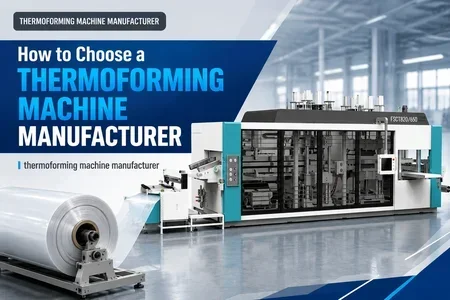
Capability assessment should cover both the machinery itself and the supplier’s engineering depth. Start by reviewing the product range offered by the thermoforming machine manufacturer. Do they provide multi-station machines, single-station units, or both? Can they integrate with plastic sheet extruders and auxiliary equipment?
Phase 1: Technical Specification Review
Examine the machine's forming area, cycle speed, heating system type (ceramic or quartz), and temperature control accuracy. Ask for detailed drawings and power consumption data.
Phase 2: Application Engineering Support
Determine whether the manufacturer offers mold design assistance and trial runs. A supplier that can simulate your product on their equipment before shipping reduces your installation risk.
Beyond the machine, evaluate the manufacturer’s ability to deliver turnkey solutions—from sheet extrusion to cup rim curling and stacking. This reduces interface issues between different equipment brands.
Key Technical Specifications to Verify Before Purchase
Before committing to a purchase, your team must verify critical technical parameters against your production requirements. Below is a checklist to run through with the thermoforming machine manufacturer:
- Forming area (max. width × length): Ensure it accommodates your largest tool.
- Heating capacity & zoning: Sufficient zones for even heating of different plastic sheets (PP, PS, PET, PLA).
- Cycle speed: Strokes per minute for your material thickness. Confirm real-world output, not theoretical maximum.
- Servo vs. pneumatic drives: Servo-driven systems offer energy savings and precision but may have higher initial cost.
- PLC brand & automation level: Siemens, Mitsubishi, or other common platforms ease integration and maintenance.
- Energy consumption: kW per cycle; ask for validated data from factory testing.
- Safety features: Light curtains, emergency stops, and CE compliance.
- Material handling: In-line stacking, counting, and packing options.
Request a technical datasheet and compare parameters across at least three suppliers. If the manufacturer hesitates to provide detailed specs, treat that as a red flag.
RFQ Checklist for a Thermoforming Machine Manufacturer
A well-structured request for quotation (RFQ) helps you receive comparable bids and avoids hidden costs. Use the following flow as your procurement procedure:
Step 1: Define Your Production Requirements
Specify product dimensions, material type, required output per hour (e.g., 12,000 cups/hour), operating hours per day, and expected uptime. Share drawings or sample photos.
Step 2: Request a Comprehensive Quote
Ask for line-item pricing: machine base, mold set, optional features (stacking robot, conveyor), shipping, installation, training, and warranty terms. Also request a list of recommended spare parts and their costs.
Step 3: Validate with a Factory Acceptance Test
Insist on witnessing a trial run of your product on the selected machine, either physically or via live video. Review cycle time and quality before final payment.
Include a timeline for delivery, installation, and commissioning. Clarify penalties for delays.
Common Procurement Mistakes and How to Avoid Them
Even experienced buyers can fall into traps when sourcing from a thermoforming machine manufacturer. Here are frequent errors and ways to mitigate them:
- Overlooking total cost of ownership (TCO). Low initial price often hides expensive spare parts and poor energy efficiency. Request TCO projections over 5 years.
- Skipping the factory audit. Relying solely on brochures can lead to mismatched quality. Always conduct a physical or virtual audit.
- Ignoring local voltage and compliance. Ensure the machine meets your region's electrical standards (e.g., 380V/50Hz or 480V/60Hz) and has required certifications.
- Underestimating training needs. Confirm the manufacturer offers on-site training for operators and maintenance staff. Include this in the contract.
- Failing to plan for expansion. Choose a modular machine that can be upgraded later with additional stations or automation.
By addressing these points during supplier evaluation, you reduce the risk of costly downtime and rework.
FAQ
What should I look for in a thermoforming machine manufacturer's after-sales support?
Evaluate response times for spare parts, availability of remote diagnostics, and whether the manufacturer has local technicians. A service-level agreement (SLA) with guaranteed response within 48 hours is preferred.
How important is the manufacturer's experience with my specific product type?
Highly important. A thermoforming machine manufacturer that has built machines for plastic cups or containers similar to yours will have optimized mold designs, heating profiles, and automation solutions that reduce your learning curve.
Is it better to buy a complete line from one manufacturer or mix components?
A single-source solution from a reputable thermoforming machine manufacturer often ensures better integration and single-point accountability. However, if you have existing equipment, verify compatibility before mixing.
What warranty terms are standard for thermoforming machines?
Typical warranties cover 12 to 24 months or 6,000 to 10,000 operating hours, whichever comes first. Confirm what is included: parts, labor, travel expenses.
Conclusion
Choosing the right thermoforming machine manufacturer is a strategic decision that affects your production efficiency, product quality, and profitability. By applying the evaluation criteria, technical checklist, RFQ steps, and mistake-prevention tips outlined here, you can approach supplier selection with confidence. Start by shortlisting manufacturers that offer proven application support and a clear path to scalable production. For a practical starting point, explore the solutions offered by a thermoforming machine manufacturer that specializes in cup and container lines. Combined with a thorough audit, this will position your team for a successful procurement outcome.