English
 Pусский
 Español
 عربي
عربي

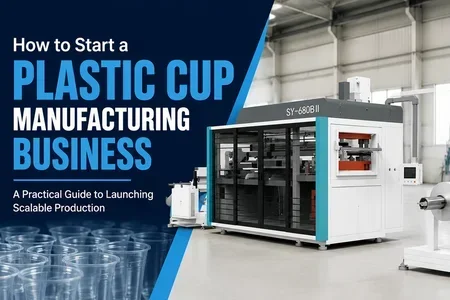
How to Start a Plastic Cup Manufacturing Business
Article Overview: This guide helps procurement teams and technical evaluators assess the key decisions when entering plastic cup production. It compares equipment sourcing strategies, production line configurations, and operational risks, providing a neutral framework for selecting plastic cup manufacturing equipment that aligns with your business goals.
What Are the First Steps to Start a Plastic Cup Manufacturing Business?
Before purchasing any machinery, a structured feasibility phase reduces costly missteps. The following steps represent a typical sequence for companies exploring how to start a plastic cup manufacturing business:
- Market analysis and product targeting: Define cup sizes (e.g., 200 ml, 500 ml), volumes (single- or multi-layer), and end-use segments (beverage, dairy, food service).
- Raw material selection: Choose between PP, PS, or PET sheets, each affecting thermoforming temperature, mechanical properties, and recycling compatibility.
- Facility and utility pre-assessment: Ensure floor space for a thermoforming line, adequate electrical load (typically 220–480 V three-phase), and compressed air supply.
- Regulatory and certification review: Verify food-contact compliance (e.g., FDA, EU 10/2011) for your target markets.
Step 1: Define Operating Zone
Map your planned output range (e.g., 100–300 cups per minute) against sheet thickness and cup geometry. This drives the core parameters for later equipment specification.
Step 2: Build a Budget Envelope
Include not just the thermoforming machine but also sheet extruder, rim curler, stacker, crusher for scrap reclaim, and installation. Early budgeting prevents underestimating total investment.
These upfront steps directly inform whether you proceed with new or pre-owned equipment, which we compare in the next section.
Choosing Between Pre-Owned and New Plastic Cup Manufacturing Equipment
One of the most debated decisions in how to start a plastic cup manufacturing business is whether to buy new or used machinery. Both paths have clear trade-offs that affect total cost of ownership, uptime, and operational flexibility.
Pre-Owned vs. New Equipment: Key Trade-offs
Option A: Pre-Owned Equipment
- Lower upfront capital – typically 40–60% of new machine cost.
- Faster delivery if machine is in stock and refurbished.
- Risk of hidden wear: heaters, vacuum pumps, and mold alignment may need immediate replacement.
- Warranty often limited or absent; spare parts availability depends on model age.
- May lack latest energy efficiency or servo-driven features, increasing operating cost.
Option B: New Plastic Cup Manufacturing Equipment
- Full warranty, manufacturer commissioning, and documented performance guarantees.
- Latest control systems (PLC with touchscreen, recipe management) and energy-saving servos.
- Longer lead time (8–16 weeks typical) and higher initial investment.
- Customizable mold configuration and line layout from the outset.
- Easier integration with downstream automation such as intelligent stacking robots.
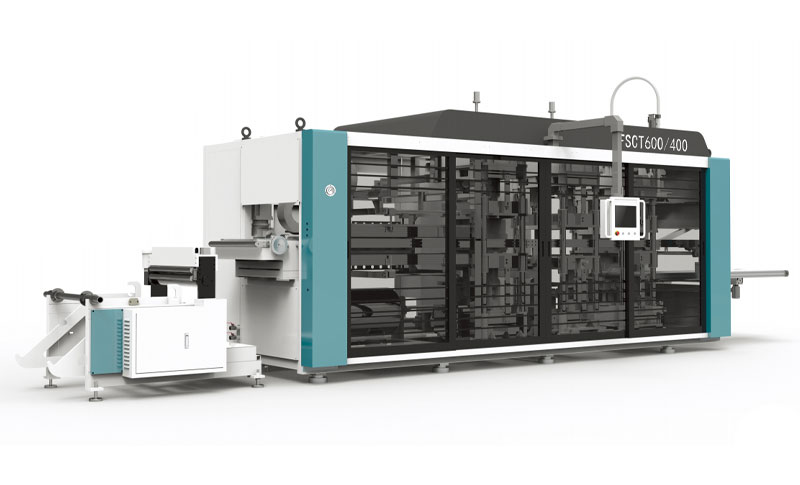
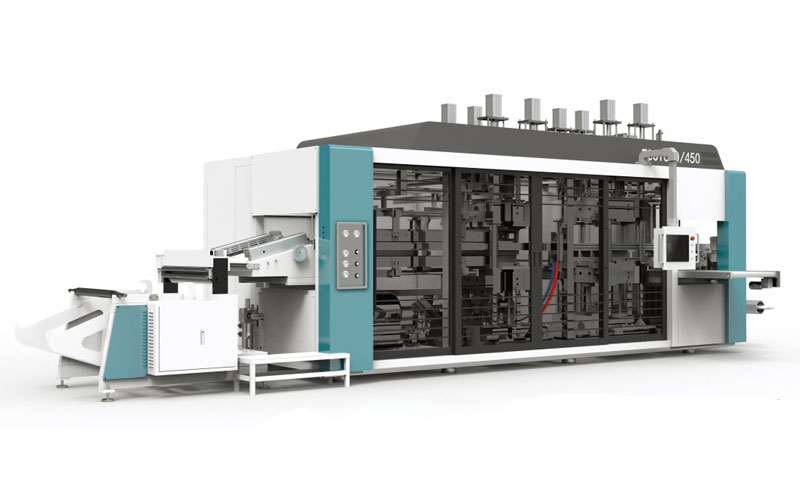
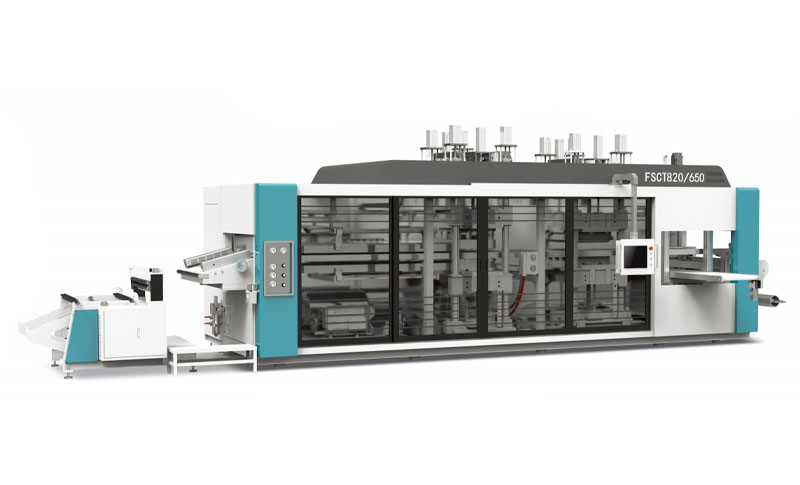
Buyer note: The decision often hinges on production volume stability. For high-volume, long-run commodity cups, new equipment often pays back through lower downtime. For low-volume or pilot lines, well-inspected pre-owned machines may offer a viable entry point. Explore comprehensive plastic cup manufacturing equipment solutions to see how new lines are configured for different throughput targets.
Once you decide on new or used, the next level of analysis concerns the production line itself.
How to Evaluate Production Line Configurations for Plastic Cups
The core of any plastic cup operation is the thermoforming line. Configurations vary, and your choice affects flexibility, scrap rate, and labor requirements. Below is a comparison of two common line architectures.
Inline Sheet Extrusion + Thermoforming vs. Separate Sheet Supply
Option A: Inline Integrated Line
- Extruder feeds hot plastic sheet directly into the forming station; no reheating needed.
- Lower energy consumption (single heating cycle).
- Compact footprint; operator can oversee both sections.
- Higher material consistency and reduced scrap from reheat.
- Requires larger capital outlay and higher maintenance skill level.
Option B: Separate Sheet Extruder + Thermoforming Machine
- Sheet can be produced in advance or bought from external suppliers.
- Allows running different sheet types (colors, recycled content) without stopping the forming line.
- Greater production scheduling flexibility.
- Reheat stage adds energy and potential quality variance.
- Easier to scale one section independently.
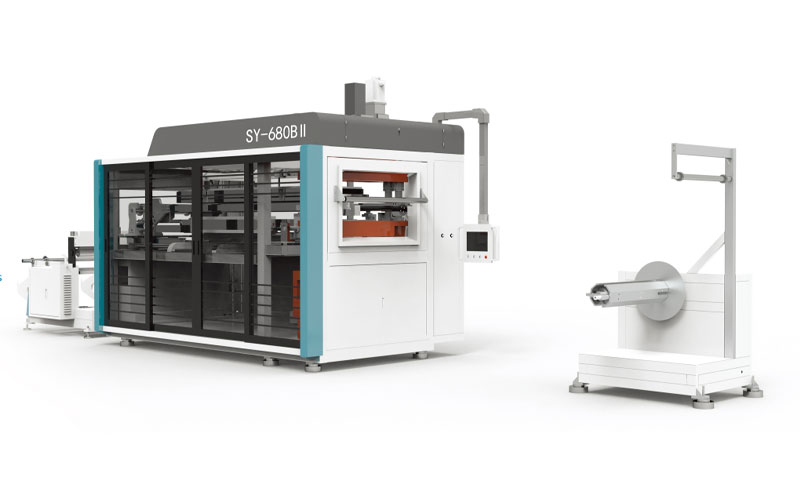
Buyer note: For a start-up, the separate configuration may lower the initial investment and simplify troubleshooting. As volumes grow, an inline line often improves per-unit cost. For detailed line diagrams and specs, refer to plastic cup manufacturing equipment for various applications.
Beyond line configuration, auxiliary equipment and automation directly affect labor efficiency and waste.
Phase: Match Auxiliary to Main Line
Consider rim curling, stacking, and on-line crusher integration. A mismatch between machine throughput and stacker capacity creates bottlenecks. Example: a 300 cups/min line without a synchronized stacker forces manual handling and slows the line.
Phase: Evaluate Servo vs. Pneumatic Drive
Servo-driven machines allow faster changeovers and better repeatability, but cost more. For product lines with frequent mold changes (e.g., different cup heights), servo is often preferred. For single-product, long-run production, pneumatic may suffice.
Key Operational Considerations and Risk Factors
Starting a plastic cup manufacturing business involves more than equipment. Below are critical factors that evaluation committees should verify before finalizing a line investment.
- Material sourcing stability: Plastic sheet prices fluctuate with polymer markets. Secure multiple suppliers and consider vertical integration (sheet extrusion) if volume justifies it.
- Mold inventory and wear: Cup quality depends on mold condition. Plan for mold refurbishment every 2–3 years depending on abrasion from filled materials.
- Scrap reclaim loop: On-line crushers recycle trim scrap back into extrusion, reducing waste. Validate that crusher throughput matches forming waste rate.
- Operator training: Servo and PLC-controlled lines require skilled technicians. Budget for initial training and documentation in your native language.
- Certification roadblocks: Different countries enforce distinct food-contact regulations. Ensure your equipment can produce cups that meet local migration limits and labeling requirements.
These risk factors are often underappreciated in initial planning but can delay launch by months if not addressed.
FAQ
What is the minimum investment to start a plastic cup manufacturing business?
Investment varies widely by scale and region. A small pilot line using pre-owned equipment may start around USD 50,000, while a fully automated new line with sheet extrusion can exceed USD 300,000. Include installation, molds, and working capital for raw materials.
How do I choose between a single-station and multi-station thermoforming machine?
Single-station machines are simpler and lower-cost but have lower output (50–100 cups/min). Multi-station rotary or in-line machines produce 200–400 cups/min with better consistency. Your choice should be driven by target daily volume and product mix complexity.
What plastic materials are most common for cup manufacturing?
Polypropylene (PP) offers flexibility and microwave safety; polystyrene (PS) provides clarity and rigidity; PET gives higher temperature resistance. The material also affects thermoforming parameters and mold design.
Can I use recycled plastic to make cups?
Yes, but recycled content is often limited to inner layers in multi-layer cups to maintain food-contact compliance. Verify that your thermoforming line can process materials with variable melt flow indices.
What after-sales support should I expect from equipment suppliers?
Look for a supplier offering remote diagnostics, spare parts availability for at least 10 years, and on-site commissioning. Request references from similar facilities to gauge response time.
Conclusion: Planning for Scalable Plastic Cup Production
Deciding how to start a plastic cup manufacturing business requires a systematic evaluation of equipment options, line configurations, and operational risks. This article has outlined the key comparison points—new vs. pre-owned machinery, inline vs. separate sheet supply, and auxiliary integration—without endorsing a single brand or pathway. The right choice depends on your production volume, product variety, and long-term growth strategy. For further guidance on configuring a complete line, consult the plastic cup manufacturing equipment resources that match your specific application scenarios. By taking a criteria-driven approach, your team will be better positioned to select equipment that balances cost, flexibility, and reliability.
Related site pages: plastic cup manufacturing equipment, Home.