English
 Pусский
 Español
 عربي
عربي

Single vs Multi Station Thermoforming: Key Differences
Article Overview: This article provides an objective comparison between single station and multi station thermoforming machines. It covers core differences in cycle time, output capacity, tooling investment, changeover complexity, and operational fit. A decision framework is included to help procurement teams, CTOs, and technical architects select the appropriate station configuration for their production requirements.
What Is the Core Difference Between Single and Multi Station Thermoforming?
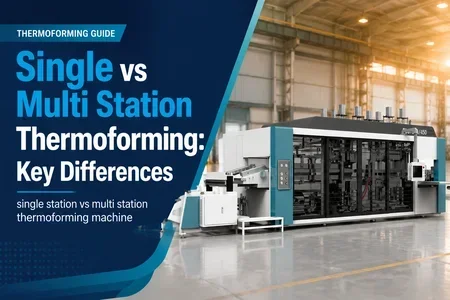
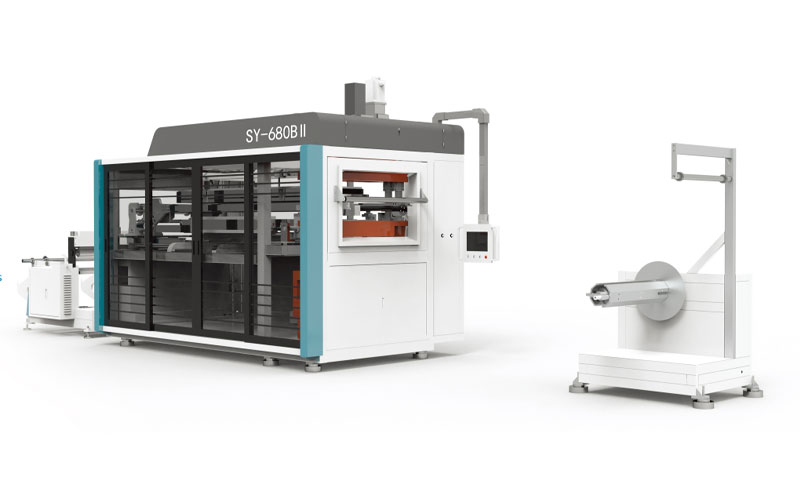
Single station thermoforming machines process one cycle of forming, cooling, and trimming in a single location. The sheet advances, the mold closes, the part forms and cools, then the mold opens and the part is removed or trimmed—all within the same station. This design is mechanically simpler and often lower in initial capital expenditure.
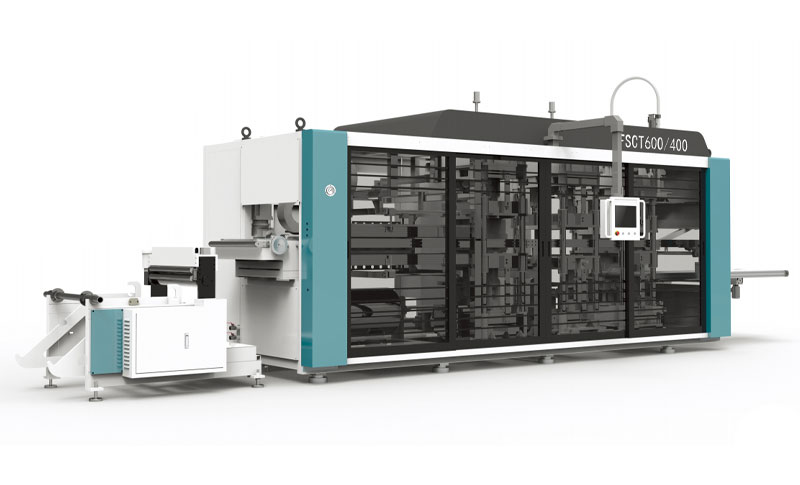
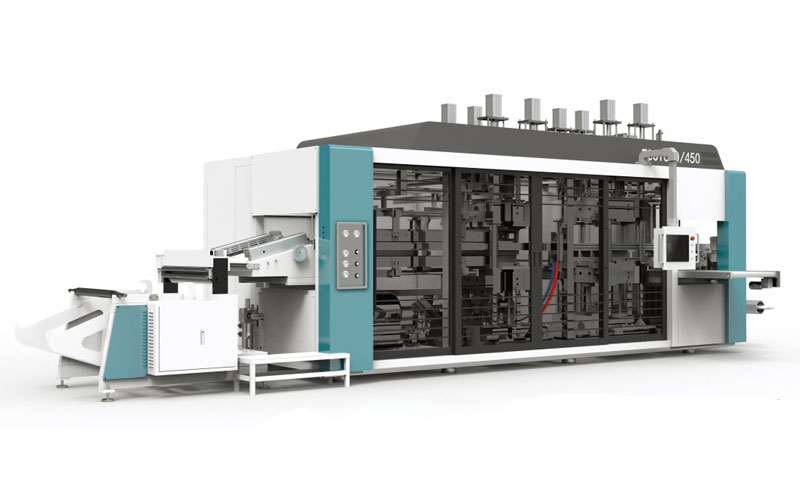
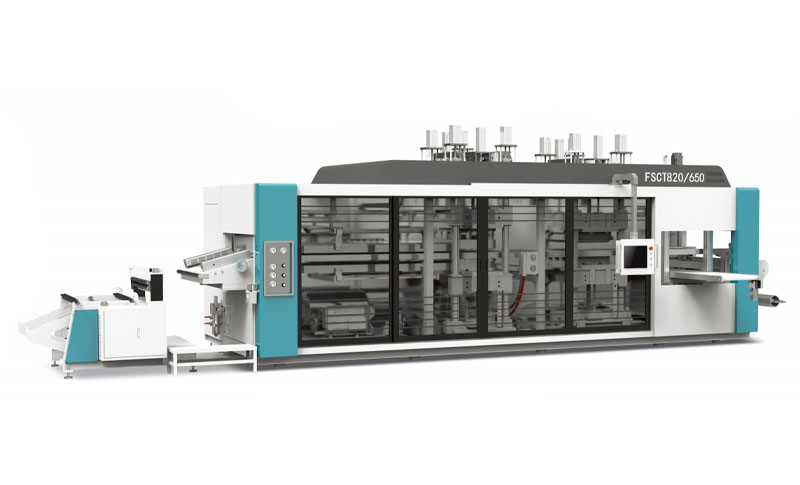
Multi station thermoforming machines split these operations across two or more stations. For example, a three-station rotary machine might have one station for heating, one for forming and cooling, and one for part ejection or trimming. By overlapping these phases, multi station systems can achieve higher throughput per unit time because one part is being formed while another is being cooled and a third is being loaded.
The fundamental trade-off is between per-cycle throughput and per-unit investment in tooling and automation. Single station machines offer lower complexity and faster changeovers, while multi station machines excel in high-volume, continuous runs of the same product.
Station Architecture Overview
Option A: Single Station — All process steps happen sequentially in one station. Cycle time is the sum of heating, forming, cooling, and trimming.
Option B: Multi Station — Process steps are distributed across two or more stations, allowing parallel operation. Cycle time is determined by the longest single station step, typically forming or cooling.
Buyer note: Multi station machines require precise timing and synchronization between stations. This increases control system complexity and maintenance demands.
How Do Cycle Time and Output Compare?
Cycle time is the most visible differentiator. A typical single station machine might achieve 8–12 cycles per minute for a small cup, while a three-station rotary can reach 20–30 cycles per minute for the same part. However, the actual output depends on part geometry, material type, and cooling requirements.
| Parameter | Single Station | Multi Station (3-station) |
|---|---|---|
| Cycle time | 5–15 seconds | 2–6 seconds |
| Typical output (cups/minute) | 8–12 | 20–30 |
| Tooling cost factor | 1x (baseline) | 2–3x |
| Changeover time | 20–45 min | 45–90 min |
Consider a hypothetical scenario: A manufacturer requires 10 million cups annually. A single station machine running 10 cycles per minute with 4 cavities produces about 4.8 million parts per year (assuming 80% uptime). To meet demand, either multiple single station machines or one multi station machine with higher output would be needed.
Step 1: Determine Your Required Annual Output
Estimate the number of parts needed per year. For high volumes (over 10 million), multi station machines often become more economical.
Step 2: Compare Capital Expenditure Per Unit of Output
Divide total machine and tooling cost by maximum annual part output. Single station machines have lower absolute cost but may yield higher cost per part if volume is high. Example: A multi station machine costing $250,000 with tooling producing 20 million parts per year yields $0.0125 per part; a single station machine at $120,000 producing 8 million parts yields $0.015 per part.
- Single station cycle time: 5–15 seconds per cycle
- Multi station cycle time: 2–6 seconds per cycle
- Tooling investment: Multi station machines require duplicate or specialized molds, increasing initial tooling cost by 200–300%.
Which Configuration Offers Faster Changeovers?
Changeover time is critical for facilities running multiple product SKUs. Single station machines typically require 20–45 minutes to change molds and adjust parameters. Multi station machines often require 45–90 minutes because each station must be reconfigured individually and timing relationships reset.
- Single station advantage: Faster changeovers, easier troubleshooting, lower operator training cost.
- Multi station advantage: Higher continuous output, lower labor cost per part (if running 24/7), better return on automation investments.
Operational skill requirements differ as well. Single station machines can be operated by one person after initial setup. Multi station machines may require a technician familiar with synchronizing multiple stations and diagnosing timing issues.
Decision Framework: Matching Station Count to Production Requirements
Use the following criteria to evaluate which configuration fits your operation. Each criterion presents a trade-off that should be weighted based on your specific production environment.
Criterion 1: Production Volume
Option A: Single Station — Suitable for low to medium volumes (up to 5 million parts per year per mold set). Works well for prototyping, seasonal runs, or custom products.
Option B: Multi Station — Ideal for high volumes (above 10 million parts per year per line). Best for commodity items like disposable cups, lids, trays where long runs are typical.
Buyer note: If annual volume fluctuates or is uncertain, start with a single station machine to avoid overinvesting in tooling that may not be fully utilized.
Criterion 2: Product Variety and Changeover Frequency
Option A: Single Station — Better for frequent changeovers (daily or multiple times per shift). Lower tooling cost per SKU.
Option B: Multi Station — Better for low changeover frequency (weekly or longer). Tooling cost per station can be justified only if runs are long enough to amortize.
Buyer note: For operations with more than 10 active SKUs, consider dedicating one multi station line to a high-volume SKU and using single station machines for the rest.
For further details on the single vs multi station thermoforming approach, visit the single vs multi station thermoforming solution page to review machine specifications and configuration options. Additionally, reviewing the plastic cup making machine range can provide context on how single station machines are often configured for cup production.
FAQ
Which is more cost-effective: single station or multi station thermoforming?
It depends on output volume and product mix. For high-volume, low-variety runs, multi station machines often have a lower cost per part. For lower volumes or frequent changeovers, single station machines are more economical due to lower tooling and quicker changeovers.
Can a single station machine be upgraded to multi station?
No, because the mechanical architecture is fundamentally different. Upgrading typically requires purchasing a new multi station machine. Some manufacturers offer modular expansions for certain rotary designs, but this is the exception.
How do material choices affect the decision?
Materials with long cooling times (e.g., thick sheets of polypropylene) can benefit from multi station designs because cooling occurs in a dedicated station while forming continues elsewhere. Thin materials may not need multi station investment.
What is the typical payback period difference?
Single station machines often pay back in 12–18 months for low-volume production. Multi station machines may require 18–36 months but can provide higher return over the machine life if utilization is high.
Conclusion: Align Station Count With Your Operational Profile
The choice between single and multi station thermoforming machines is not about which technology is inherently superior, but which aligns best with your production volume, product variety, and operational capabilities. Single station machines offer flexibility, lower initial cost, and simpler changeovers, making them ideal for job shops and medium-volume production. Multi station machines deliver higher throughput and lower per-part cost for high-volume, stable production runs.
Evaluate your typical run length, annual volume targets, and changeover frequency. Use the decision framework above to weigh trade-offs. For detailed technical specifications and pricing, consult the single vs multi station thermoforming solution page or contact equipment suppliers with your specific production data.