English
 Pусский
 Español
 عربي
عربي

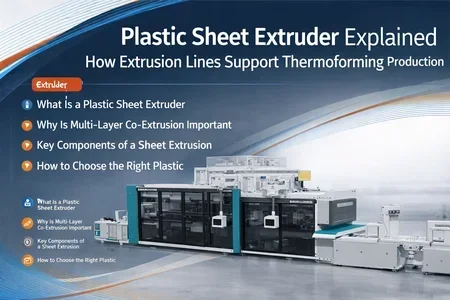
Plastic Sheet Extruder Explained: How Extrusion Lines Support Thermoforming Production
Article Overview: This article explains the fundamentals of plastic sheet extrusion for thermoforming, covering the extrusion process, key components, multi-layer co-extrusion capabilities, and factors to consider when evaluating sheet extruder lines for your production needs.
Plastic sheet extruders are the backbone of thermoforming operations, converting raw polymer pellets into uniform, high-quality sheets that are then formed into products such as cups, trays, lids, and containers. Understanding how a sheet extrusion line works, what options exist for multi-layer constructions, and which technical parameters matter most can help procurement and engineering teams make informed decisions. This article provides a neutral, evidence-led explanation of plastic sheet extrusion technology, with a focus on practical implications for manufacturers.
What Is a Plastic Sheet Extruder and How Does It Work?
A plastic sheet extruder is a machine that melts, mixes, and shapes thermoplastic materials into a continuous sheet of uniform thickness. The process begins with feeding polymer pellets (e.g., PP, PS, PET, or PLA) into a heated barrel where a rotating screw conveys, melts, and homogenizes the material. The molten polymer is then forced through a flat die to form a wide, thin web. The web passes through a polishing roll stack (calendar) that cools and imparts surface finish, followed by thickness gauging, edge trimming, and winding or cutting into sheets.
The Plastic Sheet Extruder is a central component of this line, typically comprising:
- Extruder screw and barrel: Determines throughput, melt quality, and mixing efficiency.
- Screen changer and melt pump: Filters contaminants and stabilizes pressure.
- Flat die: Distributes melt evenly across the sheet width.
- Polishing roll stack: Three or more temperature-controlled rolls that cool and calibrate the sheet.
- Haul-off and winder: Pulls the sheet at controlled speed and winds it into rolls or cuts it into stackable sheets.
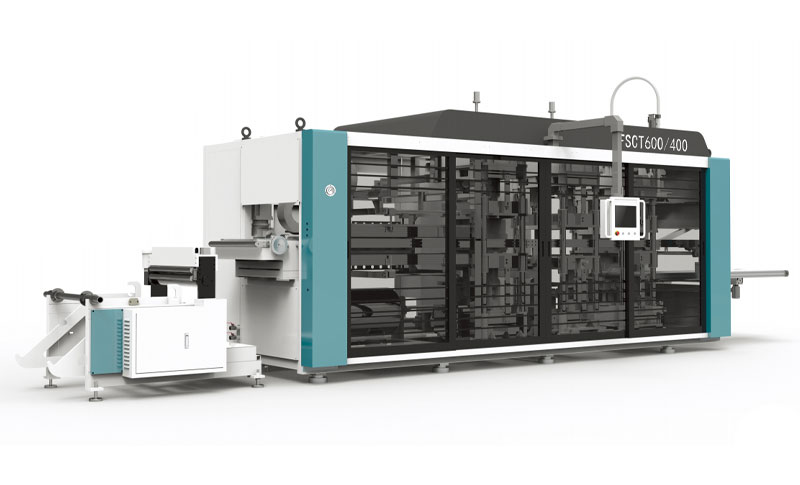
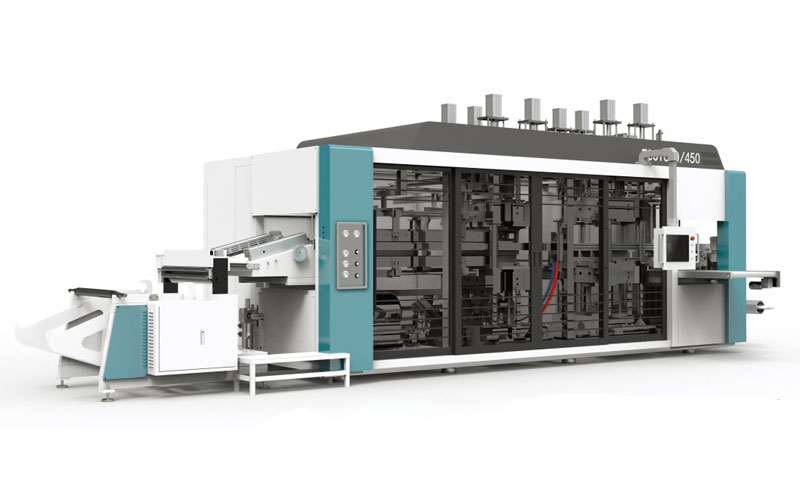
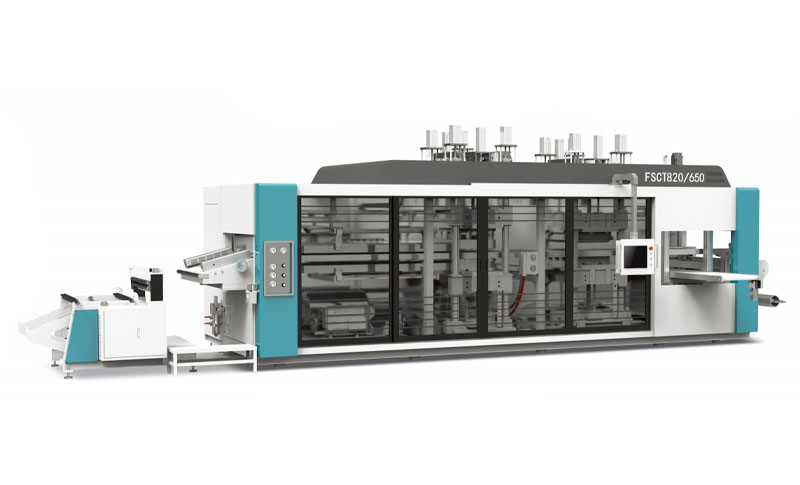
Modern extruders can achieve high throughput rates—often exceeding 500 kg/h—while maintaining thickness tolerances within ±5%. The Multi Station Thermoforming Machine downstream requires consistent sheet quality to minimize scrap and maximize forming speed.
Why Is Multi-Layer Co-Extrusion Important for Sheet Quality?
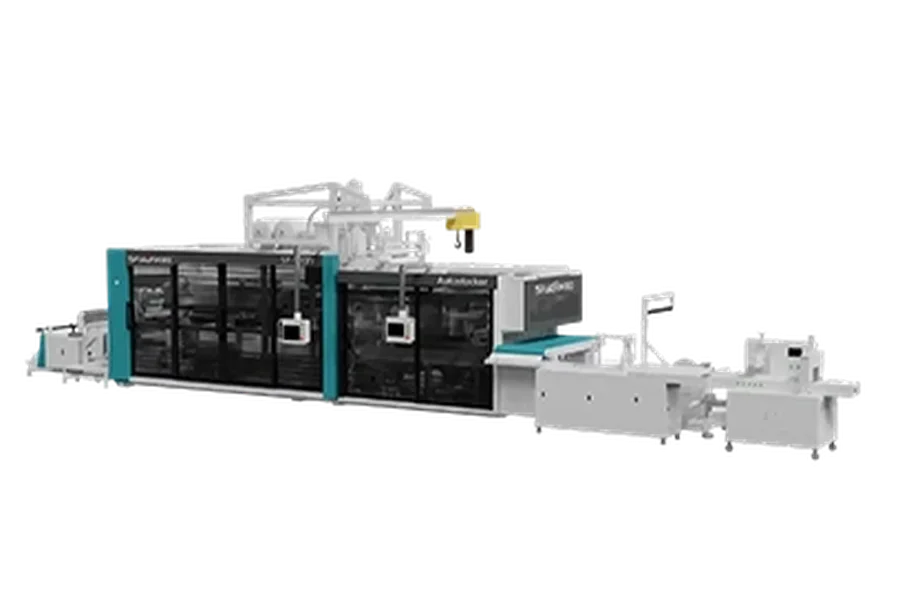
Multi-layer co-extrusion allows manufacturers to combine two or more polymers into a single sheet, each layer contributing specific properties. For example, a typical sheet for drinking cups may have an outer layer of virgin material for printability, a middle layer of recycled material for cost savings, and an inner layer with barrier properties to prevent moisture or oxygen ingress. Plastic Sheet Extruder systems with multi-layer capability use separate extruders feeding a co-extrusion feedblock or die, enabling precise layer thickness control.
Key benefits of multi-layer extrusion include:
- Material optimization: Use expensive virgin resin only where needed; incorporate regrind in inner layers.
- Barrier performance: Add EVOH, PA, or other barrier polymers to extend shelf life of food packaging.
- Color and printability: Dedicated surface layers for high-quality printing or decoration.
- Reduced material cost: Thinner functional layers reduce overall resin consumption.
The entity data for "Multi-Layer Plastic Sheet CO-Extruder" indicates growing interest in such systems. For thermoformers, multi-layer sheets can improve cup stiffness, reduce wall thickness, and meet food contact regulations. However, co-extrusion adds complexity: each layer requires its own extruder, and the feedblock design must ensure uniform layer distribution across the sheet width.
Key Components of a Sheet Extrusion Line
Beyond the extruder itself, a complete sheet extrusion line includes several auxiliary components that directly affect output quality and operational efficiency. Understanding each part helps when specifying a new line or troubleshooting an existing one.
- Raw material handling and drying: For hygroscopic resins like PET or PLA, inline dryers remove moisture to prevent hydrolysis and defects.
- Extruder drive and control: AC or DC motors with gearboxes; modern lines use servo-driven systems for precise screw speed control.
- Melt filtration: Continuous or manual screen changers remove gels, carbon specks, and unmelted particles.
- Melt pump (gear pump): Stabilizes output pressure, reducing thickness variation.
- Die and lip adjustment: Flexible lip dies allow manual or automatic thickness profile adjustment via thermal bolts or die bolts.
- Polishing roll stack: Typically a horizontal or vertical three-roll configuration with independent temperature zones; the middle roll often has a mirror finish for gloss.
- Thickness gauge: Online beta, X-ray, or infrared sensors measure profile; feedback loops adjust die bolts or roll gap.
- Edge trim and reclaim: Rotary knives trim edges; trim material can be granulated and fed back to the extruder.
- Haul-off, accumulator, and winder: For roll stock, a surface or center winder applies controlled tension. For cut sheets, a shear or guillotine cuts to length.
Each component must be sized to match the extruder's throughput. For example, a 1000 mm wide die with a 200 mm roll diameter may be suitable for thin sheets (0.3–1.5 mm), while thicker sheets require larger rolls and stronger gearboxes. The Auxiliary Equipment section of a machinery supplier's catalog often lists these items separately, but they are integral to line performance.
How to Choose the Right Plastic Sheet Extruder for Your Application
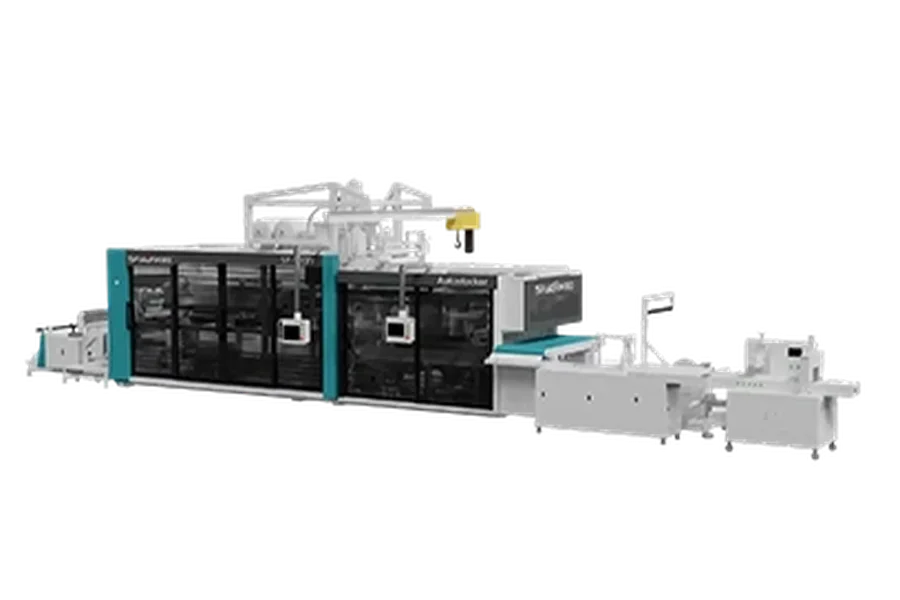
Selecting a sheet extruder involves matching the machine's specifications to your production requirements. Here are the primary decision factors:
- Throughput (kg/h): Must align with your downstream thermoforming capacity. Over-sizing leads to wasted energy; under-sizing creates bottlenecks.
- Sheet width and thickness range: Common widths range from 600 mm to 1600 mm. Thickness from 0.2 mm (thin for cups) up to 3 mm (thick for trays).
- Materials processed: The extruder screw design, temperature profile, and corrosion-resistant barrel must suit the polymers (PP, PS, PET, PLA, etc.).
- Multi-layer capability: If you plan to use barrier resins or incorporate regrind, a co-extrusion system with separate extruders is necessary.
- Automation level: PLC-based controls with recipe management, automatic die lip adjustment, and data logging improve consistency and reduce operator dependency.
When evaluating suppliers, ask about available Certificates and quality standards. A well-documented Quality system indicates commitment to reliable equipment. Additionally, visiting the Video library can give you a practical sense of machine operation and line layout. For existing facilities, retrofitting a new co-extruder section may be more cost-effective than replacing the entire line—consult with the manufacturer about modifications.
FAQ
What is the difference between single-layer and multi-layer extrusion?
Single-layer extrusion uses one extruder to produce a sheet made entirely of one polymer or blend. Multi-layer co-extrusion uses two or more extruders feeding a common die to create a sheet with distinct layers, each serving a different function (e.g., barrier, color, regrind). Multi-layer lines are more complex but offer material savings and enhanced performance.
Can a sheet extruder handle recycled materials?
Yes, but careful management is required. Recycled content is often placed in inner layers of multi-layer sheets to avoid surface defects. Proper melt filtration and drying (for hygroscopic materials) are essential. Extruder screw design may need modification to handle varying melt flow properties.
How does sheet width affect thermoforming yields?
Wider sheets allow more cavities per cycle, increasing throughput. However, width must match the forming machine's clamping frame and the die design. Excessive width can cause sagging or uneven thickness. Typical sheet widths for cup forming are 700–1200 mm, while tray lines may use up to 1600 mm.
What maintenance does a sheet extruder require?
Regular tasks include cleaning the die and roll stack, replacing screen packs, checking screw and barrel wear, and calibrating thickness gauges. Preventative maintenance schedules depend on materials processed and run hours. Suppliers often provide service manuals and Industry News for best practices.
Conclusion
Plastic sheet extrusion is a mature yet evolving technology that directly impacts the quality and cost of thermoformed products. By understanding the extrusion process, the role of multi-layer co-extrusion, and the key components of a complete line, technical buyers can make more informed decisions when investing in new equipment or upgrading existing lines. The Plastic Sheet Extruder remains the heart of the operation, and matching its capabilities to your application is critical for success. For further insights, explore resources on About Us and the Application Center for real-world examples of sheet extrusion in packaging production.