English
 Pусский
 Español
 عربي
عربي

Extruder Overview: Understanding Plastic Extrusion Technology
Article Overview: This article provides a comprehensive introduction to extruders—machines that process raw plastic materials into continuous profiles, sheets, films, and other forms. Designed for buyers and professionals new to extrusion technology, it covers fundamental principles, core components, common extruder types, applications across industries, and key factors to consider when evaluating extrusion equipment. The goal is to build foundational knowledge and support informed decision-making.
What Is an Extruder?
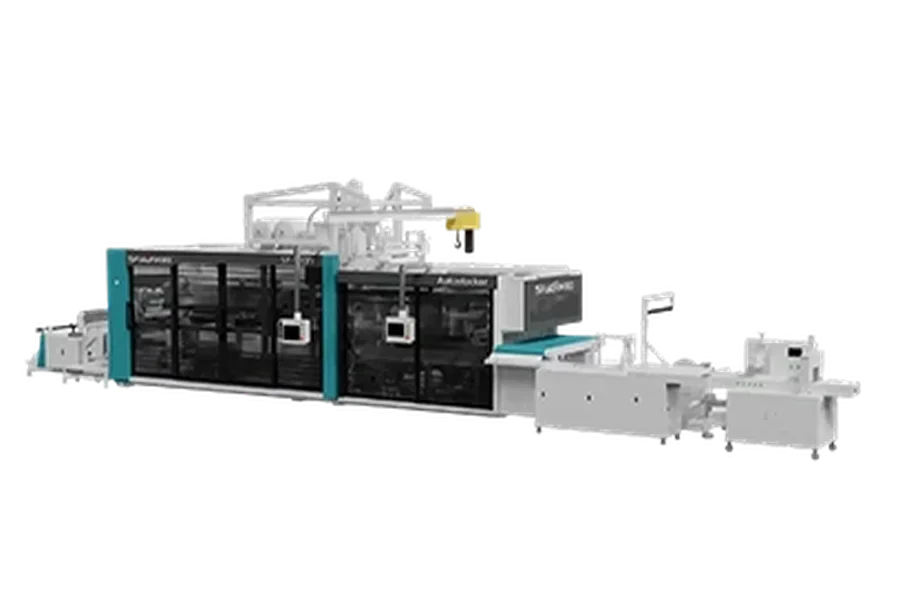
An extruder is a machine that transforms solid plastic raw material—typically in the form of pellets, granules, or powder—into a melt, which is then forced through a die to create a continuous shape. The process is fundamental to countless plastic products, from simple piping to complex multi-layer sheets used in packaging and thermoforming. Extruders are the heart of the plastic conversion industry, enabling efficient, high-volume production with consistent quality.
The core principle of extrusion is relatively simple: heat, pressure, and mechanical shear work together to plasticize the material, after which it is shaped and cooled. However, achieving precise temperature control, consistent melt flow, and uniform product dimensions requires sophisticated engineering. Modern extruders often incorporate advanced control systems, multi-layer capabilities, and specialized screw designs to meet specific material and product requirements.
To understand where extrusion fits in the broader production chain, it is helpful to explore related machinery in the plastic processing industry. Extruders often feed directly into downstream equipment such as thermoforming machines and cup making lines, forming an integrated manufacturing system.
How Does an Extruder Work?
The extrusion process can be broken down into several stages: feeding, melting and mixing, metering, and forming. Each stage relies on the interaction between the extruder screw, barrel, and heating elements.
Feeding Stage
Raw material is fed into the extruder hopper and gravity-fed into the screw channel. The screw rotates, conveying the material forward. In many systems, the feed section is designed to handle different pellet sizes and densities without clogging.
Melting and Mixing Stage
As the material travels along the screw, it experiences increasing pressure and temperature. The barrel is heated in zones, typically using electrical heaters. Frictional heat also contributes to melting. The screw design—pitch, flight depth, and mixing elements—determines how efficiently the material is melted and homogenized. Additives such as colorants, stabilizers, or recycled content can be introduced at this stage.
Metering Stage
In the final part of the screw, the melt is brought to a uniform temperature and pressure, ensuring a steady flow to the die. The metering section is critical for maintaining product consistency. The screw rotation speed and back pressure from the die work together to control output rate.
Die and Downstream
The melt exits the extruder through a die, which shapes the plastic into the desired profile—sheet, film, tube, or custom shape. After exiting the die, the product is cooled (often using water baths or chill rolls), and then cut, wound, or stacked. For sheet production, a dedicated Plastic Sheet Extruder system is specially designed to produce uniform thickness sheets for further processing, such as thermoforming or packaging.
Key Components of an Extruder
Understanding the major components helps buyers evaluate equipment specifications and compare offerings from different manufacturers.
- Barrel: A cylindrical housing that encloses the screw. It must withstand high pressure and temperature. Often made from bimetallic materials for wear resistance.
- Screw: The heart of the extruder. Its geometry (compression ratio, L/D ratio, flight design) directly affects melt quality and output. Single-screw screws are most common; twin-screw designs offer better mixing for heat-sensitive materials.
- Heating and Cooling System: Barrel heating zones with band heaters or ceramic heaters, plus air or water cooling to maintain precise temperature profiles.
- Drive System: Motor and gearbox that provide the torque required to rotate the screw under load. A robust drive ensures stable operation at varying speeds.
- Die and Breaker Plate: The die shapes the melt; the breaker plate supports the screen pack (filters) and helps build back pressure for uniform flow.
- Control System: Modern extruders include PLC-based controls for temperature, pressure, screw speed, and downstream synchronization. Data logging and remote monitoring capabilities are increasingly common.
For auxiliary equipment that enhances extrusion line efficiency, see auxiliary equipment solutions such as stacking robots and on-line crushers.
Types of Extruders and Their Applications
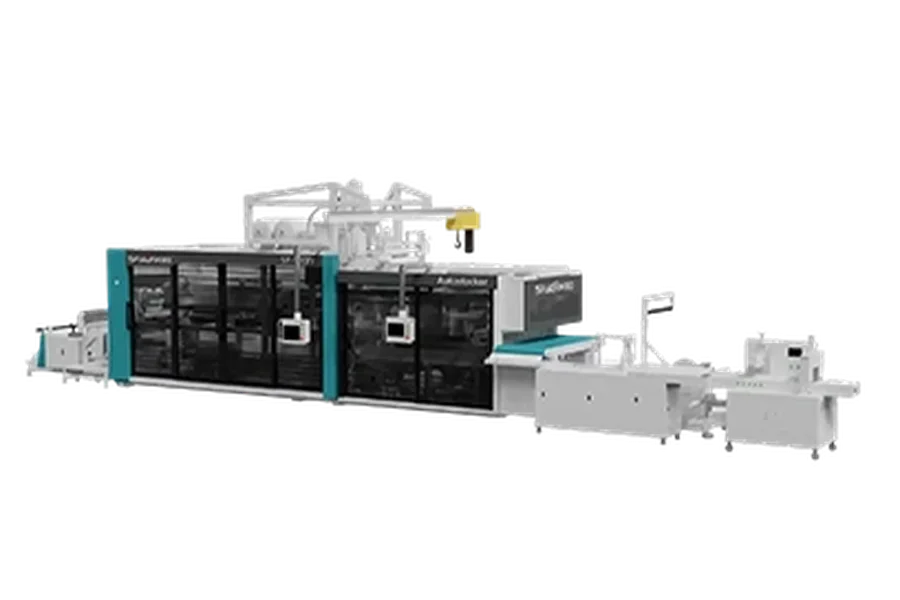
Different extrusion applications require different machine configurations. The two main categories are single-screw and twin-screw extruders, but variations exist for specialized tasks.
Single-Screw Extruders
Most widely used for conventional plastic processing—film, sheet, pipe, and profile extrusion. They are simple to operate, cost-effective, and suitable for a wide range of thermoplastics. A single-screw extruder is typically the preferred choice for producing plastic sheets used in cup forming and packaging.
Twin-Screw Extruders
Offer superior mixing and devolatilization capabilities. They are often used for compounding (blending additives into base polymers), processing heat-sensitive materials, and recycling. They come in co-rotating and counter-rotating configurations.
Multi-Layer Co-Extruders
These systems combine two or more extruders feeding into a single die to produce multi-layer structures. Each layer can have different properties (barrier, color, recycled content). Co-extrusion is common in high-performance packaging sheets and rigid trays. A Plastic Sheet Extruder for multi-layer applications allows manufacturers to achieve tailored material properties while reducing overall material costs.
Single-Screw vs. Twin-Screw: A Quick Comparison
| Single-Screw Extruder | Twin-Screw Extruder |
|---|---|
| Simpler construction; lower initial cost | More complex; higher investment |
| Suitable for most commodity thermoplastics | Preferred for compounding, devolatilization, and heat-sensitive materials |
| Typical L/D ratio: 20:1 to 30:1 | Typical L/D ratio: 30:1 to 48:1 |
| Melt quality depends largely on screw design | Better mixing and homogenization due to intermeshing screws |
| Output range: Varies by configuration | Output range: Varies by configuration |
| Common in sheet, film, pipe, and profile extrusion | Common in compounding, reactive extrusion, and recycling |
Additional specialized types include vented extruders for moisture-sensitive materials, tandem extruders for foam sheet production, and micro-extruders for research and development.
Where Is an Extruder Used?
Extruders are employed across a vast range of industries. Here are some key application areas:
- Packaging: Production of plastic sheets for thermoformed trays, cups, lids, and containers. The sheet must have consistent thickness and surface quality.
- Construction: PVC pipes, window profiles, siding, and insulation sheets.
- Automotive: Sealing strips, tubing, interior trims, and under-hood components.
- Medical: Tubing, surgical instruments, and sterile packaging films.
- Consumer Goods: Straws, toothbrushes, toys, and household items.
Each application imposes unique demands on the extruder, such as material compatibility, output rate, precision, and the need for additional downstream processing. For instance, sheet extrusion for cup making often requires inline trimming, stacking, and recycling of trim scrap. Integrated lines that combine extrusion with multi-station thermoforming improve overall efficiency.
What Should Buyers Consider When Selecting an Extruder?
Purchasing an extruder is a significant capital investment. The following questions help buyers evaluate their options systematically.
Material and Output Requirements
What material will be processed? Different polymers (PE, PP, PET, PS) require different temperature profiles, screw designs, and throughput rates. The extruder must be capable of producing the required output (kg/h) while maintaining melt quality.
Product Specifications
Sheet thickness, width, and surface finish dictate die design and downstream cooling. Multi-layer structures may require additional extruders and feedblocks.
Energy Efficiency and Reliability
Energy consumption is a major operating cost. Look for well-insulated barrels, efficient screw designs, and premium drive systems. Reliability is enhanced by using quality components and easy maintenance access.
Automation and Integration
Modern lines benefit from automated controls, touchscreen interfaces, and connectivity with downstream equipment. Consider whether the extruder can be easily integrated into an existing plant network. Some manufacturers offer complete solutions for line integration; refer to your product for more details on integrated lines.
After-Sales Support and Spare Parts
Evaluate local service availability, spare parts lead times, and technical support. It is wise to choose suppliers with a proven track record in the region. Information about supplier background can be found on the about us page. Also consider the manufacturer's commitment to quality standards.
Frequently Asked Questions
What is the difference between a single-screw and twin-screw extruder?
Single-screw extruders are simpler, less expensive, and suitable for most extrusion tasks. Twin-screw extruders provide better mixing, are preferred for compounding, and can process more difficult materials. For sheet production, single-screw designs dominate, but twin-screw may be used when high filler loading or precise additive dispersion is required.
How do I determine the right extruder size for my production?
Extruder size is primarily defined by screw diameter (e.g., 45mm, 60mm, 90mm) and length-to-diameter (L/D) ratio. The required output (kg/h) and material characteristics guide the selection. Larger diameters yield higher output but also require greater motor power and floor space. It is advisable to discuss your target output and product specifications with suppliers to match the machine appropriately.
Can an extruder process recycled materials?
Yes, many extruders are designed to handle recycled polymers. However, recycled materials often contain contaminants or variation in melt flow. A robust screw design, effective filtration, and, in some cases, venting are necessary. Some manufacturers offer dedicated recycling extruders. For sheet extrusion with recycled content, a multi-layer Plastic Sheet Extruder system can encapsulate recycled material between virgin layers to maintain product quality.
What maintenance does an extruder require?
Routine maintenance includes cleaning the screw and barrel, checking and replacing heater bands and thermocouples, lubricating the gearbox, and inspecting the die for wear. A preventive maintenance schedule extends equipment life. Many suppliers provide training and service contracts.
Conclusion
Understanding the fundamentals of extruders—how they work, their key components, types, and applications—is essential for anyone involved in plastic product manufacturing. Whether you are evaluating a new line for sheet production, upgrading existing equipment, or simply seeking to expand your knowledge, a clear grasp of extrusion technology enables better purchasing decisions and more efficient operations. We encourage buyers to work with reputable suppliers, request performance data, and consider the total cost of ownership. For further reading on related machinery and integration, explore topics such as sheet extrusion solutions offered by industry participants.