English
 Pусский
 Español
 عربي
عربي

Comparing Plastic Sheet Extruders: Single-Layer vs Multi-Layer Co-Extrusion – A Buyer’s Decision Framework
Article Overview: This article provides an objective comparison of single-layer and multi-layer plastic sheet extruders. It covers technical differences, operating implications, procurement criteria, and common implementation traps. The goal is to equip evaluation committees, CTOs, and technical architects with a decision framework for selecting the right extruder configuration.
What Distinguishes Single-Layer from Multi-Layer Extruders?
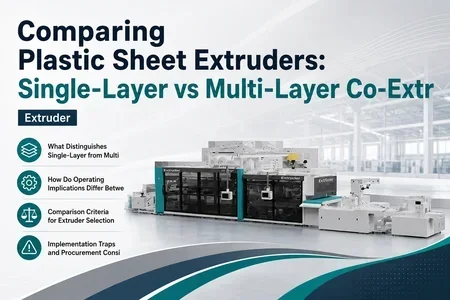
At the most basic level, a single-layer extruder processes one material through a single screw and die to produce a homogeneous sheet. In contrast, a multi-layer co-extruder combines two or more materials—each with its own extruder—into a single sheet through a feedback system. This capability enables properties such as barrier protection, enhanced stiffness, or decorative effects that are not achievable with a single resin. However, multi-layer systems introduce greater complexity in terms of control, material compatibility, and initial investment.
Your choice should align with your product requirements: if your end-use demands specific barrier or performance layers, a plastic sheet extruder with co-extrusion capability is likely necessary. For simpler applications where cost per unit is critical, a single-layer extruder may suffice.
How Do Operating Implications Differ Between Extruder Configurations?
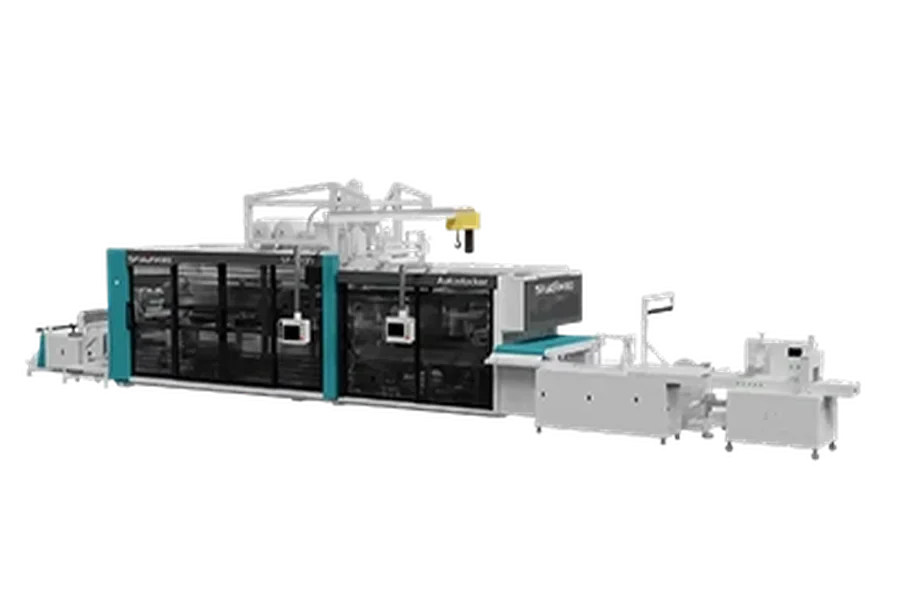
Operating a multi-layer co-extruder requires more precise control over melt temperatures, pressures, and layer thickness ratios. The feedback geometry must be carefully designed to maintain uniform layer distribution. This translates to higher demands on operator skill and maintenance schedules. Single-layer extruders are generally more forgiving and easier to troubleshoot. Additionally, the energy consumption per kilogram of output can be higher for multi-layer systems due to multiple screw drives and heating zones.
When evaluating operating costs, consider the frequency of material changeovers. In a multi-layer setup, purging between color or resin changes takes longer and generates more scrap. Companies producing long runs of consistent material may find the multi-layer approach economical; those with frequent job changes might favor the flexibility of a single-layer line. For further context on downstream equipment compatibility, see our multi station thermoforming machine integration guidelines.
Comparison Criteria for Extruder Selection
To objectively evaluate extruder options, buyers should assess criteria across several dimensions. The following table highlights key specification differences.
Key specification comparison: single-layer vs multi-layer extruders
| Criterion | Option A (Single-Layer) | Option B (Multi-Layer Co-Extruder) | Buyer Note |
|---|---|---|---|
| Number of extruders | 1 | 2–5 (typical) | Depends on layers required |
| Maximum output (kg/h) | Varies by configuration | Varies by configuration | Validate against your production volume |
| Material flexibility | High (single resin changes easy) | Moderate (limited by co-extrusion compatibility) | Check melt flow index and adhesion |
| Sheet thickness uniformity | Good | Excellent with advanced control | Requires feedback and gauge sensors |
| Capital investment | Lower | Higher (additional extruders, die, control) | Factor in ROI for multi-layer products |
| Operator skill requirement | Moderate | High | Budget for training |
In addition to specifications, consider these decision factors:
- Production volume and run length: Longer runs favor multi-layer complexity; shorter runs favor single-layer simplicity.
- Product portfolio breadth: If you need varied barrier structures, a multi-layer plastic sheet extruder provides versatility.
- Scrap management: Multi-layer scrap can be harder to recycle in-house; plan for reuse or disposal.
Implementation Traps and Procurement Considerations
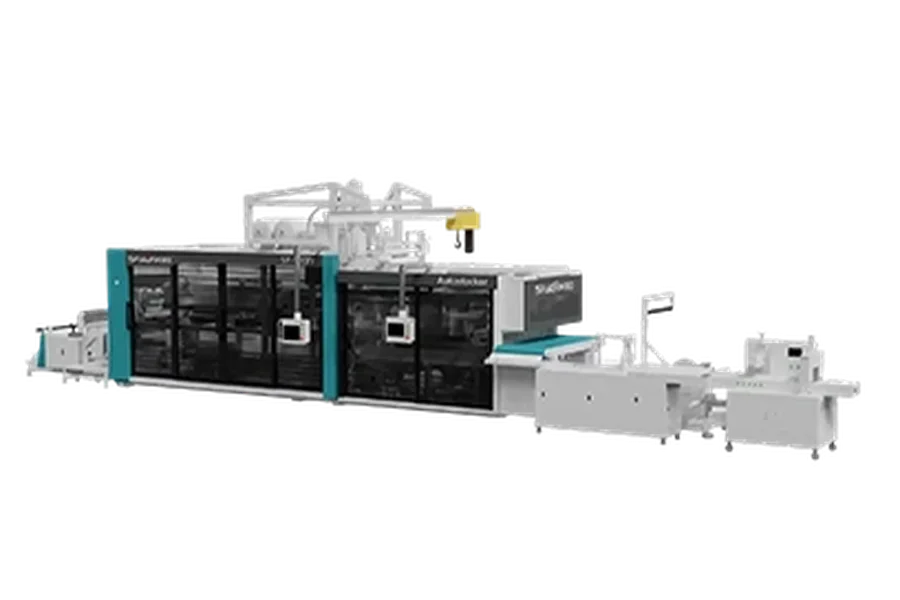
Once you select an extruder type, the implementation phase presents several potential traps that buyers should anticipate.
- Inadequate feed system design: Multi-layer systems require precise dosing of each resin. A poorly designed feed system leads to layer thickness variation and defective sheet.
- Underestimating die maintenance: Co-extrusion dies are more complex and require specialized cleaning procedures. Without a auxiliary equipment plan, downtime can increase.
- Neglecting post-extrusion handling: Sheet thickness and width stability affect downstream thermoforming. Ensure your plastic cup making machine or forming line is aligned with extruded sheet specs.
- Choosing the wrong melt pump: For multi-layer lines, gear pump integration is critical for consistent pressure. Validate pump specifications with your die design.
Additionally, evaluate the supplier's track record for the specific configuration you are considering. Request references and site visits when possible. A single-layer extruder from a reputable manufacturer may outperform a poorly integrated multi-layer line from an inexperienced vendor.
FAQ
What are the main advantages of multi-layer co-extrusion?
Multi-layer co-extrusion allows combining materials with different properties—such as barrier layers, UV resistance, or enhanced mechanical strength—in a single sheet. This reduces post-processing steps and can improve product shelf life or performance.
Is a single-layer extruder always cheaper to operate?
Not necessarily. While capital and maintenance costs are lower, single-layer extruders may require additional downstream steps (e.g., lamination or coating) to achieve comparable properties. Total cost of ownership should account for the entire production line, including multi station thermoforming machine integration and scrap rates.
Can I retrofit a single-layer extruder to become multi-layer?
It is generally not practical. Retrofitting usually requires a new die, additional extruders, and control system upgrades—often costing as much as a dedicated multi-layer line. It is more cost-effective to purchase a purpose-built co-extruder.
How do I validate layer uniformity in multi-layer sheets?
Layer thickness can be measured using microscopy, but online gauging systems (e.g., ultrasonic or near-infrared) provide real-time feedback. Ensure your extruder supplier offers compatible measurement equipment. For reference, our quality page outlines typical inspection processes.
What materials cannot be co-extruded?
Materials with vastly different melt temperatures (e.g., PP and nylon) require careful die design and may need tie layers. Some material combinations are not feasible without delamination. Always run compatiblity tests before committing to a multi-layer setup.
Conclusion
Choosing between a single-layer and multi-layer plastic sheet extruder is a strategic decision that impacts production efficiency, product quality, and capital allocation. This comparison framework emphasizes technical fit, operating implications, and procurement risks to support objective evaluation. By systematically assessing the criteria outlined above, buyers can avoid common pitfalls and select a solution that aligns with their long-term manufacturing goals. For further reading on extrusion line integration, visit our application center or review recent industry news on sheet extrusion trends.
Related site pages: Plastic Sheet Extruder, Home, Your Product, Multi Station Thermoforming Machine, Plastic Cup Making Machine, Auxiliary Equipment.