English
 Pусский
 Español
 عربي
عربي

Plastic Cup Making Machine - Sayeah Machinery Checklist
Article Overview: This checklist helps procurement managers, sourcing teams, and project engineers evaluate Plastic Cup Making Machine suppliers. It covers key criteria, RFQ preparation, and common pitfalls to ensure a successful B2B purchase. Use this guide to shortlist reliable partners and reduce procurement risk.
What Should You Look for in a Plastic Cup Making Machine Supplier?
Selecting the right supplier for a Plastic Cup Making Machine goes beyond comparing price lists. Buyers should evaluate supplier experience, production capacity, technical support, and after-sales service. The following criteria form a baseline for initial screening:
- Industry Track Record: How long has the supplier been manufacturing thermoforming equipment? A supplier with a decade of experience often has more refined quality control and a broader reference base.
- Machine Range and Customization: Does the supplier offer machines that match your output speed, mold size, and material requirements (PP, PS, PET)? Customization options for cup rims, stacking, and printing integration show flexibility.
- Certification and Compliance: Verify CE, ISO, or other applicable certifications. These indicate that the equipment meets safety and performance standards.
- References and Case Studies: Request contact details of existing customers in your region or industry. A credible supplier will share anonymized performance data or site visit arrangements.
Pay attention to how quickly the supplier responds to technical questions. Delays or vague answers may signal poor support infrastructure.
How to Prepare an Effective RFQ for Plastic Cup Making Machines
A well-structured Request for Quotation (RFQ) helps suppliers provide accurate pricing and avoids misunderstandings. Use the following flow to build your RFQ:
Step 1: Define Production Targets
Specify your required cup volume per hour, cup dimensions (height, diameter, wall thickness), and material type. Include expected uptime and tolerance levels. This data lets suppliers propose a properly sized Plastic Cup Making Machine.
Step 2: List Auxiliary Needs
Indicate whether you need integrated sheet extrusion, printing, punching, stacking, or packing. Mention existing infrastructure (e.g., power supply, floor space). A comprehensive RFQ reduces the chance of hidden costs later.
Step 3: Request Total Cost Breakdown
Ask for itemized pricing: machine base, molds, installation, training, spare parts, and warranty. Compare not just upfront cost but also operating expenses such as power consumption and maintenance intervals.
Send the RFQ to at least three qualified suppliers. Evaluate responses against your defined criteria before shortlisting.
Key Technical Specifications to Validate Before Purchasing
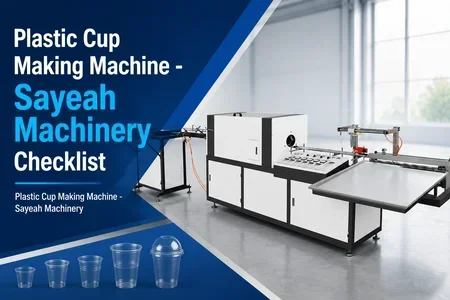
Even a trusted supplier can deliver a machine that does not precisely fit your production line. Validate these technical parameters during the evaluation phase:
- Heating System Efficiency: Check the type and number of heating zones. Uniform heating reduces material waste and improves cup quality.
- Servo Motor Precision: Ensure the forming station uses servo-driven motion for consistent stroke control. This affects wall uniformity and cycle speed.
- Mold Compatibility: Confirm the machine accepts your preferred mold dimensions and changeover time. Quick-change mold systems boost production flexibility.
- Automation Integration: Verify compatibility with automated counting, stacking, and packing modules. A fully integrated line from Plastic Cup Making Machine - Sayeah Machinery solutions can reduce labor costs.
Request a factory acceptance test (FAT) before shipment. A thorough FAT helps identify mismatches early and saves time during commissioning.
Common Procurement Mistakes and How to Avoid Them
Procurement teams often encounter predictable pitfalls when buying a Plastic Cup Making Machine. Below are three frequent errors and ways to sidestep them:
- Overlooking Total Cost of Ownership: Focusing solely on the purchase price can lead to expensive upgrades later. Factor in energy consumption, spare parts availability, and projected maintenance cycles from the start.
- Skipping On-Site Reference Visits: Relying only on brochures and videos may hide operational issues. If possible, visit a running installation or request a live demo. Even a virtual tour can reveal line layout and real-world throughput.
- Ignoring After-Sales Support Terms: Understand the warranty scope, response time for technical support, and availability of local service engineers. A machine that is down for weeks can erase the initial savings from a lower quote.
By anticipating these risks, buyers can negotiate clearer contracts and set realistic timelines.
FAQ
What is the typical lead time for a Plastic Cup Making Machine - Sayeah Machinery?
Lead times vary based on configuration and current production load. Most manufacturers quote 8–16 weeks from order confirmation. Request a written schedule in the purchase contract.
How important are spare parts availability and support?
Extremely important. Downtime for a cup making machine can halt your entire packaging line. Choose a supplier that stocks critical spares and provides remote diagnostics. Ask about local distribution partnerships in your region.
Can I use the same machine for different cup sizes and materials?
Yes, but changeover time and mold costs vary. Multi-purpose machines often come with adjustable heating zones and servo profiles. Verify the supplier's changeover procedure and tooling compatibility during negotiations.
Conclusion
Purchasing a Plastic Cup Making Machine is a significant capital decision that affects production efficiency and product quality. A structured checklist—covering supplier evaluation, RFQ preparation, technical verification, and common pitfalls—helps procurement managers make informed choices. Focus on total cost of ownership, validated specifications, and reliable after-sales support. For further guidance, explore the supplier's product pages and request a detailed quotation aligned with your production needs.