English
 Pусский
 Español
 عربي
عربي

Plastic Cup Making Machine - Sayeah Machinery Buyer Guide
Article Overview: This guide is written for procurement managers, sourcing teams, and project engineers evaluating a Plastic Cup Making Machine - Sayeah Machinery for their production line. It covers the critical parameters to verify, common risks to mitigate, and a step-by-step approach to building a defensible supplier shortlist before requesting quotes. The focus is on practical, risk-aware decision-making to reduce procurement mistakes.
What Should You Verify About Machine Specifications?
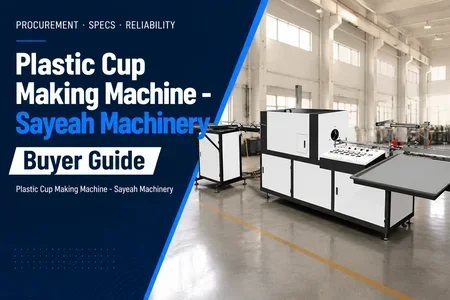
Before contacting suppliers, it is essential to define the technical requirements that match your production output, material preferences, and cup design. A Plastic Cup Making Machine - Sayeah Machinery typically offers thermoforming capabilities for materials like PP, PS, and PET. However, not all configurations are equal. Key parameters to verify include:
- Material compatibility: Confirm the machine can process the specific plastic resin you intend to use (e.g., PP for hot-fill cups, PET for clarity).
- Output speed: Check the rated cycles per minute and cup volume to ensure it meets your daily production targets.
- Mold size and format: Ensure the machine accommodates your cup diameter, height, and stacking requirements.
- Heating system: Ceramic or quartz heaters? Uniform heating affects forming quality and energy efficiency.
- Automation level: From manual to fully integrated with stacking, counting, and packaging peripherals.
Step 1: List Your Production Requirements
Begin by documenting your target cup volume (ml), wall thickness, material type, and expected daily output in pieces. This becomes the baseline for all supplier evaluations.
How Do You Evaluate Supplier Reliability and Support?
Supplier evaluation goes beyond the machine brochure. For a Plastic Cup Making Machine - Sayeah Machinery investment, consider the following checkpoints:
- Installation footprint: Request a dimensional drawing and compare with your facility layout.
- After-sales service: Ask about warranty duration, spare parts availability, and local technician response time.
- Reference installations: Ask for contact details of at least three buyers running similar production lines.
- Certifications: Verify CE, ISO, or other relevant standards that affect import compliance.
Procurement teams often overlook the long-term cost of spare parts and technical support. A machine from a reputable supplier like those offering Plastic Cup Making Machine solutions typically provides better documentation and training materials. For an overview of the complete system, visit the Plastic Cup Making Machine product page.
What Are the Hidden Costs of Ownership?
Beyond the purchase price, a Plastic Cup Making Machine - Sayeah Machinery involves several ongoing expenses. Understanding these helps avoid budget overruns:
- Energy consumption: Heating and servo motor power draw directly affect your electricity bill.
- Tooling costs: Custom molds for your cup design can be a significant one-time investment.
- Maintenance intervals: How often do critical components like heaters and bearings need replacement?
- Operator training: Ensure the supplier provides comprehensive training for your team.
Step 2: Request a Total Cost of Ownership (TCO) Estimate
Ask suppliers to break down the first three years of operational costs including energy, tooling, spare parts, and labor. Compare these figures across shortlisted suppliers to identify the most cost-effective option.
How to Structure Your RFQ for Maximum Clarity
A well-structured RFQ reduces miscommunication and speeds up supplier response. When preparing for a Plastic Cup Making Machine - Sayeah Machinery inquiry, include the following sections:
- Product description: Cup design file, material specification, and required output.
- Machine requirements: List of mandatory features vs. nice-to-haves.
- Service expectations: Warranty, installation support, and training.
- Delivery timeline: Target commissioning date and payment milestones.
- Compliance: Any local safety or environmental regulations.
Providing clear requirements upfront allows suppliers of Plastic Cup Making Machine solutions to respond with precise proposals. This reduces the need for multiple rounds of clarification.
FAQ
What is the typical lead time for a Plastic Cup Making Machine - Sayeah Machinery?
Lead times vary based on configuration and order volume. Request a confirmed schedule in writing before committing.
Can the machine handle multiple cup sizes without mold change?
Most thermoforming machines require a mold change for different cup sizes. Inquire about quick-change systems to minimize downtime.
What materials are commonly used with this machine?
PP, PS, PET, and PLA are common. Confirm material compatibility and pre-processing requirements.
How do I verify the machine's output speed claim?
Ask for a production test report or video witnessing the machine running at the specified speed with your target cup design.
Conclusion
Building a defensible shortlist for a Plastic Cup Making Machine - Sayeah Machinery requires verifying technical specs, evaluating supplier support, and understanding total ownership costs. Use the checkpoints and RFQ structure outlined above to reduce procurement risks and make an informed decision. Start by documenting your production requirements, then engage suppliers with a clear request. For more details on the machine options, review the Plastic Cup Making Machine system details on the manufacturer site.