English
 Pусский
 Español
 عربي
عربي

Key Milestones for Plastic Cup Making Machine
Article Overview: This article outlines three critical milestones for evaluating a Plastic Cup Making Machine. It focuses on production capacity, material compatibility, and automation integration, providing an evidence-led framework for early-stage research. We reference Plastic Cup Making Machine solutions to ground the discussion in practical manufacturing contexts.
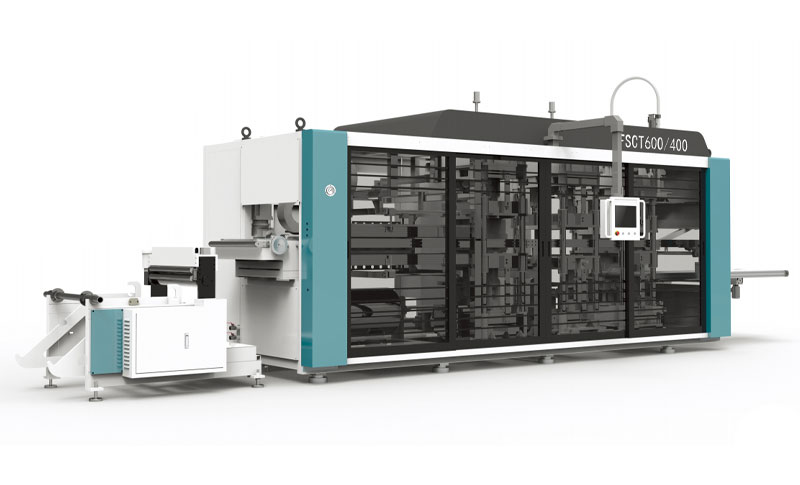
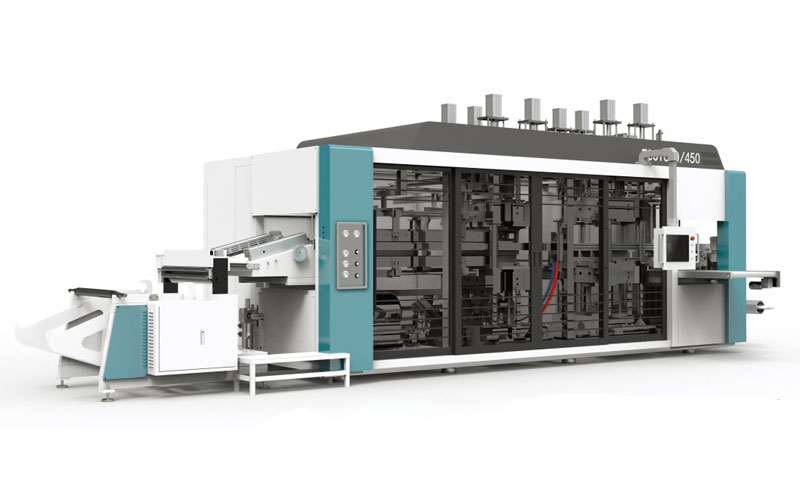
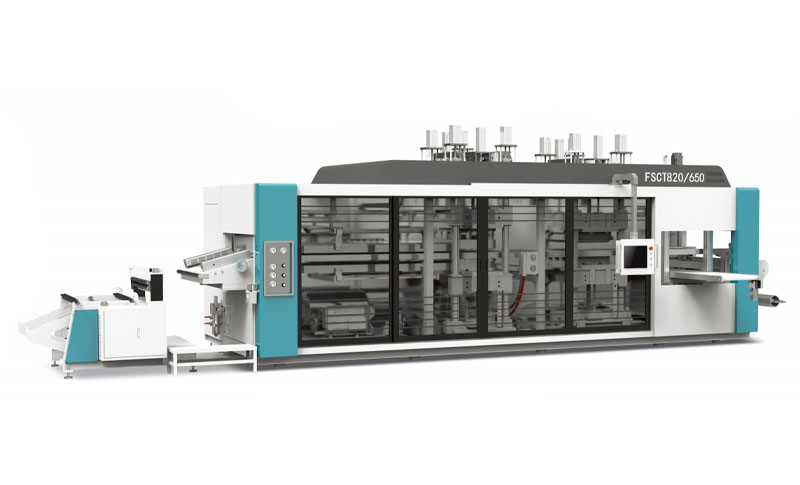
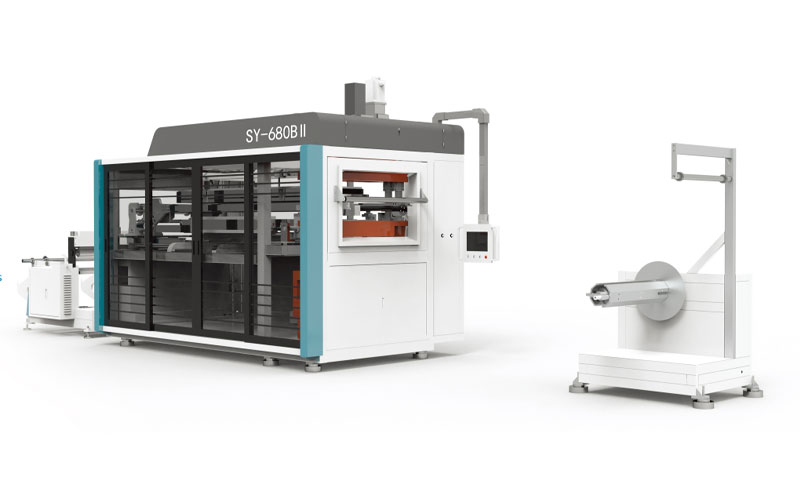
How Production Capacity Defines the Plastic Cup Making Machine - Sayeah Machinery
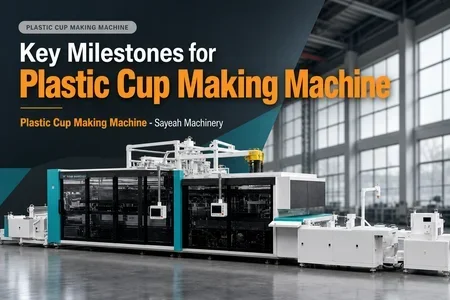
Production capacity is often the first filter in machine selection. A Plastic Cup Making Machine - Sayeah Machinery must deliver a throughput that aligns with your target output. Key factors include forming speed (cycles per minute), mold size, and cooling time. Typical high-speed machines operate at 30–50 cycles per minute for thin-wall cups, but actual output depends on cup volume, wall thickness, and material. For example, a machine producing 200ml cups may achieve 45 cycles per minute, while larger 500ml cups might only reach 30 cycles due to increased material and cooling requirements.
Step 1: Define Your Required Output
Calculate the number of cups needed per shift, including planned downtime and material changes. For instance, if you need 1.2 million 200ml cups per month over 22 working days, the daily target is approximately 54,545 cups. An 8-hour shift requires a machine capable of roughly 114 cups per minute, accounting for 85% efficiency. This calculation helps you narrow down machine options.
Step 2: Evaluate Machine Cycle Time
Check the manufacturer's cycle time for your target cup design. A faster cycle may require higher heating power and better cooling. Consider that thicker walls or deeper draw ratios reduce speed. Request cycle data for your specific material and cup geometry. For example, a machine running a 0.3mm wall cup may achieve 50 cycles per minute, but a 0.5mm wall cup might drop to 35 cycles. Always verify with the supplier's technical data.
Other capacity considerations include the number of cavities per mold and the ability to run multiple molds simultaneously. Below is a list of common parameters to compare:
- Maximum forming area (mm × mm)
- Maximum draw depth (mm)
- Heating power (kW) and heating zones
- Cooling method (water or air)
- Servo motor drive vs. pneumatic
- Mold changeover time
Evaluating Material Compatibility with the Plastic Cup Making Machine - Sayeah Machinery
The Plastic Cup Making Machine - Sayeah Machinery supports a range of thermoplastics, but compatibility affects tooling, temperature settings, and end-product quality. Common materials include PP, PS, PET, and PLA. Each has distinct processing windows. For instance, PP requires higher forming temperatures and slower cooling, while PET needs precise temperature control to avoid crystallization. Material selection also influences the machine's heating system requirements, such as the number of heating zones and the ability to maintain uniform temperature across the sheet.
Phase 1: Material Selection
Identify the cup's application (hot drink, cold drink, food storage) and select a material with appropriate barrier properties. Then verify that the machine's heating system can reach and maintain the required temperature range. For multi-layer or co-extruded sheets, the machine must have adequate heating capacity and zone control. For example, PLA requires lower processing temperatures but is more sensitive to moisture, requiring a pre-drying step.
Phase 2: Sheet Preparation
The quality of the plastic sheet directly affects forming. A Plastic Sheet Extruder must produce a uniform gauge. Check the machine's compatibility with sheet width, thickness range (0.2–2.0 mm typical), and whether it can handle recycled content. Discuss preheating requirements with the supplier. For example, thick sheets over 1.0 mm may need a preheating station to avoid uneven heating and warping.
Key material-related questions to ask during procurement:
- Does the machine include a preheating station for thicker sheets?
- What temperature control accuracy does the heater provide?
- Are quick-change tooling options available for different materials?
- How does the machine handle material shrinkage after forming?
- What is the recommended sheet thickness range for optimal performance?
What Automation Features Should You Look For?
Automation reduces labor cost and increases consistency. A modern Plastic Cup Making Machine for food packaging often integrates with downstream equipment such as stacking machines, punching units, and packing lines. The level of automation ranges from semi-automatic with manual stacking to fully inline with automatic counting and packaging. For high-volume production, consider a complete line that includes an automatic servo-driven punch and stacker. Automation also impacts maintenance and training requirements.
Step 1: Assess Automation Levels
Determine whether your production volume justifies full automation. Semi-automatic machines require an operator to feed sheets and remove cups, which may be suitable for low-volume or custom runs. Fully automatic lines, on the other hand, can run continuously with minimal intervention, achieving higher throughput and consistent quality.
Step 2: Evaluate Integration with Downstream Equipment
Look for machines that can easily connect to an in-line cutting and stacking unit, such as an on-line auto cutting stacking machine. This reduces manual handling and potential defects. Also consider rim curling, printing, and packing integration. Ensure the control system supports recipe storage for quick changeovers.
Essential automation components to consider:
- Servo-driven forming station for precise plug assist
- In-line cutting and stacking with servo control
- Cup rim curling and printing integration
- Automatic counting and packing systems
- PLC with touchscreen and remote diagnostics
FAQ
What is the typical payback period for a Plastic Cup Making Machine?
Payback depends on output volume, labor savings, and material costs. For a mid-range machine producing 50 cups per minute, many operations recover investment within 12–18 months when operating at 80% capacity. Higher automation reduces labor costs, accelerating payback.
Can the same machine run different cup sizes?
Yes, with mold changes. Most models allow quick mold changeover within 30 minutes. However, deep cups may require a machine with longer heating and cooling zones. For a machine that runs both 200ml and 500ml cups, ensure the forming area and draw depth accommodate the larger cup.
What maintenance is required for a Plastic Cup Making Machine?
Routine maintenance includes cleaning heating elements, lubricating moving parts, and checking pneumatic or hydraulic systems. Servo motors generally require less maintenance than older mechanical drives. Regular inspection of cooling systems and seals is also recommended.
How does material type affect machine selection?
Different materials have different processing temperatures and shrinkage rates. For example, PET requires precise temperature control to avoid crystallization, while PP needs higher heat and slower cooling. The machine must have compatible heating zones and cooling capacity. Always verify material compatibility with the manufacturer.
Is it possible to integrate printing inline with the cup making machine?
Yes, many modern machines offer optional inline printing units that apply print directly onto the formed cups before they are stacked. This increases efficiency and reduces secondary operations.
Conclusion
Investing in a Plastic Cup Making Machine requires careful assessment of production capacity, material compatibility, and automation needs. By addressing these three milestones early, technical buyers can align machine specifications with business goals and avoid costly redesigns later. Use the frameworks above to structure your evaluation and consult with machine manufacturers for detailed parameters. The Plastic Cup Making Machine solutions from Sayeah offer a solid foundation for building a reliable production line, but always perform due diligence based on your specific requirements.