English
 Pусский
 Español
 عربي
عربي

An Upgrade Path for Plastic Sheet Extruders: From Assessment to Implementation
Article Overview: This article provides a structured approach to upgrading plastic sheet extruders. It covers performance assessment, prioritization of improvements, the role of multi-layer co-extrusion, and integration with downstream and auxiliary equipment. The goal is to help technical buyers and operations leaders make informed decisions based on measurable needs rather than vendor promises.
What Does an Extruder Upgrade Typically Involve?
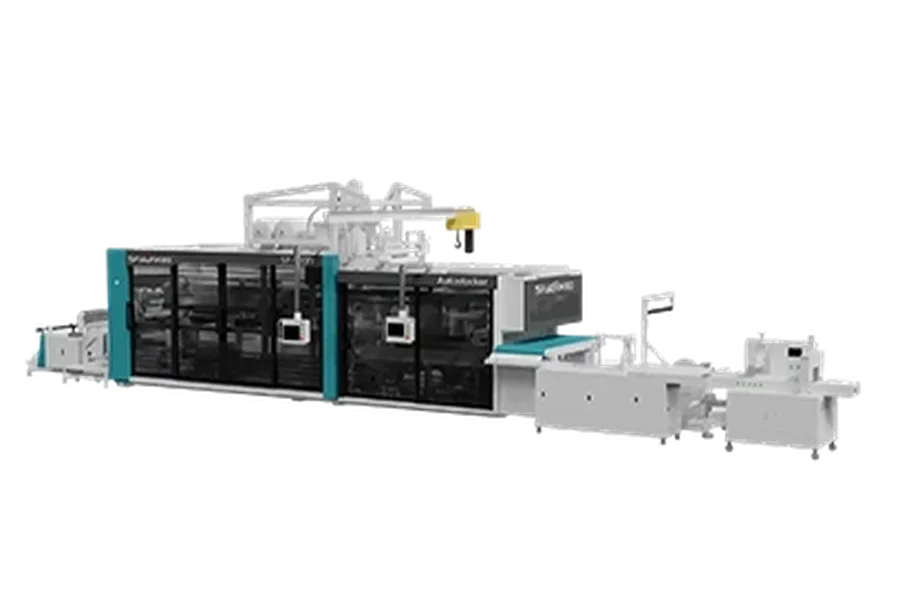
A plastic sheet extruder upgrade can range from simple component replacements to a full system retrofit. Common upgrade targets include increasing throughput, improving melt quality, reducing energy consumption, and adding multi-layer capability. Key components that are often upgraded include the screw and barrel assembly, drive motor, heating and cooling zones, screen changer, die head, and control system.
Each component upgrade affects overall line performance. For example, a high-performance screw can improve mixing and output, while precise temperature control can enhance sheet gauge uniformity. Upgrades must be evaluated in the context of the entire production line, including the thermoforming machine and downstream handling equipment.
How to Assess Your Current Extruder’s Performance
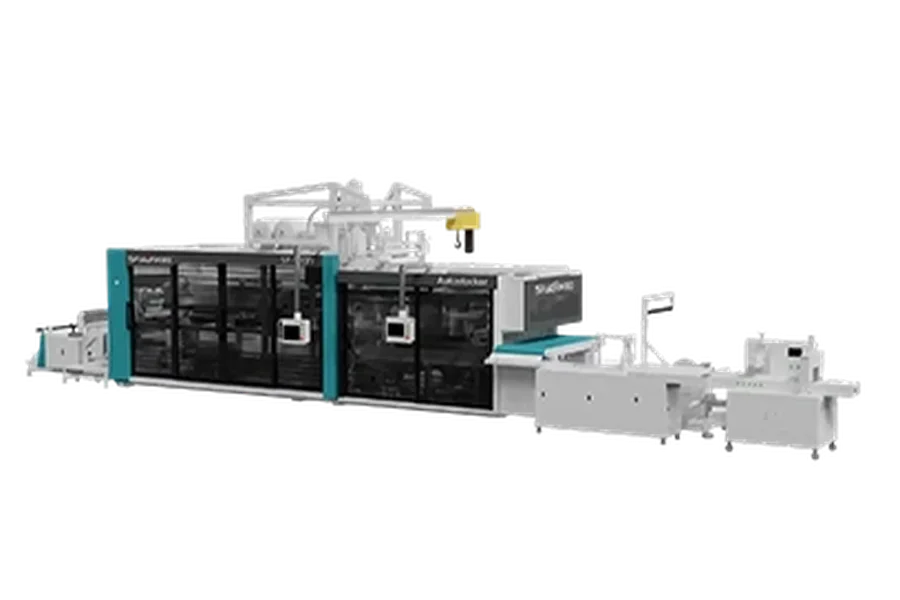
Before planning any upgrade, you need a clear baseline of current performance. A systematic assessment identifies bottlenecks and quantifies potential improvements. Consider the following checklist:
- Throughput rate (kg/h) – Is the extruder running at its rated capacity? Pulse the line to measure actual output vs. design specification.
- Melt temperature stability – Fluctuations of more than ±2°C can cause gauge variation and degrade sheet quality.
- Pressure consistency – Monitor die pressure; abnormal spikes may indicate worn screw or screen pack issues.
- Energy consumption – Measure kWh per kg of material processed. Older drives and band heaters are often inefficient.
- Downtime and maintenance records – Frequent breakdowns of specific components point to upgrade priority.
- Material compatibility – If you plan to process new resins (e.g., PLA, recycled content), the extruder must handle different melt flow indices and thermal sensitivities.
Documenting these parameters provides a factual basis for selecting upgrades. Always correlate data with the requirements of downstream equipment such as the plastic cup making machine to ensure line balance.
Prioritizing Upgrades: From Quick Wins to Major Retrofits
Once you have a performance baseline, upgrade projects can be grouped by impact and complexity. A phased approach minimizes production disruption and allows budget allocation over time.
- Quick wins (low cost, high effect): Replacing worn heater bands with ceramic or infrared types can reduce energy use by 10–20%. Upgrading the temperature controller to a PID loop improves melt stability. Installing an auxiliary equipment like an in-line crusher for edge trim recycling directly improves material yield.
- Intermediate upgrades (moderate investment): A new screw design tailored to your material (e.g., barrier screw for PET) can raise throughput by 15–25%. Upgrading the barrel to bimetallic liners extends wear life when processing filled or recycled materials. Retrofitting a melt pump before the die smooths pressure fluctuations.
- Major retrofits (capital project): Adding multi-layer co-extrusion capability requires a co-extrusion feedblock, additional smaller extruders, and sometimes a new die. This is a common upgrade for producing barrier sheets or cosmetic top layers. The complete system must be validated with the quality control procedures your facility already uses.
Each upgrade tier should be evaluated against production goals. For example, a quick win might be all that is needed to increase output to match the stacking trays line speed, while a major retrofit might be required to enter new market segments like food packaging.
Why Multi-Layer Co-Extrusion is a Common Upgrade Goal
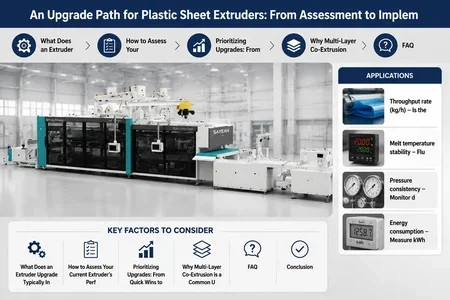
Multi-layer sheet extrusion (typically 3 to 5 layers) allows combining materials with different properties – such as a barrier layer, adhesive layer, and recycled core – in a single sheet. This is increasingly demanded for sustainable packaging where recycled content must be encapsulated between virgin layers. Upgrading to a co-extrusion setup involves the following considerations:
- Feedblock design: Must ensure layer distribution is uniform across sheet width. A variable vane feedblock offers tuning flexibility.
- Extruder configuration: Typically one main extruder plus one or two smaller satellite extruders. The satellite units must match the main extruder’s melt temperature and viscosity range.
- Die and roll stack: May need adjustment for higher melt pressures or different die swell properties. Polishing rolls should have independent temperature control.
- Thickness measurement: An online gauge with layer-specific feedback loop is essential for closed-loop control.
Many manufacturers find that a co-extrusion upgrade opens new application opportunities, such as plates and trays with barrier properties. The plastic sheet extruder you already have can often serve as the main unit, reducing the cost of the upgrade.
FAQ
How long does a typical extruder upgrade take?
The timeline depends on the scope. Quick wins like heater replacements can be completed during a single maintenance shutdown (1–2 days). Major retrofits involving co-extrusion feedblock and satellite extruders may require 4–8 weeks for design, fabrication, and onsite commissioning, including process optimization.
Can I upgrade an older extruder to handle biodegradable materials?
Yes, but it requires careful assessment. Biodegradable resins such as PLA are more thermally sensitive and have narrower processing windows. Upgrading the temperature control system, screw design (low shear), and ensuring proper drying upstream are typically necessary. The certifications of your equipment may need to be verified for food-contact compliance when switching materials.
What is the typical payback period for an extruder upgrade?
Payback varies widely. Quick wins often pay for themselves in 6–12 months through energy savings and reduced scrap. Intermediate upgrades might have payback of 12–18 months. Major retrofits, such as co-extrusion, can have payback of 2–3 years depending on the value of the new products enabled. Always run a cost-benefit analysis based on your actual production data before committing.
Do I need to replace the entire extruder for a major upgrade?
Not always. Many components can be retrofitted: new screw and barrel, upgraded drive, new controls, and auxiliary equipment. However, if the extruder frame or gearbox is severely worn, replacement may be more cost-effective. Consult with the application center for a technical feasibility study.
Conclusion
Upgrading a plastic sheet extruder should follow a structured path: assess baseline performance, prioritize upgrades by impact, and execute in phases. Quick wins deliver immediate benefits, while major retrofits like multi-layer co-extrusion open new market opportunities. A systematic plan, grounded in real production data, ensures that upgrades solve genuine bottlenecks rather than becoming a wish list of expensive equipment. Always validate upgrade decisions with downstream line balance and future material requirements. With careful planning, an extruder upgrade can significantly improve competitiveness without replacing the entire production line.