English
 Pусский
 Español
 عربي
عربي

Small Improvements Around the Extruder That Still Make a Credible Story for Production Efficiency
Article Overview: This article explores targeted, low-risk improvements that can be made around the extruder in a plastic sheet or cup production line. While the extruder is the core of the process, auxiliary adjustments—such as better temperature control, consistent material feeding, and downstream handling—often deliver meaningful gains in output consistency, energy use, and scrap reduction. The goal is to help technical and procurement decision-makers identify practical upgrades that build a credible case for incremental investment.
Why Are Small Improvements Around the Extruder Important?
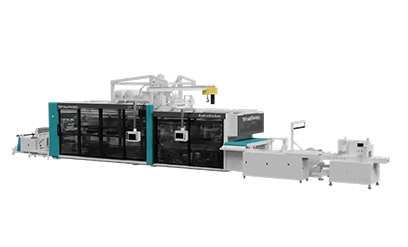
In many plastic processing lines, the extruder is already a robust piece of equipment. However, even a well-maintained extruder can be limited by peripheral factors. Small adjustments in how the extruder is fed, cooled, or integrated with downstream equipment can have a noticeable effect on final product quality. For early-stage research, understanding these touchpoints helps build a roadmap for incremental upgrades rather than a complete line replacement.
Consider a typical plastic sheet extruder running polypropylene or PET. If the feed section experiences inconsistent moisture content or variable pellet size, the melt quality can fluctuate. Simple improvements like installing a pre-drying hopper or using a more precise gravimetric feeder can stabilize the process. These are not expensive overhauls, but they address real pain points in day-to-day production.
How Can You Optimize Extruder Performance Without Major Overhauls?
Optimization often begins with better data and process control. Below are several practical areas where small changes yield measurable results:
- Temperature profiling: Adjusting barrel and die temperatures in narrow bands (e.g., ±2°C) can reduce melt fracture and improve gauge uniformity. Many modern extruders allow multi-zone PID tuning that operators can fine-tune for specific resins.
- Feed consistency: Using a crammer feeder or a vibration feeder ensures a constant bulk density, which reduces surging and pressure variation at the die.
- Screw design review: Even without replacing the screw, modifying the compression ratio or adding a mixing section can enhance homogenization. This is best done in consultation with the equipment manufacturer.
- Downstream alignment: Misaligned take-off rolls or cooling baths create stress that warps the sheet. Simple alignment checks and roll surface maintenance prevent defects.
These steps are low-capital but require careful observation and operator training. For a plastic cup making machine, consistent sheet thickness from the extruder directly affects forming success, so improvements here cascade downstream.
Key Areas for Targeted Improvement Around the Extruder
When evaluating existing equipment or planning a new line, focus on the following subsystems that interact with the extruder:
- Material handling and drying: Moisture in hygroscopic resins like PET or PLA can cause hydrolysis during extrusion. A dehumidifying dryer with a dew point monitor is a proven upgrade.
- Screen changers and filtration: Continuous screen changers reduce downtime for filter changes and maintain consistent melt pressure. They are especially valuable when processing recycled material.
- Melt pumps and static mixers: A gear pump after the extruder smooths pressure fluctuations, while a static mixer ensures uniform temperature and color dispersion before the die.
- Die and lip adjustments: Fine-tuning the die gap with automated lip adjustment systems can reduce edge bead and trim waste. Even manual die bolts, when regularly calibrated, improve consistency.
- Cooling and haul-off: Controlled cooling rates prevent crystallization in amorphous sheets. Adjustable air knives or water spray systems help maintain flatness.
Many of these components are offered as modular add-ons. For example, auxiliary equipment like an intelligent stacking robot or a crusher can be integrated alongside the extruder to close the loop on scrap handling. A crusher positioned near the sheet take-off can regrind edge trim and re-feed it into the extruder, improving material utilization.
Evaluating the Credibility of Incremental Upgrades
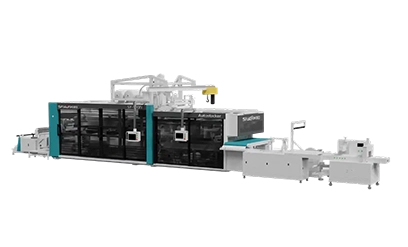
Procurement and engineering teams often face a dilemma: invest in a new extruder or improve the existing one. Small improvements around the extruder are credible when they target specific bottlenecks. For instance, if a multi-station thermoforming machine downstream is experiencing frequent jams due to sheet thickness variation, solving the variation at the extruder is more effective than adjusting the former. Such targeted fixes have shorter payback periods and lower risk than a full line replacement.
To build a business case, document baseline metrics such as scrap rate, energy consumption per kg, and uptime. Then simulate the impact of each improvement. Many equipment suppliers offer trial periods or rental units for add-ons like melt pumps or screen changers, allowing you to validate benefits before purchase.
FAQ
What is the single most cost-effective improvement around an extruder?
Improving feed consistency—by adding a gravimetric feeder or a pre-dryer—often delivers the fastest return, as it directly stabilizes melt pressure and reduces scrap.
Can small improvements reduce energy costs?
Yes. For example, optimizing barrel insulation and properly sizing the drive motor can lower energy consumption. Adjusting screw speed and back pressure also reduces unnecessary electrical load.
Are these improvements applicable to multi-layer sheet extrusion?
Absolutely. In a multi-layer co-extrusion line, consistent melt temperature and pressure across each layer are critical. Small adjustments to individual extruder zones and feed systems can prevent interlayer instability.
How do I know which improvement is right for my line?
Start by auditing your current scrap rate, downtime causes, and product quality data. Map those issues to the subsystems above. Consult with your equipment manufacturer or a plastic sheet extruder specialist to prioritize.
Conclusion
Small improvements around the extruder are not just low-cost fixes; they are strategic investments in production reliability. By focusing on feed consistency, temperature control, downstream alignment, and auxiliary integration, manufacturers can achieve meaningful gains in quality and efficiency without the capital outlay of a new extruder. For teams evaluating their next steps, these incremental upgrades offer a credible path to better performance, backed by observable data and supported by modular equipment options.
Related site pages: Home, Your Product, About Us, About Sayeah, Machining Center, Quality.