English
 Pусский
 Español
 عربي
عربي

The Uncomfortable Trade-Offs in Extruder Procurement: A Buyer's Guide to Supplier Evaluation and RFQ Preparation
Article Overview: This guide is written for procurement managers, sourcing teams, and project engineers who are evaluating extruder suppliers and preparing RFQs. It addresses the inherent trade-offs between cost, capacity, and quality, and provides practical checkpoints to reduce procurement mistakes. Whether you are sourcing a single-layer or multi-layer co-extruder, understanding what to validate before purchase is essential to avoid costly operational surprises.
Why Extruder Selection Demands a Structured Supplier Evaluation?
Procuring a plastic sheet extruder is not a simple commodity purchase. The machine directly impacts your downstream thermoforming or converting processes, material yield, and product consistency. Without a structured supplier evaluation, you risk mismatched specifications, hidden ownership costs, and production delays. A disciplined RFQ process helps you compare suppliers objectively and surface critical differences in machine design, build quality, and service capabilities.
What Are the Hidden Costs and Risks in Extruder Procurement?
Beyond the initial purchase price, several cost factors can significantly affect total cost of ownership. These include energy consumption per kilogram of output, maintenance intervals for screws and barrels, scrap rates during startups, and the cost of downstream auxiliary equipment such as cooling chillers or crushers. For example, a lower-priced extruder may consume more energy or require more frequent part replacements, outweighing any upfront savings. Additionally, consider the risk of inadequate after-sales support: a supplier without local service technicians can lead to extended downtime. The following list outlines common hidden costs.
- Energy efficiency: kWh per kg of extruded material
- Wear part lifespan: screw and barrel replacement frequency
- Scrap generation during grade changes and startups
- Integration costs with existing thermoforming or cup making lines
- Training and installation support
Key Checkpoints for Your Extruder RFQ and Supplier Audit
When you invite suppliers to quote, structure your RFQ around validated requirements. Use the following ordered checklist to ensure no critical aspect is overlooked.
- Throughput vs. material profile: Specify the target materials (e.g., PP, PS, PET, multi-layer) and required output in kg/h. Ask suppliers to confirm achievable rates for your specific recipe.
- Screw design and material: Request details on screw geometry, L/D ratio, and whether the supplier offers customization for high-torque or high-wear applications.
- Temperature control precision: Inquire about the number of heating zones, controller accuracy, and cooling efficiency for consistent melt quality.
- Die and lip adjustment: Understand how the die width and gap are adjusted, and whether automated profile control is available for thinner gauges.
- Documentation and compliance: Ask for CE certification, electrical schematics, and a list of installed references similar to your application.
Validating Implementation and After-Sales Support Before Purchase
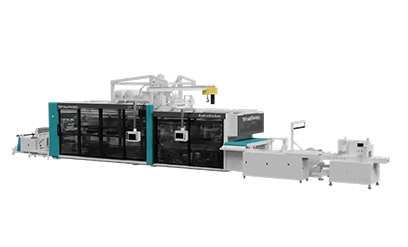
Before finalizing your supplier, take steps to reduce implementation risk. Verify that the extruder can integrate with your existing plastic cup making machine or downstream equipment. Request a factory acceptance test (FAT) to witness real-world performance on your target material. Evaluate the supplier's quality management system and certifications. Confirm the availability of spare parts and technical support. For complex lines, consider whether the supplier offers turnkey integration services including auxiliary equipment like chillers, crushers, and stacking robots. The following points are essential to validate.
- Installation footprint and utility requirements (power, cooling water, compressed air)
- Training scope: operator training, maintenance manuals, and remote diagnostics
- Warranty terms: duration, response times, and service level agreements
- Reference installations: contact existing customers with similar production volume
How to Balance Production Capacity with Material Quality?
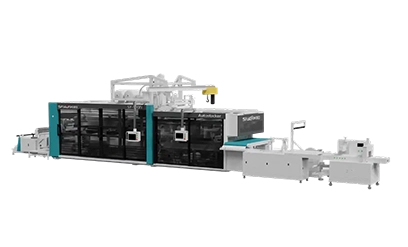
Extruder buyers often face a trade-off between maximizing output and maintaining sheet thickness uniformity or optical quality. A machine that claims higher throughput may require compromises in melt homogeneity or require a larger diameter screw that increases shear heat. Multi-layer co-extrusion adds complexity: layer ratio control and interlayer adhesion demand precise temperature and melt pump coordination. When evaluating a plastic sheet extruder, ask suppliers how they address these trade-offs. Request data on thickness variation across the sheet width and across time. For high-value applications, consider investing in online gauging and automatic profile control to reduce scrap.
Additionally, consider the overall production system. A well-matched multi-station thermoforming machine paired with your extruder can optimize line efficiency. Visit application center examples to see how different setups perform in practice.
FAQ
What are the most important criteria when comparing extruder suppliers?
Focus on throughput vs. material fit, temperature control accuracy, screw design, energy consumption, and after-sales support. Always request references and a factory acceptance test.
How do I know if I need a single-layer or multi-layer extruder?
Multi-layer co-extrusion is beneficial when you require barrier properties, different material layers for cost savings, or specific surface textures. Evaluate your final product requirements and consult with suppliers on achievable layer structures.
What should be included in an extruder RFQ?
Include material type(s), throughput range, sheet width and thickness, tolerance requirements, utility availability, desired control features, and any integration needs with existing equipment.
How can I reduce risk during extruder installation?
Conduct a FAT at the supplier site, verify utility compatibility, agree on a detailed installation schedule, and ensure your team receives thorough training. Also plan for spare parts and a maintenance contract from the start.
Conclusion
Selecting the right extruder supplier requires more than comparing price lists. By adopting a structured RFQ process, validating implementation details, and understanding the inherent trade-offs between capacity and quality, you can reduce procurement mistakes and secure a machine that meets your production goals. Start your evaluation with a clear requirements document and use the checkpoints in this article to guide your conversations with suppliers. For further information on how a plastic sheet extruder solution can fit into your existing line, review our product details or contact our team to discuss your specific application.