English
 Pусский
 Español
 عربي
عربي

How to Choose a Thermoforming Machine
Article Overview: This comprehensive guide on how to choose a thermoforming machine is designed for procurement decision-makers in the packaging and plastics industry. Whether you manufacture cups, trays, containers, or custom parts, understanding the critical parameters in thermoforming machine selection helps you avoid costly mistakes. We cover machine types, process workflows, supplier evaluation criteria, total cost of ownership, and risk mitigation strategies. By the end, you will have a clear framework to confidently select the right machine for your production needs.
Key Factors in How to Choose a Thermoforming Machine
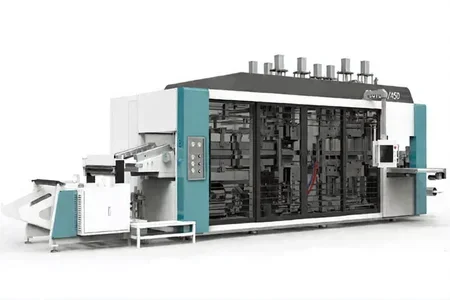
When approaching how to choose a thermoforming machine, the first step is to align your production requirements with the machine's technical capabilities. Two main forming methods dominate the market: pressure forming and vacuum forming. Pressure forming is ideal for parts requiring sharp details and tight tolerances, such as intricate packaging or electronic components. Vacuum forming, on the other hand, is more economical for simpler geometries and larger parts, like trays or clamshells. Your choice depends on the complexity of your product and the quality standards you must meet.
Another fundamental decision in thermoforming machine selection is between single-station and multi-station configurations. Single-station machines are well-suited for low to medium volumes, frequent mold changes, and prototyping. They offer flexibility and lower initial investment. Multi-station machines, however, excel in high-volume production, providing faster cycle times and consistent output. For example, a manufacturer of disposable cups might opt for a multi-station setup to meet high demand, while a custom packaging shop may prefer a single-station machine for versatility.
Material compatibility is equally critical. Common materials include PET, PP, PS, and PVC, each requiring specific heating profiles and mold temperatures. Ensure the machine you evaluate supports your primary materials and can handle recycled content if sustainability is a goal. Additionally, the forming area dimensions must accommodate your largest product, and the heating system should provide uniform temperature control to minimize scrap. Below are the essential parameters to consider:
- Forming method (pressure vs. vacuum) based on part detail
- Number of stations (single vs. multi) aligned with volume
- Material range and thickness capability
- Maximum forming area and depth of draw
- Cycle time and throughput requirements
- Heating system type (quartz, ceramic, or gas) and control precision
- Trim press integration or in-line cutting options
Step-by-Step Procurement Process for Thermoforming Machine Selection
A structured procurement process reduces risk and ensures you choose a machine that delivers long-term value. Follow these phases to streamline your thermoforming machine selection.
Phase 1: Define Your Production Requirements
- List product dimensions, weight, and material specifications.
- Estimate annual production volume and peak demand periods.
- Determine required forming speed and tolerance levels.
- Assess whether in-line extrusion or pre-cut sheet feeding suits your workflow.
- Identify any special requirements, such as anti-static properties or food-grade compliance.
Phase 2: Research and Shortlist Machine Types
- Compare pressure forming vs. vacuum forming for your part complexity.
- Evaluate single-station vs. multi-station configurations based on volume.
- Check compatibility with multi-station thermoforming machine options if high output is needed.
- Review automation features like stacking robots, product counters, and quick mold change systems.
- Request brochures and specification sheets from at least three suppliers.
After completing these phases, you will have a clear shortlist of machine configurations that match your needs. Next, move to supplier evaluation to find the right partner.
How to Evaluate Supplier Fit When Choosing a Thermoforming Machine
Supplier evaluation is a crucial part of how to choose a thermoforming machine. A machine is only as good as the support behind it. Use the following criteria to assess potential suppliers:
- Technical Expertise: Does the supplier have experience in your industry? For instance, a supplier specializing in food packaging will understand hygiene requirements and material certifications.
- Customization Capabilities: Can they adapt the machine to your specific mold design, automation needs, or space constraints? Some suppliers offer modular designs for easy upgrades.
- After-Sales Support: Evaluate installation, training, warranty terms, and remote troubleshooting. Prompt service can save weeks of downtime.
- Spare Parts Availability: Check lead times for critical components like heating elements, vacuum pumps, and control boards. A supplier with local warehouses reduces risk.
- References and Case Studies: Ask for client references in similar applications. A proven track record in thermoforming machine selection for cup production can indicate reliability.
Conduct factory visits or virtual demos to see the machine in operation. Pay attention to build quality, safety features, and ease of maintenance. A reputable supplier will be transparent about performance data and total cost of ownership.
Cost-Risk Tradeoffs in Thermoforming Machine Selection
Investment decisions involve balancing upfront costs with long-term operational expenses. In thermoforming machine selection, the cheapest option is rarely the most cost-effective. Higher-priced multi-station machines reduce per-unit cost at scale but require larger floor space and more complex maintenance. In contrast, lower-cost single-station machines offer flexibility but may limit throughput. Consider the total cost of ownership (TCO), including energy consumption, tooling costs, scrap rates, and predicted maintenance intervals.
Energy efficiency is a significant factor. Machines with servo-driven movements and precise temperature control consume less power and produce less waste. For example, a machine with zone-controlled heaters can reduce scrap by up to 15% compared to older models. Another risk is material compatibility: a machine that cannot handle recycled or thinner materials may become obsolete as sustainability regulations tighten. Always calculate the payback period based on your production volumes. A simplified TCO comparison table is shown below (values are illustrative):
- Single-station machine: Lower capital cost ($50k–$150k), higher per-unit cost at high volumes, flexible for low mix, moderate energy efficiency.
- Multi-station machine: Higher capital cost ($200k–$500k+), lower per-unit cost at high volumes, less flexible, high energy efficiency with servo drives.
- Inline extrusion integration: Additional cost but reduces material handling and scrap, best for continuous production of standard products.
To mitigate risk, request a detailed proposal from suppliers that includes energy consumption data, recommended preventive maintenance schedule, and warranty terms. Also, consider leasing options or used machines if budget is tight, but ensure they come with service agreements.
FAQ
What should buyers evaluate first about how to choose a thermoforming machine?
Start with fit, evidence-backed requirements, and supplier proof relevant to how to choose a thermoforming machine before shortlisting vendors.
How can teams reduce procurement risk for how to choose a thermoforming machine?
Use structured comparison, validate specifications early, and review implementation or quality checkpoints with documented evidence.
Conclusion
Successful procurement of a thermoforming machine requires a systematic approach. By understanding how to choose a thermoforming machine through careful evaluation of forming methods, station configurations, material compatibility, and supplier capabilities, you can make an informed decision that aligns with your production goals and budget. Remember to assess total cost of ownership, consider future scalability, and prioritize after-sales support. For those specifically producing cups or containers, the thermoforming machine selection solution must be tailored to your product geometry and volume. Use the checklist and process steps in this guide to reduce uncertainty and achieve the best return on your investment.