English
 Pусский
 Español
 عربي
عربي

Top Thermoforming Machine Manufacturers: Procurement Guide
Article Overview: This procurement guide helps decision-makers evaluate and select from the top thermoforming machine manufacturers. It covers fit assessment, supplier comparison, risk mitigation, and next-step actions—all anchored to real-world scenarios and the product category of thermoforming machines. Use this structured approach to make a confident, evidence-based investment.
Why Focus on Top Thermoforming Machine Manufacturers?
Procuring a thermoforming machine is a capital-intensive decision that affects production efficiency, product quality, and long-term operational costs. The top thermoforming machine manufacturers offer proven technology, reliable support, and scalable solutions. However, “top” means different things to different buyers—some prioritize speed, others flexibility, and others total cost of ownership. This article provides a structured approach to cut through marketing claims and make an evidence-based choice. For buyers needing a thermoforming machine system tailored to cup production, the evaluation must consider integration with downstream equipment.
What Makes a Manufacturer “Top” for Your Production Line?
Before shortlisting suppliers, define your production requirements. Key factors include:
- Material compatibility: Does the thermoforming machine handle your target materials (e.g., PP, PS, PET)?
- Output volume: Is the machine rated for your required cycles per minute and sheet thickness?
- Tooling flexibility: Can the machine accommodate quick mold changes for different products?
- After-sales support: Does the manufacturer offer installation, training, and spare parts availability?
Evaluate each candidate against these criteria. For example, a manufacturer specializing in high-speed cup production may not be the best fit for low-volume custom trays. Always request machine specifications and sample production data to validate claims. Consider whether the manufacturer’s core expertise matches your primary product type—if you produce small containers, look for a history of successful installations in that segment.
How to Compare Thermoforming Machine Suppliers Effectively?
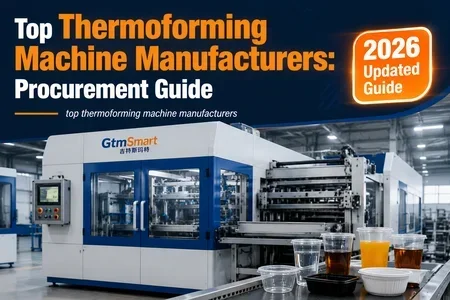
Comparison should go beyond brochures. Use these steps to assess the top thermoforming machine manufacturers:
Step 1: Request Technical Specifications
Ask for detailed datasheets covering heating zones, forming area, cycle time, energy consumption, and output per hour. Compare numbers side-by-side. Pay special attention to electric vs. hydraulic systems—electric machines typically offer higher energy efficiency and faster cycle times, but may have higher initial cost.
Step 2: Review Installation and Training Support
Top manufacturers provide on-site commissioning and operator training. Inquire about response times and remote troubleshooting capabilities. Also ask about documentation quality—clear manuals and video tutorials reduce ramp-up time.
Step 3: Evaluate Total Cost of Ownership
Beyond the purchase price, consider maintenance intervals, spare part costs, and mold replacement expenses. Request a five-year cost projection. Some manufacturers offer service contracts that include preventive maintenance; weigh the added cost against reduced downtime risk.
After gathering data, create a weighted scorecard based on your priorities. Avoid overvaluing price alone—consider total cost including maintenance, tooling, and downtime. Use a simple matrix with columns for each candidate and rows for each criterion, scoring from 1 to 5.
What Procurement Checkpoints Should You Use for Top Thermoforming Machine Manufacturers?
Use this checklist to guide your evaluation:
- Machine reliability: Mean time between failures (MTBF) and warranty terms. Request service logs from existing clients.
- Component quality: Are heating elements, servo drives, and controls from reputable brands? Standardized components ease future repairs.
- Energy efficiency: Electric vs. hydraulic systems—compare kWh per part. Electric systems often deliver 20–30% energy savings.
- Local support: Does the supplier have service centers or partners in your region? Check response time guarantees.
- References: Ask for contactable clients with similar production lines. A site visit can reveal real-world performance.
- Scalability: Can the machine be upgraded or integrated with a thermoforming machine solution for higher throughput later?
Document findings in a comparison table to present to your procurement team. The goal is to reduce selection risk by verifying each supplier’s claims with tangible evidence. Remember to also assess the supplier’s financial stability—a manufacturer with strong financials is more likely to honor warranty and provide long-term support.
Risk Controls When Selecting a Thermoforming Machine Supplier
Procurement risk can arise from misaligned expectations, hidden costs, or poor support. Mitigate with these controls:
- Contractual performance guarantees: Specify minimum output and maximum scrap rates. Include penalties for non-compliance.
- Spare parts commitment: Ensure availability of critical components for at least 10 years. Ask for a list of recommended spares with pricing.
- Third-party audits: Visit the factory or hire an independent inspector to verify manufacturing capability. Check ISO certification and quality processes.
- Escalation path: Establish a clear contact for post-installation issues. Define response times for different severity levels.
- Payment milestones: Structure payments linked to delivery, installation, and acceptance testing to protect your investment.
Remember that a thermoforming machine is part of a larger production ecosystem. Integration with upstream sheet extruders and downstream auxiliary equipment (e.g., stackers, crushers) affects overall line efficiency. For seamless integration, consider manufacturers that offer compatible equipment or have partnerships with auxiliary providers. A holistic approach reduces integration risk.
How Do Top Thermoforming Machine Manufacturers Support Implementation?
Implementation support is often overlooked but critical for production ramp-up. Top manufacturers offer:
- Site preparation guidance: Recommendations for floor layout, electrical requirements, compressed air capacity, and ventilation.
- Installation and commissioning: On-site engineers to set up the machine and run initial production tests.
- Operator training: Hands-on training for your staff covering machine operation, maintenance, and troubleshooting.
- Remote monitoring: Some manufacturers provide IoT capabilities to track machine performance and predict maintenance needs.
Ask about typical implementation timelines. For a standard thermoforming machine, installation and commissioning may take 2–4 weeks, with full production readiness within 6 weeks. Confirm these estimates in the contract. Also request a designated project manager who will be your single point of contact throughout the process.
FAQ: Top Thermoforming Machine Manufacturers
What is the best way to shortlist top thermoforming machine manufacturers? Start by matching your production scope (volume, material, product type) to each supplier’s core expertise. Use industry forums, trade show visits, and direct inquiry to gather unbiased feedback. Create a long list of 10–15 candidates, then narrow down to 3–5 based on initial responsiveness and technical alignment.
How can I verify a manufacturer’s claims before purchase? Request trial runs with your own molds or materials. Visit plants that use the same model. Check certifications (CE, UL, ISO) and ask for detailed machine logs showing uptime and scrap rates. Independent third-party audits can provide additional assurance.
What are common mistakes when procuring a thermoforming machine? Undervaluing service and training, overlooking tooling costs, and focusing only on initial price. Total lifecycle cost should guide the final decision. Another mistake is not negotiating warranty terms—aim for at least one year full warranty with option to extend.
How long does it take to install and commission a thermoforming machine from top manufacturers? Typically 2–6 weeks depending on machine complexity and site preparation. Confirm timelines in the contract. Factor in additional time for operator training and trial production before full-scale operation.
Can a thermoforming machine be retrofitted for new products later? Many top manufacturers design machines with modular tooling and quick-change features. Discuss future product plans with suppliers to ensure the machine can accommodate changes in material, thickness, or shape without major modifications.
Conclusion
Selecting from the top thermoforming machine manufacturers requires a disciplined process: define requirements, compare systematically, validate evidence, and plan for long-term support. Use the checkpoints and flow steps outlined here to drive a confident purchase decision. For integrated cup production lines, explore the thermoforming machine system tailored to high-speed cup forming. Evaluate, compare, and choose a partner that aligns with your operational goals. By following this procurement guide, you minimize risk and maximize return on your investment in a thermoforming machine.