English
 Pусский
 Español
 عربي
عربي

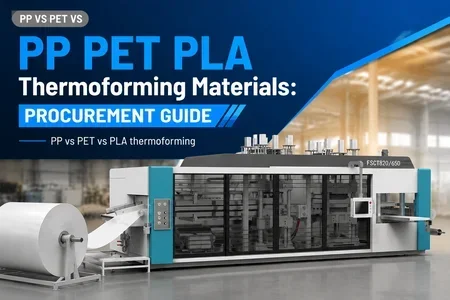
PP PET PLA Thermoforming Materials: Procurement Guide
Article Overview: This guide helps procurement managers and sourcing teams evaluate PP PET PLA thermoforming materials for food packaging and other applications. It covers material differences, supplier validation checkpoints, cost-performance trade-offs, and practical RFQ steps to avoid common procurement mistakes. Whether you compare PP vs PET vs PLA thermoforming for cups, trays, or containers, this article provides neutral, actionable insights for informed decisions.
Why Material Selection Matters in Thermoforming Procurement
Choosing the right thermoforming material for cups, trays, or containers directly impacts production efficiency, end-use performance, and regulatory compliance. For B2B buyers, material decisions affect not only product quality but also supplier fit and long-term cost structure. PP PET PLA thermoforming materials each offer distinct properties that suit different applications, making it essential to align material characteristics with your product requirements before issuing an RFQ.
Common procurement mistakes include selecting a material based solely on price or sustainability claims without verifying process compatibility. For example, PLA requires specific temperature controls during thermoforming, while PET demands higher drying precision. Understanding these nuances early helps avoid costly re-tooling or rejected batches. Additionally, material selection influences downstream operations such as sealing, printing, and recycling. A comprehensive evaluation of PP PET PLA thermoforming materials ensures that your chosen polymer aligns with both production capabilities and market demands.
Key Differences Between PP, PET, and PLA Thermoforming Materials
When comparing PP vs PET vs PLA thermoforming options, it is critical to understand their unique processing and performance characteristics. Below is a detailed comparison to guide your material selection.
- Polypropylene (PP): Excellent chemical resistance, good heat resistance (up to 120°C), low density, and cost-effective. Suitable for hot-fill containers and microwaveable packaging. Requires preheating systems for consistent forming. PP offers fast cycle times and low scrap rates in well-tuned lines, making it a workhorse for high-volume production.
- Polyethylene Terephthalate (PET): High clarity, good barrier properties, and recyclability. Used for cold beverages, deli trays, and clamshells. Needs thorough drying before processing to prevent hydrolysis. PET provides superior aesthetics and is often chosen for premium packaging where shelf appeal matters.
- Polylactic Acid (PLA): Biobased and compostable under industrial conditions. Lower heat resistance (around 50°C) and narrower processing window. Ideal for short-shelf-life cold food packaging where sustainability is a priority. PLA processing demands precise temperature control and slower forming speeds, which can increase cycle times and scrap rates.
Buyer note: Verify that your supplier’s thermoforming line can handle the specific melt flow index and processing temperature range of each material. Ask for documented run records for PP PET PLA thermoforming materials before committing to large orders. Also consider sealing compatibility, printability, and recycling infrastructure available in your target markets. A thorough comparison of PP vs PET vs PLA thermoforming properties will help you avoid costly mismatches.
How to Validate Supplier Capabilities for PP PET PLA Thermoforming?
Assessing a supplier’s technical competence with PP PET PLA thermoforming materials requires more than a price quote. Use a structured checklist during supplier evaluation to ensure they can deliver consistent quality across your chosen material.
- Process Equipment: Does the supplier have dedicated lines for each material? Ask about preheating systems (e.g., infrared or contact heaters) and mold temperature control. Multi-material flexibility indicates deeper expertise.
- Material Handling: Confirm drying protocols for PET and moisture control for PLA. Inconsistent drying leads to defects such as bubbles or poor wall thickness.
- Quality Certifications: Check for food contact certifications (FDA, EU 10/2011) and traceability systems. Certifications demonstrate regulatory readiness.
- Sample Runs: Request trial runs with your chosen material and product geometry. Evaluate wall thickness distribution, forming consistency, and seal strength.
Using these steps reduces the risk of selecting a supplier inexperienced with PP PET PLA thermoforming materials. For deeper insights into material-process pairings, consult the PP PET PLA thermoforming materials application center which provides detailed recommendations for specific products.
Step 1: Define Material and Application Requirements
Clearly specify the polymer grade, target thickness, and performance needs (e.g., heat resistance for hot-fill). Include details like fill temperature, shelf life, and sealing method. Provide this in your RFQ to align supplier expectations and avoid ambiguity.
Step 2: Request Process Parameters and Capability Data
Ask for documented processing windows—temperature range, cycle times, and scrap rates—for each material type. This helps compare supplier expertise objectively. A supplier that can share detailed process data is more likely to deliver consistent results.
Following these flow steps will help you systematically evaluate suppliers and reduce the risk of selecting one that lacks experience with PP PET PLA thermoforming materials.
Cost vs. Performance Trade-offs in PP vs PET vs PLA Thermoforming
Material cost is only one component of total procurement expenditure. When comparing PP vs PET vs PLA thermoforming, consider the full lifecycle: raw material price, processing efficiency, scrap rate, energy consumption, and end-of-life costs. PP typically offers lower per-unit material cost and higher throughput due to faster cycle times and lower scrap rates (under 3% in optimized lines). PET provides better clarity and barrier properties but requires energy-intensive drying, which adds to operating costs. PLA carries a premium price and slower forming speeds, with scrap rates often between 5% and 8%, but may satisfy corporate sustainability targets and open access to eco-conscious markets.
Use a total-cost-of-ownership (TCO) model in your RFQ analysis. For example, a slightly higher material cost may be offset by reduced waste or premium pricing opportunities. Conversely, a cheaper material might lead to hidden costs from higher scrap or additional processing steps. Always request actual production data from suppliers to validate their cost and performance claims. Understanding these trade-offs is essential for making a sound procurement decision.
What Are the Common Procurement Pitfalls with PP PET PLA Thermoforming Materials?
Even experienced buyers can overlook critical factors when sourcing PP PET PLA thermoforming materials. Common pitfalls include:
- Assuming that a single supplier can handle all three materials equally well without checking their process records. Each polymer requires distinct expertise and equipment configurations.
- Focusing only on raw material price and ignoring processing scrap rates—PLA often has higher scrap (5–8%) compared to PP (under 3%) in well-tuned lines. Scrap directly impacts unit cost.
- Underestimating the impact of drying and preheating requirements on cycle time and energy costs. PET and PLA demand stricter moisture control, which can slow production and increase utility bills.
- Neglecting end-of-life considerations. If your market requires recyclability or compostability, ensure the entire packaging system (including lids and labels) is compatible with your chosen material.
To avoid these pitfalls, always request production data from suppliers, conduct on-site audits if possible, and engage with equipment manufacturers to confirm process compatibility. A thorough validation of PP PET PLA thermoforming materials before procurement will save time and resources.
FAQ
Which thermoforming material is best for hot-fill applications?
PP is the preferred choice for hot-fill containers due to its heat resistance up to 120°C. PET and PLA are not suitable for high-temperature fills as they can deform or lose structural integrity.
Can PLA be processed on standard PET thermoforming lines?
Not without modifications. PLA requires lower forming temperatures and different heating profiles. Consult your equipment supplier for retrofitting options, and request sample runs to validate compatibility.
What is the typical scrap rate for PP vs PET vs PLA thermoforming?
Scrap rates vary by part design and process control. In well-tuned lines, PP scrap can be under 3%; PET around 2–4%; PLA may reach 5–8% due to narrower processing windows. Always request actual production data from suppliers for the specific part geometry you need.
How do I ensure consistent wall thickness across different materials?
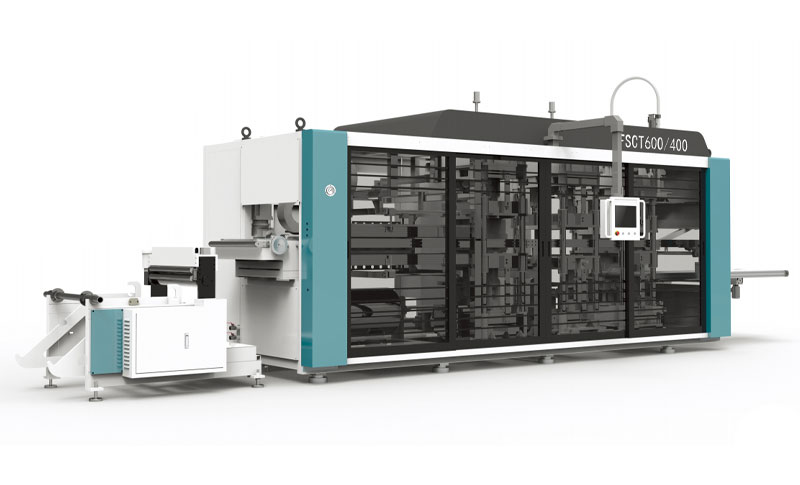
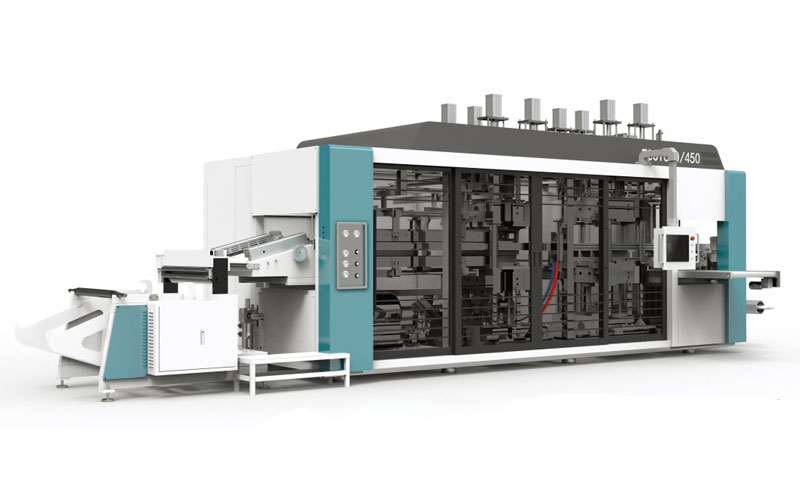
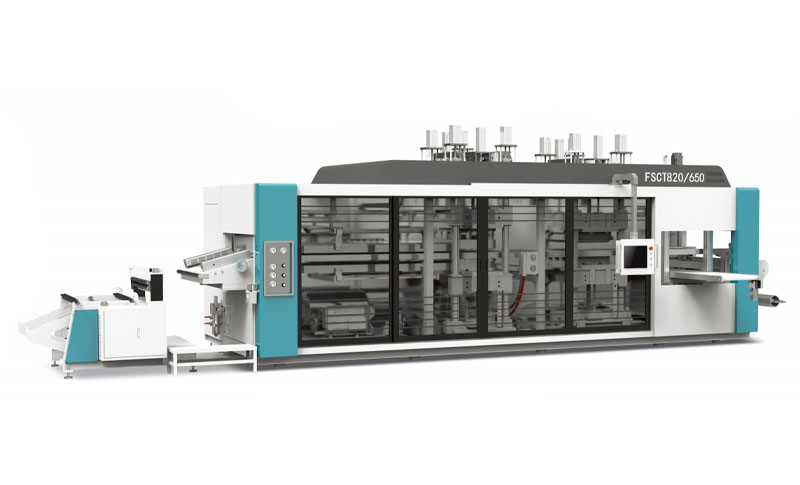
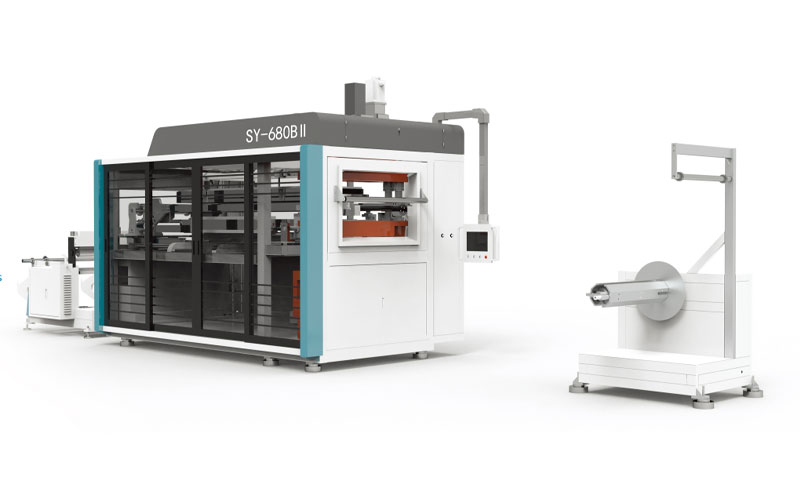
Material selection affects sheet sag and preheat uniformity. Work with your thermoforming machine provider to optimize plug assist and vacuum profiles. Many modern thermoforming machines offer adjustable parameters specifically for PP PET PLA thermoforming materials. For example, you can refer to equipment like plastic cup making machines that are designed to handle multiple material types.
What certifications should I look for when sourcing PP PET PLA thermoforming materials?
For food contact applications, check for FDA (U.S.) and EU 10/2011 compliance. For compostable claims, look for EN 13432 or ASTM D6400 certification. Also ensure that your supplier provides traceability documentation for each batch.
Conclusion
Selecting among PP PET PLA thermoforming materials requires balancing technical requirements, supplier capability, and total cost. By following the procurement checkpoints outlined—material-process compatibility, supplier validation, and TCO analysis—buyers can reduce mistakes and improve outcomes. Use the PP PET PLA thermoforming materials solution center as a resource for matching materials to specific product lines, and always request sample runs before large commitments. For further guidance on PP vs PET vs PLA thermoforming, contact your equipment and material suppliers with clear specifications to ensure a successful procurement.