English
 Pусский
 Español
 عربي
عربي

How to Choose Pressure Thermoforming Machine Manufacturers
Article Overview: Selecting the right pressure thermoforming machine manufacturer is a critical procurement decision that impacts product quality, production efficiency, and long-term operational costs. This guide provides procurement managers, sourcing teams, and project engineers with a practical framework for evaluating suppliers, preparing RFQs, and avoiding common purchase mistakes. Use this checklist to conduct thorough due diligence before committing capital.
What to Look for in Pressure Thermoforming Machine Manufacturers
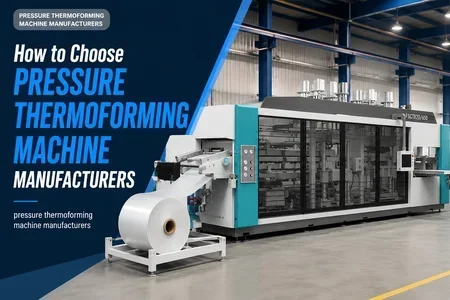
When evaluating pressure thermoforming machine manufacturers, procurement professionals should prioritize factors that directly affect production outcomes and total cost of ownership. Below are the key areas to examine:
- Machine Build Quality: Inspect frame construction, platen rigidity, and heating system uniformity. Look for manufacturers that use high-grade steel, precision-ground platens, and zone-controlled ceramic heaters.
- Process Capabilities: Verify that the machine supports your required materials (e.g., PP, PS, PET, PLA) and can achieve the draw ratios, wall thickness tolerances, and cycle times you need.
- Automation & Control: A modern PLC with touch-screen interface, recipe storage, and remote diagnostic capabilities reduces operator dependency and simplifies troubleshooting.
- Energy Efficiency: Machines with servo-driven movements and insulated heating zones consume less power per cycle, lowering operational costs.
- Compliance Certifications: Confirm that the manufacturer meets CE, UL, or other applicable safety standards to avoid regulatory delays.
Key Technical Specifications to Validate Before Purchase
A detailed technical review prevents costly mismatches between machine specifications and production requirements. For a pressure thermoforming machine, focus on these parameters:
- Forming Area and Depth: Ensure the platen size accommodates your largest product footprint and that the forming depth meets draw requirements.
- Heating Capacity: Check the number of heating zones, their power output, and the ability to adjust temperature gradients across the sheet.
- Pressure and Vacuum System: Verify the available compressed air pressure (typically 6–8 bar) and vacuum pump capacity (CFM or m³/h) to achieve consistent detail.
- Tooling Compatibility: Confirm that the machine accepts industry-standard mold mounting patterns and that tool-change time meets your production schedule.
- Throughput Rate: Request cycle-time data for your target product; be wary of unrealistic claims—ask for references with similar applications.
Step 1: Define Your Product Profile
List all products you plan to run, including material type, wall thickness, surface finish, and annual volume. This data will anchor your machine specifications and help manufacturers propose appropriate solutions.
Step 2: Cross-Reference Manufacturer Shortlists
Compare at least three pressure thermoforming machine manufacturers against your product profile. Request machine datasheets, videos, and customer testimonials. Prioritize suppliers with documented experience in your industry (food packaging, medical, etc.).
How to Evaluate Supplier Experience and Support
The manufacturer’s expertise and post-sale service often determine the success of your investment. Use these criteria to assess supplier reliability:
- Industry Track Record: How long has the manufacturer been building thermoforming machines? Do they have a dedicated R&D team?
- Client References: Ask for contact information of three clients with similar applications. Call them to discuss machine uptime, support responsiveness, and overall satisfaction.
- Installation & Training: Clarify what is included: installation supervision, operator training, and documentation. Some manufacturers offer on-site commissioning; others provide virtual support.
- Spare Parts Availability: Inquire about lead times for critical spares (e.g., heaters, valves, sensors). A manufacturer with a regional warehouse can minimize downtime.
- Warranty & Service Agreements: Review warranty terms, exclusions, and conditions. Extended service agreements may be cost-effective for high-utilization lines.
RFQ Preparation: Steps for a Successful Supplier Inquiry
An effective Request for Quotation (RFQ) ensures you receive comparable proposals from pressure thermoforming machine suppliers. Follow this structured approach:
Phase 1: Compile Technical Requirements
Provide detailed product dimensions, material specification, expected annual volume, shift pattern, and desired automation level. Attach drawings if available.
Phase 2: Request Clear Pricing Breakdown
Ask for a line-item quotation: machine base price, tooling cost, shipping, insurance, customs duties (if international), installation, and training fees. This helps you compare total landing costs.
Phase 3: Include Payment & Delivery Terms
Define your preferred payment structure (e.g., 30% deposit, 60% on shipment, 10% on acceptance) and expected delivery timeline. Clarify penalties for late delivery.
Common Procurement Mistakes and How to Avoid Them
Even experienced buyers can overlook critical factors when sourcing a pressure thermoforming machine. Here are the most frequent errors and practical countermeasures:
- Prioritizing Price Over TCO: A lower initial price may hide higher energy consumption, frequent breakdowns, or expensive tooling. Perform a total cost of ownership analysis covering 3–5 years.
- Underestimating Tooling Costs: Molds for pressure thermoforming can cost tens of thousands of dollars. Get firm quotes for tooling from the machine supplier or independent mold makers.
- Neglecting After-Sales Support: A manufacturer with a local service network is preferable to one that requires sending technicians from overseas. Verify response-time guarantees.
- Skipping Factory Acceptance Test (FAT): Whenever possible, visit the manufacturer’s facility or arrange a remote FAT to verify machine performance with your material before shipment.
- Overlooking Scalability: Choose a machine platform that can accommodate future product variations or higher volumes. Modular designs often allow retrofitting additional stations or automation.
FAQ
How do I identify reputable pressure thermoforming machine manufacturers?
Start by checking industry trade show attendance (e.g., K Show, NPE), read customer reviews on platforms like ThomasNet or Kompass, and request recent machine references. Look for manufacturers that publish detailed technical documentation and case studies.
What is the typical lead time for a pressure thermoforming machine?
Lead times vary from 8 to 20 weeks depending on customization level and factory workload. Standard machines with limited options ship faster. Always confirm lead time in writing and include it in the purchase contract.
Can I run multiple products on the same pressure thermoforming machine?
Yes, most modern machines accept interchangeable molds. However, mold changeover time and setup repeatability differ between manufacturers. Ask about quick-change systems and recipe storage to minimize downtime.
Conclusion: Making a Confident Purchase Decision
Choosing among pressure thermoforming machine manufacturers requires careful evaluation of technical specifications, supplier experience, and total cost factors. By following the procurement checklist outlined in this guide—defining your product needs, validating technical specs, assessing support capabilities, and structuring a comprehensive RFQ—you reduce the risk of costly mistakes. Start your search with a short list of manufacturers that have a proven track record in your application, and always conduct a factory acceptance test or virtual machine demonstration before final commitment. For buyers focused on cup, tray, or lid production, a pressure thermoforming machine solution from a specialized manufacturer can deliver the consistency and throughput needed to stay competitive.