English
 Pусский
 Español
 عربي
عربي

How to Choose a Plastic Cup Thermoforming Machine
Article Overview: This guide helps procurement managers and project engineers prepare for supplier evaluation and RFQ when investing in a plastic cup thermoforming machine. It covers key selection criteria, configuration impact, total cost of ownership, and practical checkpoints to reduce procurement risk.
What Should You Look for in a Plastic Cup Thermoforming Machine Supplier?
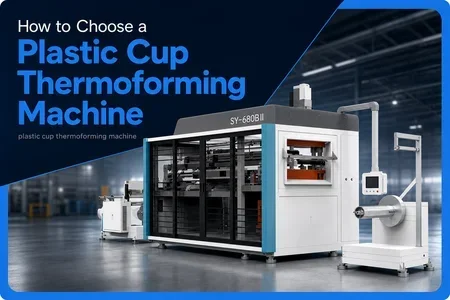
Selecting the right supplier for a plastic cup thermoforming machine is a critical decision that affects production efficiency, product quality, and long-term operational costs. Beyond the machine specifications, you need to assess the supplier's manufacturing capability, customer support, and market reputation.
Key Evaluation Criteria
- Production Speed & Efficiency: Evaluate cycle time and output per hour for your target cup size and material (PP, PET, PS). Ensure the machine can meet your volume requirements.
- Material Versatility: The machine should handle multiple plastic sheets with consistent heating and forming quality. Check if quick changeover is supported.
- Mold Compatibility: Verify that the supplier offers molds tailored to your cup designs or can customize them. Interchangeable mold systems reduce downtime.
- Energy Consumption: Modern servo-driven systems can lower electricity costs. Request energy consumption data per thousand cups.
- After-Sales Support: Ask about warranty, spare parts availability, and technical response times. A local service network is a plus.
Step 1: Shortlist Suppliers
Gather at least three candidates with proven track records in plastic cup thermoforming. Review their product pages, case studies, and client testimonials. For example, a supplier like Plastic Cup Making Machine specialists often provide detailed technical datasheets.
Step 2: Request Machine Demonstrations
Arrange virtual or on-site demos to see the plastic cup thermoforming machine in operation. Pay attention to heating uniformity, indexing accuracy, and scrap rate. Ask for sample production runs using your materials.
Step 3: Verify Certifications and Compliance
Check CE, UL, or equivalent safety standards. Also confirm that the machine meets local regulatory requirements for food-contact packaging if applicable.
How Does Machine Configuration Affect Cup Quality and Output?
The configuration of a plastic cup thermoforming machine directly influences the consistency and appearance of the final product. Key subsystems include the heating section, forming station, stacking unit, and control system. Understanding these helps you specify the right machine for your production line.
Comparison: Single-Station vs. Multi-Station Thermoforming
Option A: Single-Station Machine – Lower initial investment, simpler operation, ideal for small to medium runs. However, output is limited as forming, cooling, and stacking occur sequentially.
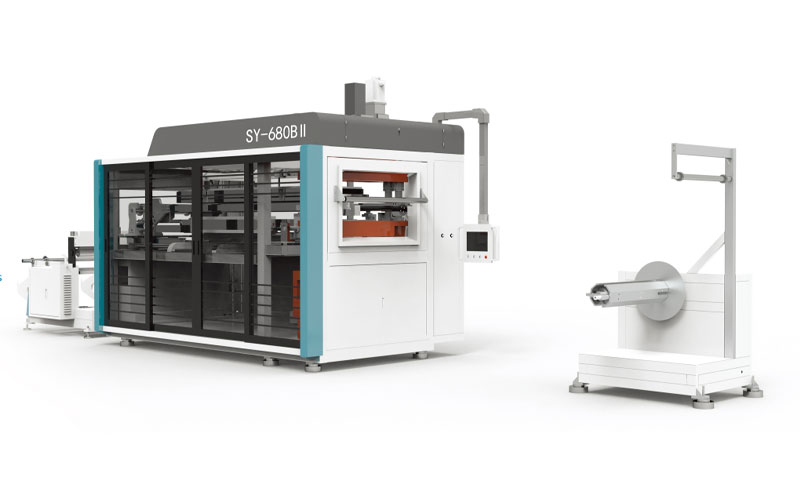
Option B: Multi-Station Machine – Higher throughput and efficiency as multiple stations work in parallel. Better suited for high-volume production of standard cup sizes. The plastic cup thermoforming machine in the SY-680B series is an example of a multi-station design that offers robust performance.
Buyer note: Evaluate your projected volume and budget. Multi-station machines have higher upfront cost but lower per-unit cost at scale.
Validation Checklist Before Purchase
- Heating System: Check for even heat distribution. Infrared ceramic heaters are common; ensure they have individual zone control.
- Forming Pressure & Tooling: Confirm that the machine can deliver sufficient forming pressure for your cup depth and material thickness.
- Stacking Mechanism: Automated stacking reduces labor. Test the stacker for accuracy to avoid jams.
- Servo vs. Pneumatic Drives: Servo systems offer better precision and energy efficiency. Verify the supplier's standard configuration.
- Touchscreen Control: Intuitive interface with recipe storage eases operation and changeovers.
Phase: Production Trial Run
Before final acceptance, run a full production trial with your target material and mold. Measure cup weight, wall thickness consistency, and rim finish. Use the results to validate machine performance against supplier claims.
Key Procurement Checkpoints Before Issuing an RFQ
A well-prepared RFQ saves time and ensures you receive comparable bids. Include specific technical requirements, delivery terms, and service expectations. Below are critical checkpoints to incorporate.
- Detailed Technical Specifications: Include forming area, max draw depth, material width range, heater power, and output rate. Attach your cup drawing if possible.
- Mold and Tooling Details: Specify whether you need a complete mold set or if you have existing tooling. Ask about compatibility.
- Installation and Commissioning: Clarify who handles installation, training, and initial setup. Define timeline.
- Payment and Warranty Terms: Typical terms: 30% deposit, 70% before shipment or after installation. Warranty period usually 12-24 months.
- Spare Parts and Consumables: Request a list of recommended spare parts and their costs. Check availability.
- Compliance and Documentation: Ask for CE declaration, electrical diagrams, and operation manuals in English.
Step 1: Define Your Production Needs
Calculate required daily output (e.g., 200,000 cups/day), cup size, and likely materials. This sets the baseline for machine capacity.
Step 2: Prepare the RFQ Document
Use the checklist above to create a structured request. Send to shortlisted suppliers and ask for a proposal including delivery time, price, and after-sales terms.
Understanding Total Cost of Ownership and After-Sales Support
The purchase price of a plastic cup thermoforming machine is only part of the total investment. Consider maintenance, energy, consumables, and downtime costs. Also evaluate the supplier's ability to support you after the sale.
- Maintenance Schedule: Regular lubrication, heater element replacement, and alignment checks. Ask about recommended intervals and parts lifespan.
- Spare Parts Lead Time: Where is the supplier located? Having a local warehouse or fast shipping reduces downtime.
- Technical Support: Is remote diagnostics available? What is the average response time for on-site service?
- Upgrade Path: Can the machine be upgraded with new controls or options later? Future-proofing is valuable.
- Training: Comprehensive training for operators and maintenance staff prevents costly mistakes.
FAQ
What is a plastic cup thermoforming machine?
A plastic cup thermoforming machine is an industrial equipment that heats plastic sheet (such as PP, PET, or PS) and forms it into cup shapes using vacuum and/or pressure. The process includes heating, forming, cooling, and stacking.
What factors affect the speed of a plastic cup thermoforming machine?
Speed is influenced by material type (PP requires longer heat cycles than PS), cup depth, wall thickness, and machine design (single-station vs. multi-station). Multi-station machines offer higher output.
How do I choose between a pneumatic and servo-driven machine?
Servo-driven machines provide more precise control and energy savings, making them better for high-quality, high-volume production. Pneumatic machines are simpler and cheaper but less efficient.
What maintenance is required for a thermoforming machine?
Routine maintenance includes cleaning heater elements, checking vacuum pumps, lubricating moving parts, and inspecting electrical connections. Always follow the manufacturer's schedule.
Conclusion
Purchasing a plastic cup thermoforming machine is a significant investment that demands careful supplier evaluation and thorough preparation. By following the checkpoints in this guide—from evaluating supplier criteria to preparing a detailed RFQ—you can minimize risk and choose a machine that meets your production goals. Start your supplier research by exploring trusted manufacturers like those featured on plastic cup thermoforming machine product pages, and always request a hands-on demonstration before committing.