English
 Pусский
 Español
 عربي
عربي

Evaluate Thermoforming Machine Manufacturers in China
Article Overview: This guide is designed for procurement managers, sourcing teams, and project engineers preparing to evaluate thermoforming machine manufacturers in China. It outlines a practical checklist for supplier validation, RFQ preparation, and risk reduction to help you make a confident purchase decision.
What Should You Validate Before Engaging a Supplier?
Before submitting an RFQ, you need a clear picture of what makes a supplier reliable. The following checkpoints help you separate qualified thermoforming machine manufacturers in China from less experienced vendors.
Step 1: Confirm Production Capabilities
Request documentation of the supplier’s factory floor, machine model range, and annual output. Ask for a list of reference clients and their project timelines. Verify that they produce complete thermoforming lines, not just individual components.
Step 2: Inspect Certifications and Quality Control
Legitimate thermoforming machine manufacturers in China hold ISO 9001 certification and may have CE or UL marks for export markets. Request sample inspection reports and test run videos for similar machines. This step reduces the risk of receiving substandard equipment.
Beyond basic compliance, also check after-sales service policies and spare parts availability. Use this quick checklist when contacting prospective suppliers:
- Factory audit report (third-party or virtual tour)
- List of export destinations with customs clearance history
- Technical drawings and electrical schematics
- Warranty terms and response time for service calls
- Lead time for common spare parts (e.g., heaters, molds)
How to Structure Your RFQ for Better Responses?
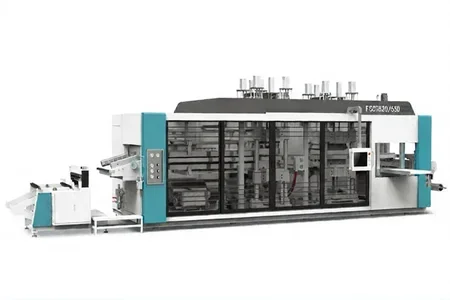
A well-structured RFQ helps thermoforming machine manufacturers in China provide accurate, comparable quotes. Include the following elements in your request:
- Machine specifications: forming area, draw depth, cycle time, material type (PP, PS, PLA, etc.)
- Production requirements: parts per minute, mold cavities, runtime hours
- Utilities and footprint: power supply, compressed air, floor space
- Additional services: installation supervision, operator training, mold design
- Payment terms and delivery timeline
Then, use a structured evaluation flow to compare bids:
Phase: Bid Comparison
Create a weighted scorecard covering price, technical compliance, delivery schedule, and after-sales support. Invite the top two or three shortlisted suppliers for a technical discussion. A video call or factory visit can reveal operational depth that paper responses miss.
Phase: Reference Checks
Contact at least three past buyers of similar equipment from the manufacturer. Ask about machine uptime, ease of maintenance, and supplier responsiveness. This step often uncovers hidden costs or reliability issues not mentioned in the RFQ.
Key Procurement Checkpoints for Thermoforming Machines
When finalizing your choice among thermoforming machine manufacturers in China, pay attention to these critical areas:
- Electrical and safety standards: Confirm that the machine meets local voltage and safety regulations. Ask for a compliance statement for your target market.
- Mold compatibility: Ensure the forming station can accommodate your existing molds or that the supplier offers mold design services. Many thermoforming machine manufacturers in China solution providers include mold matching in their package.
- Automation level: Decide between basic semi-automatic lines and fully integrated systems with stacking and packing. Higher automation reduces labor costs but increases initial investment.
- Energy consumption: Request actual kWh per cycle data. Energy-efficient machines lower total cost of ownership significantly over a 5-year period.
Why Location and Logistics Matter in China Sourcing
Manufacturing hubs like Zhejiang and Jiangsu provinces are home to many thermoforming machine manufacturers in China. Proximity to ports reduces inland freight costs and simplifies container loading. Ask your supplier about their nearest export port and average shipping time to your country. Also verify that the machine packaging meets international shipping standards to prevent damage during transit. A supplier with export experience can handle documentation for customs clearance more efficiently.
FAQ
What are the typical lead times for thermoforming machines from China?
Lead times range from 30 to 90 days depending on machine complexity, customization level, and current order backlog. Confirm the schedule in the contract and include penalty clauses for delays.
Can I get custom machine designs from Chinese manufacturers?
Yes, many thermoforming machine manufacturers in China offer custom designs. Provide your production requirements, mold dimensions, and material preferences. Most suppliers charge a design fee that can be credited toward the final order.
How do I ensure spare parts availability after purchase?
Request a spare parts list and recommend an initial stock of consumables. Confirm that the supplier stocks components for at least five years. Some manufacturers partner with local distributors for faster parts delivery.
What payment terms are standard with Chinese thermoforming machine makers?
Common terms are 30% deposit with the order, 60% before shipment, and 10% after acceptance. Use a letter of credit or escrow service for larger transactions to mitigate risk.
Conclusion
Evaluating thermoforming machine manufacturers in China requires a structured approach that includes factory validation, clear RFQ guidelines, and careful comparison of bids. By following the procurement checkpoints outlined in this article, you can reduce the risk of costly mistakes and select a supplier that aligns with your production goals. For a complete turnkey line including molds and auxiliary equipment, consider reviewing the comprehensive plastic cup making machine solutions offered by experienced Chinese manufacturers. Start your evaluation with these steps and move closer to a reliable, cost-effective investment.