English
 Pусский
 Español
 عربي
عربي

Plastic Cup Making Machine Buying Guide
Article Overview: This guide explains the fundamentals of a Plastic Cup Making Machine and how it fits into a production line. It covers the thermoforming process, key selection criteria for matching the machine to your output goals, total cost of ownership analysis, and quality metrics that affect long-term performance. The information is intended for technical buyers and engineers conducting early-stage research into Food & Beverage Packaging solutions.
What Is a Plastic Cup Making Machine - Sayeah Machinery?
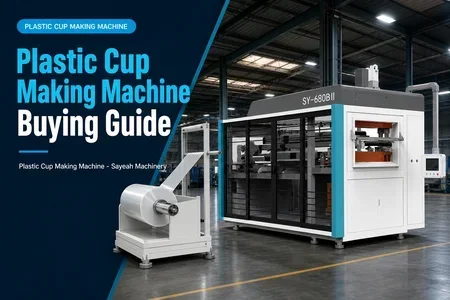
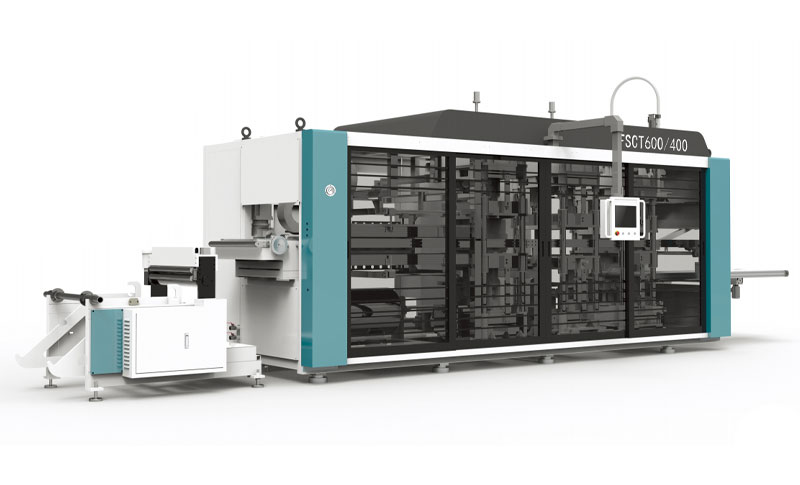
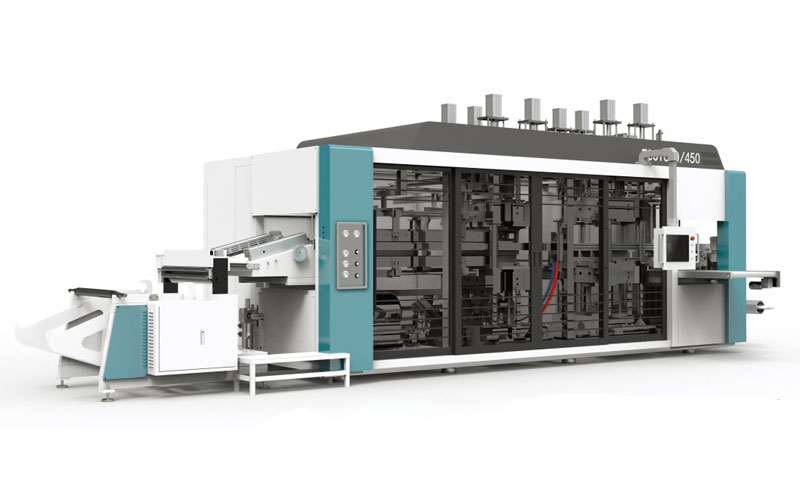
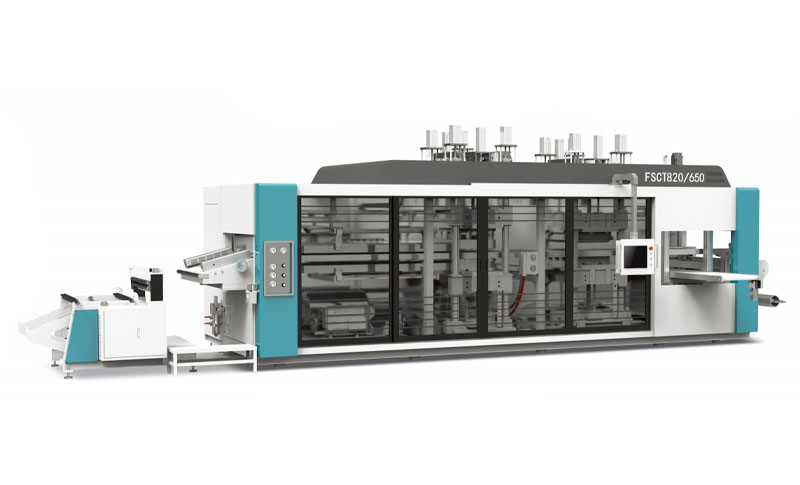
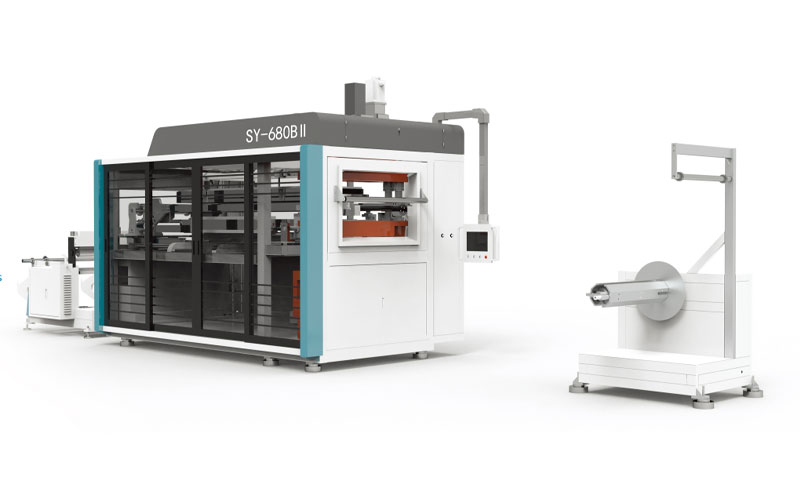
A Plastic Cup Making Machine - Sayeah Machinery is a roll-fed thermoforming system designed to convert plastic sheet into cups, containers, lids, and similar packaging. The process is continuous: plastic sheet unwinds from a roll, passes through heating zones, is formed into cup cavities using vacuum or compressed air, then trimmed and stacked. Typical output ranges from 2,000 to 6,000 cups per hour, depending on cup size and material. Common thermoplastics include polypropylene (PP), polystyrene (PS), PET, and PLA for compostable applications.
Step 1: Sheet Feeding and Preheating
The plastic sheet is drawn from the roll by pinch rollers and fed into a preheating tunnel. Infrared heaters or contact plates raise the sheet temperature to a forming range of 120–180°C, depending on polymer. Precise temperature control prevents degradation and ensures uniform material softness.
Step 2: Thermoforming and Trimming
The heated sheet advances into the forming station where it is clamped over molds. Vacuum draws the material into the mold cavity, and in some machines pressurized air assists. After forming, the cups are trimmed from the web by a punch press. Cycle times are measured in cycles per minute (CPM), typically 20–40 CPM for standard cup geometries.
Step 3: Stacking and Collection
Trimmed cups are transferred to a stacking station, where they are counted and collated into stacks for packaging. Advanced machines incorporate sensors to reject malformed cups and maintain quality control. The scrap web is rewound or granulated for recycling.
How Do You Match a Plastic Cup Making Machine - Sayeah Machinery to Your Production Needs?
Selecting the right machine requires aligning its specifications with your production volume, cup design, material preference, and facility constraints. Consider the following parameters:
- Material Compatibility: Confirm the machine can process your target polymer. PP and PS are common; PET requires higher forming temperatures and careful handling; PLA needs lower temperatures and often a dedicated heating profile.
- Cup Dimensions and Mold Complexity: Mold width and depth limit maximum cup size. Multi-station machines allow different cup heights and diameters, but each mold set is a separate investment. Tapered cups or undercuts may require servo-driven forming actuators.
- Production Volume: Estimate daily or monthly output. High-volume lines (over 3 million cups/month) benefit from continuous roll-fed machines with inline trimming and stacking. Lower volumes may be served by semi-automatic or single-station machines.
- Auxiliary Equipment Integration: Plan how the cup making machine will connect to downstream equipment such as printing, rim curling, lid sealing, or packaging. Some suppliers offer integrated solutions including online cutting stackers and six-color printers. Ensure compatibility with existing systems or choose a supplier that provides turnkey lines.
- Changeover Speed and Flexibility: If you produce multiple cup sizes, look for machines with quick-change mold systems and preset temperature profiles. Changeover times range from 30 minutes to several hours depending on automation.
It is advisable to request a sample run using your actual material and cup design. Many manufacturers provide test runs to verify performance and output quality before purchase.
Why Is Total Cost of Ownership a Critical Milestone?
The purchase price of a Plastic Cup Making Machine - Sayeah Machinery is only one component of the financial equation. Total cost of ownership (TCO) encompasses energy, maintenance, tooling, labor, and auxiliary equipment over the machine’s life. Understanding TCO prevents budget overruns and ensures realistic return-on-investment calculations.
- Energy Consumption: Calculate annual electricity cost as (rated kW × operating hours × utility rate). A machine with servo-driven heaters and efficient insulation can reduce energy use by 15–30% compared to older designs.
- Maintenance and Replacement Parts: Budget for heating element replacement every 6–12 months, trim die sharpening, and routine lubrication. Machines with fewer moving parts and sealed bearings lower maintenance costs.
- Tooling Investment: Mold sets can vary from $2,000 to $15,000 per cavity depending on material and complexity. Factor in the number of molds needed for your product mix and expected life of each mold (typically 1–3 million cycles).
- Labor and Automation: Highly automated machines reduce operator labor but increase initial cost. Consider whether a semi-automatic setup with two operators is more cost-effective than a fully automatic line with one operator.
- Auxiliary Equipment: Plastic sheet extruder systems, punch presses, and packaging lines can cost 50–100% of the cup making machine. Purchasing from a single supplier can simplify integration and service.
For high-volume production exceeding 3 million cups per month, a high-speed servo-driven machine often yields lower TCO within 18 months, despite a higher initial price.
What Are the Key Quality Indicators for a Plastic Cup Making Machine?
Quality output is essential for customer satisfaction and regulatory compliance. When evaluating a Plastic Cup Making Machine - Sayeah Machinery, monitor these metrics during trials or through supplier data:
- Wall Thickness Uniformity: Variations should be less than ±0.05 mm to ensure consistent stacking and sealing. Uneven walls lead to leaks or structural weakness.
- Rim Quality and Roundness: Cups must have smooth, burr-free rims for lid sealing. Check for ovality—maximum deviation of 0.2 mm for standard lids.
- Scrap Rate: Typical scrap rates for well-maintained machines are 2–5% including startup waste. Higher scrap rates indicate heating or alignment issues.
- Cycle Repeatability: Cycle time should vary less than 0.1 second per cycle. Inconsistent cycles cause stacking errors and reduced throughput.
- Material Compatibility Checks: Some machines can run multiple materials, but cross-contamination or temperature drift may occur. Verify that the heating system can switch profiles quickly without affecting quality.
Request documentation of quality control procedures, such as in-line vision systems or thickness gauges. These features reduce waste and improve consistency.
Frequently Asked Questions
What materials can a Plastic Cup Making Machine process?
These machines typically handle PP, PS, PET, and PLA. Each material requires specific heating profiles and mold coatings. Always verify with the manufacturer that your chosen polymer is compatible, especially for biodegradable resins like PLA.
How long does a mold change take?
On multi-station machines, a complete mold change including heating profile adjustment and trim tool replacement takes 30–60 minutes with a trained operator. Quick-change systems can reduce this to under 20 minutes.
What is the typical machine lifespan?
With regular maintenance, a Plastic Cup Making Machine that is well-constructed will last 10–15 years. Key wear items include heating elements, trim dies, and chain drives. A preventive maintenance plan can extend operational life beyond 15 years.
Can one machine produce different cup sizes?
Yes, if the machine features adjustable station spacing or a multi-station design. However, cup diameter and depth are limited by the mold dimensions. You will need additional mold sets for each size, and changeover time increases with the number of stations.
What auxiliary equipment is commonly needed?
Typical auxiliary equipment includes a plastic sheet extruder, rim curler, printer or labeling machine, leak tester, and packaging system. Some suppliers offer integrated lines that connect all components for streamlined operation.
How often should molds be replaced?
Mold lifetime depends on material abrasiveness and maintenance. For PP and PS, molds can last 1–3 million cycles before needing reconditioning. For abrasive materials like PET, replacement may be needed sooner. Regular cleaning and proper storage extend mold life.
Conclusion
Selecting a Plastic Cup Making Machine involves understanding the thermoforming process, aligning machine specifications with production requirements, calculating total cost of ownership, and verifying quality indicators. By systematically evaluating these aspects, buyers can make informed decisions that meet operational goals and budget constraints. For further technical details, consult product datasheets or speak directly with equipment suppliers.