English
 Pусский
 Español
 عربي
عربي

Blister Thermoforming Machine: How to Choose the Right One
Article Overview: This article provides a neutral, criteria-based framework for comparing blister thermoforming machines. It covers key specifications, application fit, and decision trade-offs to help procurement teams, technical architects, and evaluation committees make an informed investment.
What Is a Blister Thermoforming Machine and How Does It Work?
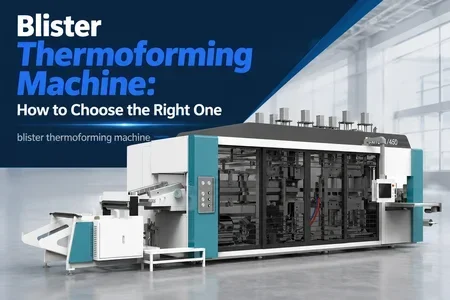
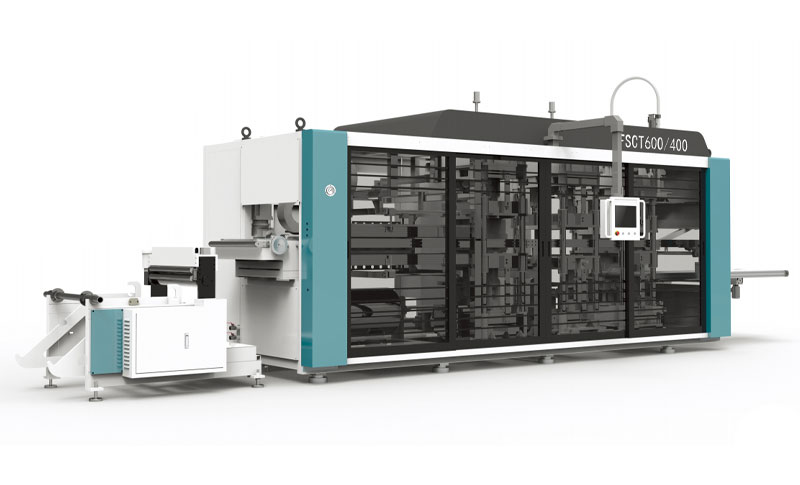
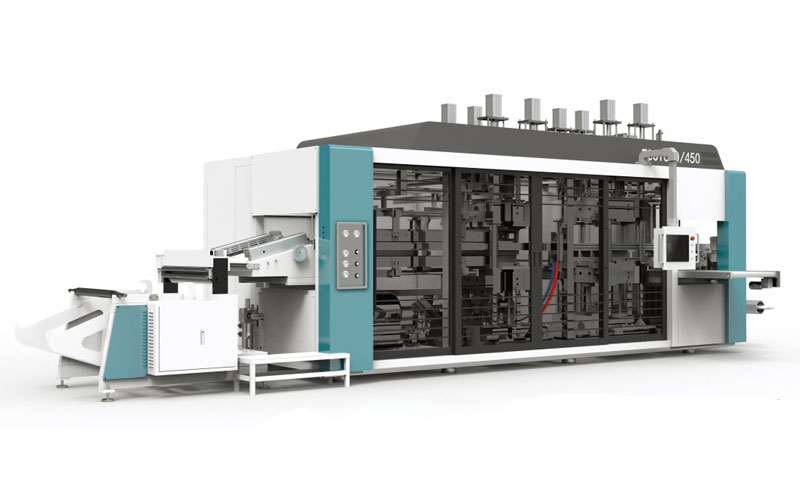
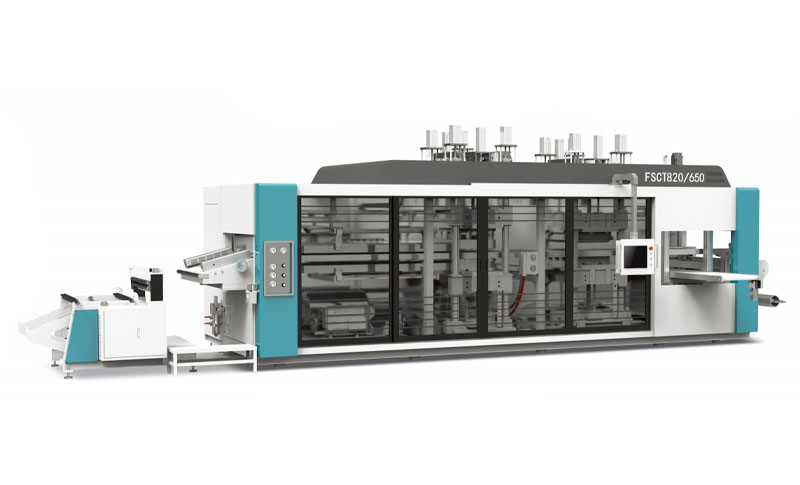
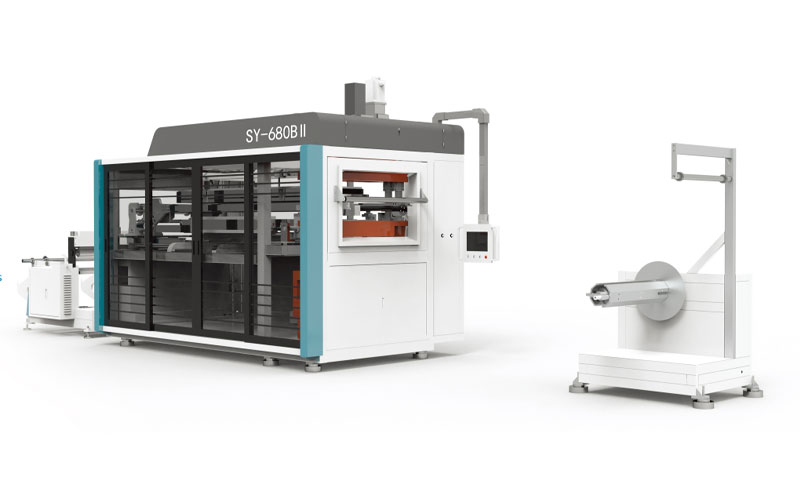
A blister thermoforming machine is a specialized thermoforming system that converts plastic sheet stock into blister packaging—rigid cavities sealed with a backing material. The process typically involves heating a plastic sheet until pliable, forming it over a mold using vacuum or pressure, cooling, and then cutting individual blisters. These machines are widely used in pharmaceutical, consumer goods, electronics, and food packaging.
While the basic principle is consistent, blister thermoforming machines differ significantly in architecture—inline vs. intermittent motion, forming area, mold type, and downstream automation. Understanding these differences is the first step in a structured comparison.
Key Specifications to Compare When Selecting a Blister Thermoforming Machine
When evaluating models from different suppliers, focus on these four specification categories that directly affect output quality and operational cost.
| Criterion | Entry-Level / Economy | Mid-Range / Precision |
|---|---|---|
| Max. forming area | ~500×350 mm | ~700×500 mm or larger |
| Max. forming depth | Up to 80 mm | Up to 120 mm |
| Cycle speed (cycles/min) | 15–25 | 25–45 |
| Material thickness range | 0.2–0.8 mm | 0.15–1.2 mm |
| Cutting method | In-die punching or manual | Cut-in-place / servo-driven |
| Material handling | Manual unwind / low-level automation | Automatic unwind, stacking, scrap winder |
These figures are representative ranges; always validate against the manufacturer’s datasheet for your specific configuration. The trade-off between speed and forming depth is especially important: deeper draws often require slower cycles to avoid thinning or tearing.
Decision checkpoint: forming area vs. cavity count
Option A: A machine with smaller forming area but higher cycles. This suits high-volume production of small blisters (e.g., pharmaceutical blister packs for tablets).
Option B: A larger forming area machine at moderate cycle speeds. Ideal for medium-volume runs of large blisters (e.g., tool inserts, electronics trays).
Buyer note: Map your blister layout to the forming area. A 10% increase in cavity count per cycle can offset a 5% cycle speed reduction—calculate your net throughput before deciding.
How Do Forming Area and Depth Affect Your Blister Production?
Forming area and depth are the most critical dimensional constraints. A machine with too small a forming area forces multi-cavity compromises or limits the product size you can manufacture. Similarly, insufficient forming depth restricts blister internal height.
Forming depth: deep-draw vs. shallow-draw
Option A – Shallow-draw blister (up to 60 mm): Faster cycle times, less material thinning, suitable for thin-profile products such as SD cards, medical strips, or single-dose packs.
Option B – Deep-draw blister (60–120 mm): Requires more heating zone control and slower forming to avoid material stress. Used for bottles, vials, or products with vertical edges.
Buyer note: If your product mix shifts between shallow and deep draws, look for a machine with adjustable heating zones and variable forming pressure. Otherwise you may need two specialized machines.
When comparing models, request a draw-ratio test with your actual production mold. Most reputable suppliers will provide a sample run. If they cannot, treat it as a risk signal.
What Should You Prioritize: Speed, Precision, or Flexibility?
No single blister thermoforming machine can maximize all three dimensions—cost trade-offs are inevitable. Define your primary driver first.
Speed-first approach
Option A – High-cycling intermittent machine: Uses servo-driven platens and quick mold-change systems. Typical in packaging factories with long runs of a single blister format. Automation for stacking and scrap handling is essential to keep up with throughput.
Option B – Rotary or inline continuous machine: Even higher speeds but limited forming depth and less flexibility in mold shape. Often chosen for standard blisters in high volumes.
Buyer note: High-speed machines require more preventive maintenance and operator training. Factor in the total cost of ownership beyond the purchase price.
Precision-first approach
Option A – Cut-in-place with servo registration: Ensures consistent wall thickness and accurate cut lines. Vital for blisters that must seal to a high tolerance (e.g., pharmaceutical blister packs with low oxygen permeability).
Option B – Inline vision inspection: Not a machine feature per se but a supplementary module. If your product requires 100% blister integrity inspection, budget for integrated inspection and rejection systems.
Buyer note: Precision machines often command a 20–30% price premium. Validate whether your market actually requires that level of control; many food blisters, for instance, do not.
Flexibility-first approach
Option A – Quick-change mold system: Reduces changeover time from hours to minutes. Allows a single blister thermoforming machine to run multiple SKUs per shift—ideal for contract packagers.
Option B – Modular heating and forming stations: Some machines allow you to swap between vacuum forming and pressure forming, or adjust the number of heating zones. This increases flexibility at the expense of initial complexity.
Buyer note: Flexibility often comes with higher training costs and a larger spare parts inventory. Assess your changeover frequency: if you run fewer than three SKUs per week, a dedicated machine may be more economical.
Matching the Machine to Your Blister Application
Now that you have identified the key trade-offs, you can structure your evaluation into concrete steps. Use the following workflow to narrow your options.
Step 1: Define your primary blister dimensions
Measure the length, width, and depth of your largest blister. Add at least 10mm clearance per row for web handling. This determines the minimum forming area required. If you produce multiple blister formats, decide which one drives the machine spec—often the largest cavity dictates the forming area.
Step 2: Estimate annual volume and run size
High annual volume (>5 million units) favors a high-speed intermittent or rotary machine. Low-to-medium volume (<2 million units) with frequent changeovers makes flexibility and quick changeover more valuable. Compute the required cycles per minute: volume / (shifts × hours × target OEE). Then add a 15–20% buffer for growth.
Step 3: Evaluate material compatibility
List the plastic sheet types you will process (PVC, PET, PP, PS, HIPS, etc.). Each material has different heating requirements. Polypropylene, for instance, requires precise temperature control to avoid sticking. Ask the manufacturer for documented compatibility; if they only provide generic claims, request a material supplier reference.
Step 4: Check downstream automation options
Consider how blisters will be counted, stacked, and packed. Many blister thermoforming machines integrate with downstream stacking and counting systems. For high-speed lines, an automatic stacker and a scrap winder are almost mandatory. Explore solutions like those offered for blister thermoforming machine setups that include modular automation modules.
By completing these steps, you create a shortlist of machines that are technically suitable. The final selection then balances capital budget with anticipated operating costs.
FAQ
What is the difference between a blister thermoforming machine and a generic vacuum former?
A blister thermoforming machine is designed for semi-rigid blisters that typically undergo a separate sealing process. It includes precise temperature control, cut-in-place or trim-in-die capability, and often runs at higher cycles than general vacuum forming machines used for industrial trays or packaging inserts.
Can a blister thermoforming machine handle biodegradable materials?
Yes, many newer machines can process PLA, cellulose acetate, and other bioplastics. However, material suppliers should be consulted for specific temperature windows, as bioplastics often have narrower processing ranges than petroleum-based plastics.
How long does mold changeover take on a typical blister thermoforming machine?
Changeover time ranges from 15 minutes on a quick-change system to over 2 hours on manual-platen machines. For multi-SKU operations, prioritize machines with tool-less locking systems and servo-driven platens.
What maintenance is required for a blister thermoforming machine?
Daily cleaning of heating elements, regular lubrication of guide rails, and periodic replacement of heating rods and seals. Servo-driven machines require less frequent mechanical adjustments than pneumatic systems.
Should I choose a machine with cut-in-place or in-die punching?
Cut-in-place reduces blister distortion and yields cleaner edges, but is slower. In-die punching is faster and works well for simple shapes. Choose based on your required edge quality and production speed. A blister thermoforming machine solution with cut-in-place is typically recommended for pharmaceutical blisters.
Conclusion
Selecting a blister thermoforming machine is a multidimensional decision that balances forming area, depth, speed, precision, flexibility, and automation. By focusing on your blister dimensions, volume profile, and material requirements, you can systematically narrow the field to two or three realistic candidates. Use the specification table and trade-off blocks in this guide as a checklist when reviewing proposals from manufacturers. Always run a sample test before committing, and remember that the lowest purchase price may not yield the lowest per-part cost when maintenance, changeover, and scrap rates are included.
Related site pages: blister thermoforming machine, Home.