English
 Pусский
 Español
 عربي
عربي

Working principle of plastic cup thermoforming machine
Introduction
Plastic cup thermoforming machines are essential in the packaging industry, producing disposable cups for beverages, desserts, and other food products. These machines transform plastic sheets into durable, lightweight, and cost-effective cups through a precise thermoforming process. Understanding their working principle helps manufacturers optimize production efficiency and product quality.
In this article, we will explore: The basic components of a plastic cup thermoforming machine,The step-by-step thermoforming process,Different types of thermoforming techniques,Key advantages and applications of thermoformed plastic cups,Future trends in thermoforming technology
1. Key Components of a Plastic Cup Thermoforming Machine
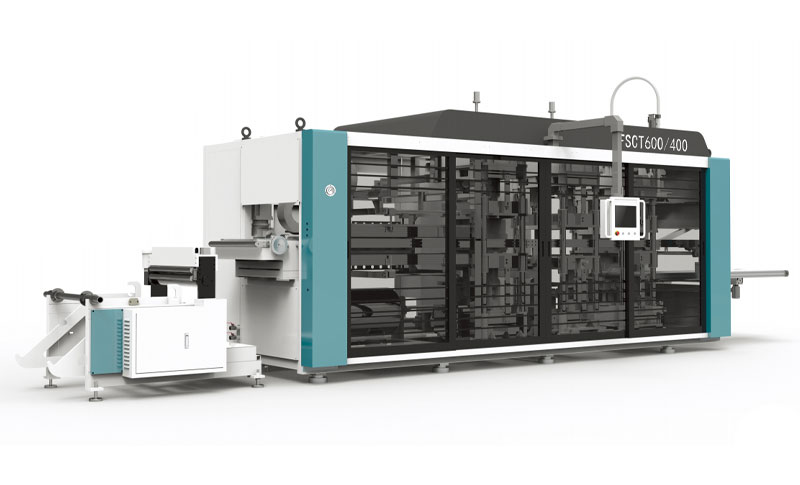
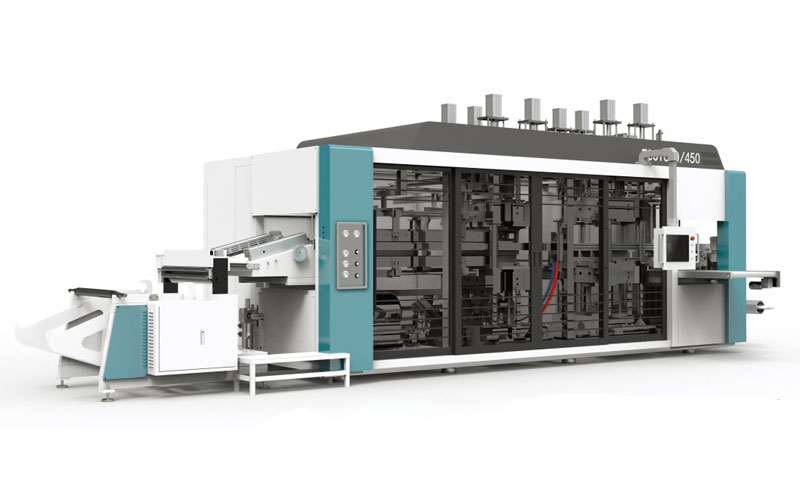
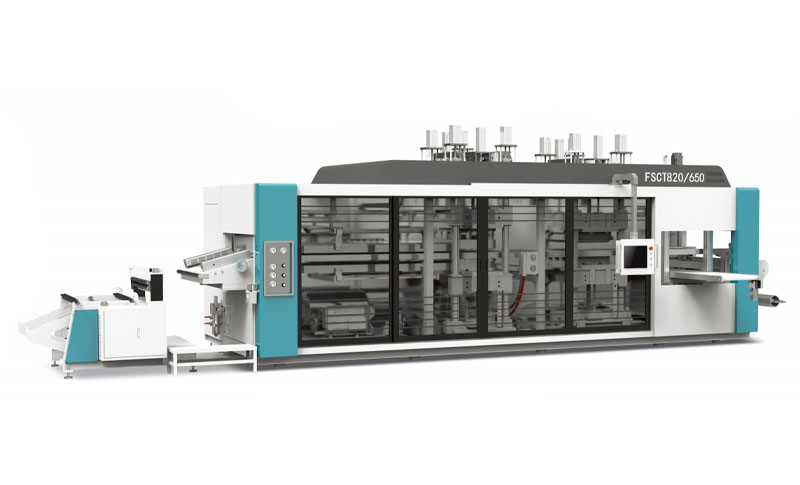
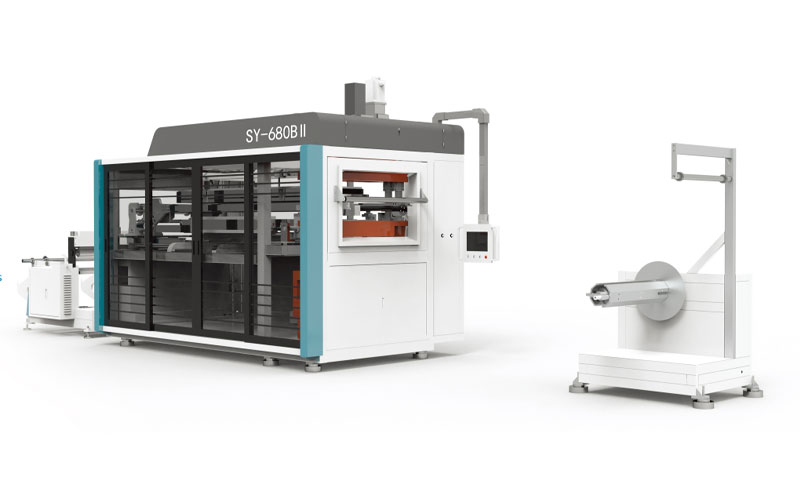
A thermoforming machine consists of several critical parts that work together to shape plastic sheets into cups:
Plastic Sheet Unwinder: Feeds the roll of thermoplastic material (e.g., PET, PP, PS) into the machine.
Heating System: Uses infrared or convection heaters to soften the plastic sheet to a pliable state.
Forming Station: Where the heated plastic is molded into cups using vacuum, pressure, or mechanical force.
Cooling System: Rapidly cools the formed cups to retain their shape.
Trimming Unit: Removes excess plastic and separates individual cups.
Stacking & Ejection System: Collects and packages finished cups for distribution.
2. The Thermoforming Process: Step by Step
The plastic cup thermoforming process involves several stages:
Step 1: Plastic Sheet Feeding
A roll of thermoplastic material (typically 0.2mm–1.5mm thick) is fed into the machine. Common materials include:
Polypropylene (PP) – Heat-resistant, ideal for hot beverages
Polystyrene (PS) – Rigid and cost-effective for cold drinks
Polyethylene Terephthalate (PET) – Clear and recyclable, used for premium cups
Step 2: Heating the Plastic Sheet
The plastic sheet passes through a heating chamber, where it reaches a temperature just below its melting point (typically 150°C–200°C). This makes the material soft and stretchable.
Step 3: Forming the Cups
The heated plastic is positioned over a mold (usually aluminum for durability). The forming method depends on the machine type:
Vacuum Thermoforming: A vacuum sucks the plastic into the mold cavity.
Pressure Thermoforming: Compressed air pushes the plastic into the mold for sharper details.
Mechanical Thermoforming: A plug assist helps shape deep-drawn cups uniformly.
Step 4: Cooling & Solidification
Cooling fans or water-cooled molds rapidly harden the plastic, locking the cup’s shape.
Step 5: Trimming & Finishing
Excess plastic (webbing) is cut away using a punching die or CNC trimming system. The finished cups are then stacked and ejected.
3. Types of Thermoforming Techniques
Different methods are used based on production needs:
| Technique | Description | Best For |
| Vacuum Forming | Uses suction to shape plastic | Simple, shallow cups |
| Pressure Forming | Applies compressed air for precision | High-detail, textured cups |
| Twin-Sheet Forming | Bonds two plastic layers | Double-walled insulated cups |
4. Advantages of Thermoformed Plastic Cups
Cost-Effective: Lower material waste compared to injection molding.
High-Speed Production: Can produce thousands of cups per hour.
Customizable: Easy to modify mold designs for different shapes/sizes.
Eco-Friendly Options: Biodegradable PLA plastic cups are gaining popularity.
5. Future Trends in Thermoforming Technology
Automation & AI: Smart sensors optimize heating and forming for consistency.
Sustainable Materials: Increased use of recycled and compostable plastics.
Energy-Efficient Machines: Reduced power consumption with advanced heating systems.
Conclusion
Plastic cup thermoforming machines are at the heart of modern disposable cup manufacturing, offering unmatched efficiency, precision, and adaptability. From vacuum forming for simple designs to pressure forming for high-detail cups, these machines cater to diverse production needs while minimizing material waste. As sustainability becomes a priority, advancements in biodegradable plastics and energy-efficient thermoforming ensure eco-friendly production without compromising quality.
For businesses seeking reliable and high-speed production, investing in a plastic cup making machine—whether for PP, PET, or PS cups—ensures consistent output and cost-effective operations. By leveraging the latest thermoforming technology, manufacturers can meet growing market demands while reducing environmental impact.