English
 Pусский
 Español
 عربي
عربي

Thermoforming Machine Technology: A Complete Guide
In the plastic packaging manufacturing industry, production success depends on more than just machine speed. It is the result of deliberate choices in mechanical design, forming processes, parameter control, and a clear understanding of industry-specific requirements. This guide provides an expert-level overview of how these four elements work together to deliver reliable, high-quality output—whether you produce plastic cups, bowls, blister packaging, or other thermoformed products.
Understanding the Mechanical Architecture of Thermoforming Machines
The mechanical foundation of a thermoforming machine determines its long-term reliability and production consistency. Three structural elements warrant particular attention.
Drive Systems and Multi-Station Configuration
The drive system controls the timing and motion of all forming stations.
-
In simple terms: A precise drive system ensures that heating, forming, trimming, and stacking happen at exactly the right moment.
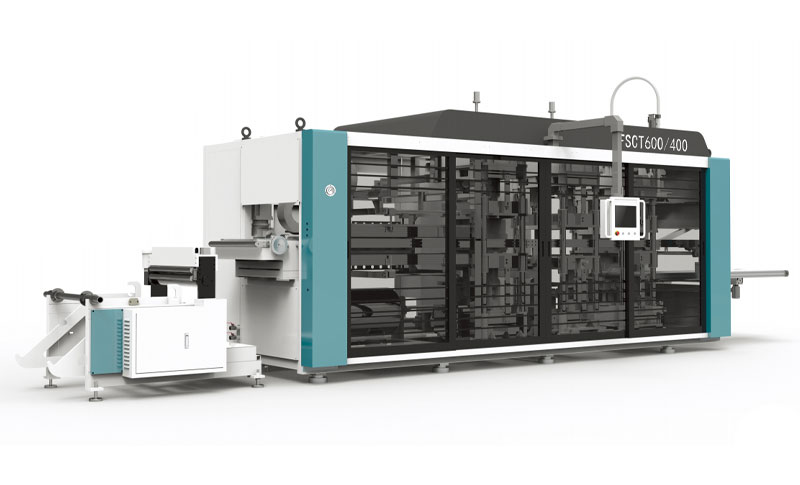
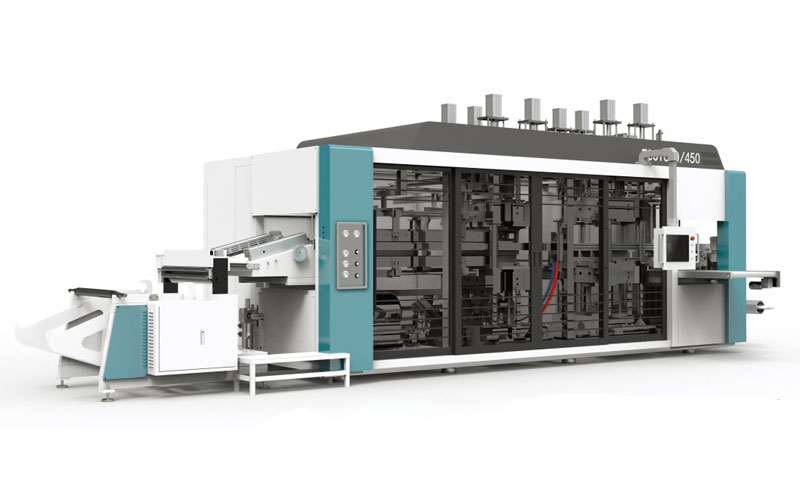
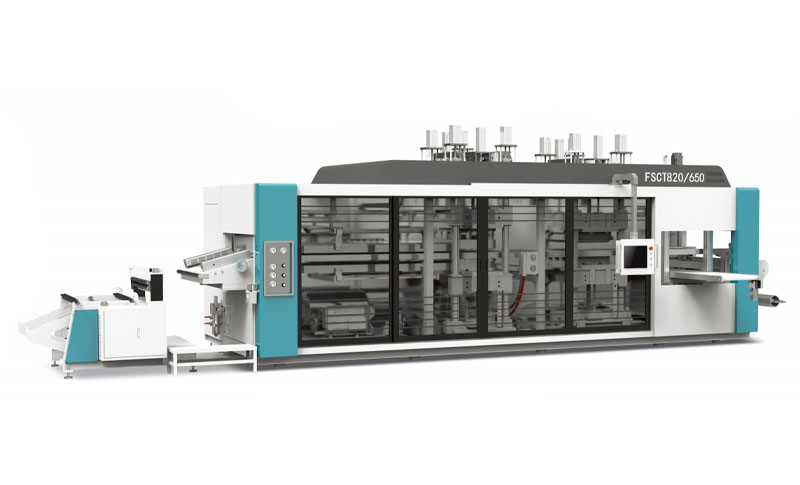
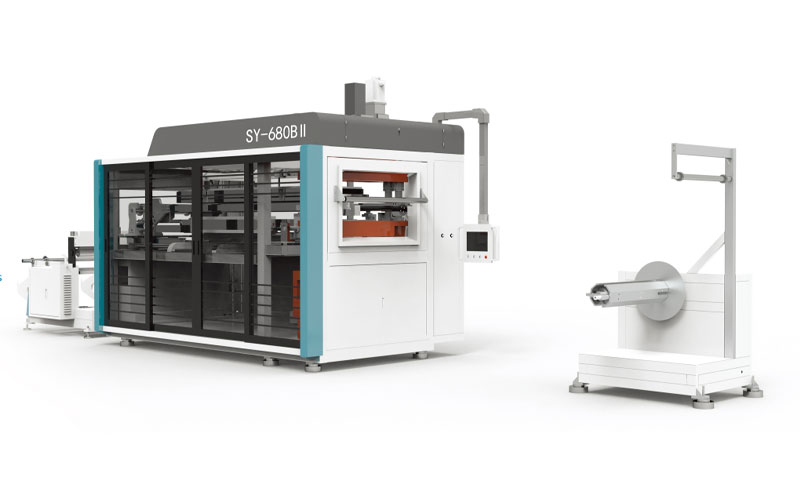
Multi-station thermoforming machines integrate multiple functions into a single production line.
-
In simple terms: Instead of moving materials between separate machines, all processes occur in one continuous flow, reducing handling time and improving consistency. SAYEAH’s multi-station machines feature quick mold change systems that reduce downtime during product changeovers.
Frame Construction – The Foundation of Precision and Stability
The machine frame supports all moving components during high-speed operation.
-
In simple terms: A rigid frame absorbs vibration, ensuring that forming stations maintain precise alignment even at maximum speed.
SAYEAH uses precision machining centers to manufacture critical components.
-
In simple terms: These advanced machine tools can hold tolerances measured in microns, ensuring that every component fits perfectly and operates smoothly. This precision is essential for maintaining consistent wall thickness across formed products.
Temperature Control Systems – The Key to Consistent Forming
Temperature control is critical for all thermoforming processes.
-
In simple terms: The plastic sheet must be heated to exactly the right temperature—too hot and the material degrades; too cold and it won’t form properly.
SAYEAH’s intelligent machines feature fast and accurate temperature control systems with a precision of 1 degree error.
-
In simple terms: This level of accuracy ensures that every part of the plastic sheet reaches the optimal forming temperature, eliminating hot spots and cold spots that can cause defects.
Core Forming Processes Across Different Machine Types
Different machine types employ distinct forming processes. Understanding these differences is essential for selecting the right equipment.
Multi-Station Thermoforming – Integrated Production
Multi-station thermoforming machines combine heating, forming, trimming, and stacking in one continuous operation.
-
In simple terms: The plastic sheet moves through multiple stations within a single machine, each performing a specific function.
Key features include:
-
Heating station: Infrared heaters warm the plastic sheet to forming temperature.
-
Forming station: Pressure and vacuum shape the heated sheet into molds.
-
Trimming station: Finished parts are cut from the sheet.
-
Stacking station: Completed products are counted and stacked automatically.
This integrated approach reduces labor requirements and ensures consistent quality across all production cycles. Learn more about how these specialized systems optimize output by exploring the advanced capabilities of the Multi-Station Thermoforming Machine.
Plastic Cup Making Machines – High-Volume Cup Production
Plastic cup making machines are specialized thermoforming systems designed specifically for cup and container production.
-
In simple terms: These machines are optimized to produce cups quickly and consistently.
Key capabilities include:
-
Fast cycle times: Producing hundreds of cups per minute.
-
Energy-efficient operation: Reducing power consumption while maintaining output.
-
Easy maintenance: User-friendly controls and accessible components.
Plastic Sheet Extruders – Raw Material Preparation
The thermoforming process begins with plastic sheet extrusion.
-
In simple terms: Plastic pellets are melted and formed into continuous sheets of the correct thickness for thermoforming.
Modern sheet extruders offer:
-
Customizable thickness and width: Tailoring sheet dimensions to specific product requirements.
-
Material versatility: Processing a wide range of plastic materials.
-
Cost-effective output: Producing high-quality sheets with minimal waste.
Auxiliary Equipment – Enhancing Production Efficiency
Auxiliary equipment supports and enhances the main thermoforming line.
-
In simple terms: These additional machines improve automation, reduce downtime, and expand production capabilities.
This includes:
-
Material handling systems: Automated feeding of plastic pellets.
-
Trim collection systems: Recycling scrap material.
-
Packaging integration: Linking forming lines with downstream packaging equipment.
Critical Parameters and Their Practical Optimization
Parameter settings translate mechanical capability into actual production results. Understanding how to optimize them separates high-performing lines from those plagued by rejects.
Temperature Control – Achieving 1-Degree Precision
Heating temperature is the most critical parameter in thermoforming.
-
In simple terms: If the plastic sheet is not heated uniformly, the formed products will have inconsistent wall thickness and may warp or fail.
SAYEAH’s temperature control systems maintain accuracy within 1 degree error.
-
In simple terms: The system monitors temperature across the entire heating area and adjusts heater output instantly to maintain uniformity. This precision is achieved through:
-
Multiple heating zones: Independent control of different areas of the sheet.
-
Closed-loop feedback: Sensors that measure actual temperature and adjust accordingly.
-
Recipe storage: Saved settings for different materials and product types.
-
Forming Pressure and Vacuum – Shaping the Product
Pressure and vacuum work together to force the heated plastic sheet into the mold cavity.
-
In simple terms: Positive pressure pushes the plastic from above while vacuum pulls it from below, ensuring the material conforms perfectly to the mold contours.
Key parameters include:
-
Forming pressure: The force applied to push the plastic into the mold.
-
Vacuum level: The suction that draws the plastic against the mold surface.
-
Timing: When pressure and vacuum are applied relative to the heating cycle.
Mold Temperature – Controlling Cooling and Solidification
After forming, the plastic must cool while maintaining its shape.
-
In simple terms: The mold temperature controls how quickly the plastic solidifies.
Mold temperature affects:
-
Cycle time: Cooler molds shorten cooling time but may not allow complete forming.
-
Product clarity: Improper cooling can cause cloudiness or haze.
-
Dimensional stability: Consistent cooling prevents warping.
Quick Mold Change – Reducing Downtime
Mold change time directly impacts production efficiency.
-
In simple terms: Faster mold changes mean less time between production runs.
SAYEAH’s quick mold change systems significantly reduce downtime.
-
In simple terms: Molds can be swapped in minutes rather than hours, allowing manufacturers to respond quickly to changing product demands.
Industry-Specific Considerations for Thermoformed Products
Different industries impose distinct requirements on product construction, material compatibility, and production standards.
Food Packaging – Cups, Bowls, and Containers
Food packaging is the largest application for thermoformed products.
-
In simple terms: Cups, bowls, and containers must be safe for food contact and maintain integrity during storage and use.
Key requirements include:
-
Food-grade materials: Using approved polymers like PP, PET, and PS.
-
Seal integrity: Ensuring lids and seals remain leak-proof.
-
Clarity: Clear containers require precise temperature control to prevent haze.
Blister Packaging – Clamshells and Medical Trays
Blister packaging is used for pharmaceuticals, medical devices, and consumer goods.
-
In simple terms: These packages consist of a formed plastic cavity sealed to a backing card or lidding material.
Key considerations include:
-
Precision forming: Tight tolerances for product fit.
-
Material compatibility: Using materials that meet regulatory requirements.
-
Seal strength: Ensuring the package remains closed until opened by the end user.
Industrial and Heavy-Duty Applications
Thermoformed products are also used in industrial applications.
-
In simple terms: These products must withstand demanding conditions.
Examples include:
-
Automotive components: Interior trim and protective covers.
-
Material handling trays: Reusable containers for manufacturing.
-
Equipment housings: Durable enclosures for machinery.
Quality Control and Smart Manufacturing
Consistent quality requires more than just good machinery—it requires rigorous quality control processes and intelligent manufacturing systems.
Precision Machining – Ensuring Component Quality
The accuracy of a thermoforming machine begins with the accuracy of its components.
-
In simple terms: If the parts that make up the machine are not manufactured to precise tolerances, the finished machine cannot produce accurate products.
SAYEAH uses precision machining centers to manufacture critical components.
-
In simple terms: These advanced machine tools ensure that molds, platens, and trimming tools maintain alignment and fit with micron-level precision.
Intelligent Operation – Recipe Storage and Automatic Adjustment
Modern thermoforming machines incorporate intelligence that simplifies operation.
-
In simple terms: The machine remembers settings for different products and can adjust itself automatically.
SAYEAH’s machines feature:
-
Recipe storage: Saving temperature, pressure, timing, and mold settings for each product.
-
Automatic adjustment: The system fine-tunes parameters based on real-time feedback.
-
User-friendly interfaces: Touchscreen controls that simplify setup and monitoring.
Comprehensive Quality Control
Quality control is integrated throughout the manufacturing process.
-
In simple terms: Every component is inspected at multiple stages to ensure final product quality.
Key QC practices include:
-
Source part inspection: Verifying quality of purchased components.
-
In-process monitoring: Checking dimensions and performance during assembly.
-
Final acceptance testing: Running machines under full production conditions before shipment.
From Knowledge to Action – Selecting the Right Machine for Your Production Goals
Understanding the technical principles behind thermoforming is only the first step. The real value lies in applying this knowledge to your specific production environment—selecting the right equipment configuration, dialing in the optimal parameters for your materials, and ensuring consistent output across every shift.
-
In simple terms: Knowing how a machine works helps you make better decisions, but the right machine partner ensures those decisions deliver results.
To explore how SAYEAH’s engineering expertise translates into reliable, high-performance thermoforming solutions, visit the Your Product page. There, you will find detailed specifications for each machine series—including multi-station thermoforming machines, plastic cup making machines, plastic sheet extruders, and auxiliary equipment—allowing you to match the right mechanical architecture to your production goals.