English
 Pусский
 Español
 عربي
عربي

Sizing Extruder for the Line: Process First, Machinery Second – A Buyer’s Comparison
Article Overview: Selecting the right extruder for a plastic cup or sheet production line is a critical decision that directly impacts product quality, throughput, and operating cost. This comparison article provides a buyer-side framework for evaluating extruder configurations—single-screw, twin-screw, and multi-layer co-extruders—based on process requirements first and machinery features second. We examine key specifications, trade-offs, and integration considerations to help technical decision-makers size an extruder that fits their line.
Understanding Extruder Types for Sheet Extrusion
Before comparing specific models, it is essential to understand the three main extruder architectures used in sheet extrusion for thermoforming:
- Single-Screw Extruder: The most common design, using one rotating screw to melt, mix, and pump the polymer. It is cost-effective, reliable, and suitable for a wide range of thermoplastics, including PP, PS, and PET. However, its mixing capability is limited, making it less ideal for blends or precise additive dispersion.
- Twin-Screw Extruder: Features two intermeshing screws that provide superior mixing, devolatilization, and temperature control. This type is preferred for compounding, color masterbatch incorporation, and processing heat-sensitive materials. It comes at a higher capital cost and requires more maintenance expertise.
- Multi-Layer Co-Extruder: A configuration of two or more extruders feeding a single die to produce a sheet with multiple layers. This enables barrier properties, recycled core layers, or decorative effects without post-extrusion lamination. The complexity increases with the number of layers, requiring precise melt flow control and die design.
Each type serves different process needs. For example, a standard drinking cup line might use a single-screw extruder, while a cup requiring a high-oxygen barrier (e.g., for dairy products) would need a multi-layer co-extrusion line with dedicated extruders for each layer. The choice begins with the product’s performance requirements, not the machine’s maximum output.
Key Specifications: Throughput, Screw Design, and Co-Extrusion Capability
When comparing extruders for a sheet line, procurement teams should evaluate the following criteria against their production targets:
- Throughput (kg/h): The extruder’s output must match the downstream thermoforming machine’s consumption. Oversizing leads to unnecessary energy use and material degradation; undersizing creates bottlenecks. For a typical Plastic Cup Making Machine line, throughputs range from 100 to 600 kg/h depending on cup size and wall thickness.
- Screw Diameter and L/D Ratio: Larger diameters increase output; higher L/D ratios improve melt homogeneity and allow higher RPM without shear degradation. A 20:1 to 30:1 L/D is standard for sheet extrusion.
- Temperature Control Zones: More zones allow finer control of the melt profile, critical for multi-layer co-extrusion where each layer may have a different melting temperature.
- Co-Extrusion Feedblock and Die: The number of extruders, feedblock design (e.g., combining adapter plate), and die geometry determine layer uniformity. Systems with adjustable layer thickness (variable vane feedblocks) offer flexibility but add cost.
For example, a multi-layer sheet extrusion line for producing yogurt cups with a recycled core might require one main extruder for the core (single-screw) and two smaller co-extruders for the skin layers. The total output must be balanced across the three extruders, often controlled by a central PLC.
Decision Framework: Matching Extruder to Product Requirements
The following step-by-step framework can guide evaluation committees through the extruder selection process:
- Define the product structure: Is it a monolayer cup, a two-layer cup (virgin + recycled core), or a three-layer cup with barrier? This defines the number of extruders needed.
- Calculate required sheet throughput: Based on cup weight, cavity count, and cycle time. Example: a 5-gram cup at 40 cavities with 20 cycles/min requires 4 kg/min or 240 kg/h. Add 5–10% margin for scrap.
- Select extruder type and size: For monolayer, a single-screw extruder with a screw diameter that delivers the required throughput at moderate RPM (60–90 RPM) is usually optimal. For multi-layer, specify each extruder’s output ratio.
- Evaluate screw design: Barrier screws provide better melt homogeneity for high-output lines; generic screws may suffice for lower speeds. For recycled content, a mixing section is recommended to disperse contaminants.
- Check die and feedblock compatibility: Ensure that the die width equals the thermoforming machine’s sheet width (often 600–1200 mm). Co-extrusion feedblocks must be compatible with the polymer viscosities.
- Assess control system integration: The extruder PLC should communicate with the thermoforming press and auxiliaries via standard protocols (Profibus, Ethernet). This reduces startup risk and enables recipe management.
- Plan for future flexibility: If the product mix may expand, consider a platform that allows adding a co-extruder later or upgrading to a twin-screw from the same supplier. Modular designs reduce lifecycle cost.
Hypothetical scenario: A producer currently making 8-oz PS cups with a single extruder wants to introduce a recycled core layer for cost reduction. The decision framework would recommend a two-extruder co-extrusion line: a small 45mm extruder for the virgin skin, and a larger 75mm extruder for the recycled core. The capital cost increase is justified if the recycled content reduces material cost by 15% or more.
Integrating the Extruder with the Thermoforming Line
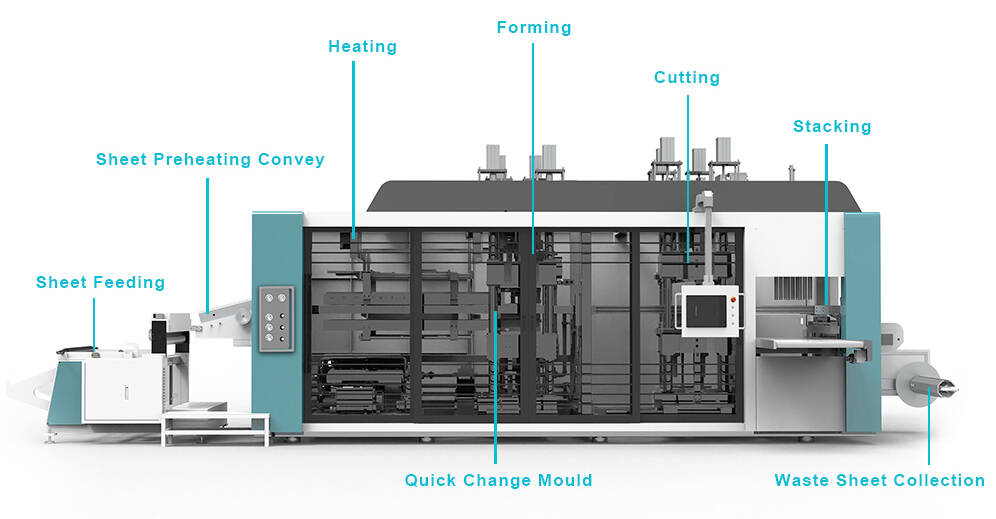
An extruder does not operate in isolation; it must be sized and configured to integrate seamlessly with downstream equipment. Key integration points include:
- Sheet Take-Off: The polishing roll stack (three-roll calendar) must match the extruder’s output width and speed. Mismatched roll dimensions can cause sheet sagging or wrinkles.
- Edge Trim and Recycling: On-line crushers and granulators should be rated to handle scrap at maximum line speed. A properly sized extruder will generate scrap at a predictable rate that the recycling system can absorb. For more on auxiliary equipment, see the Auxiliary Equipment overview.
- Stacking and Packaging: After cup forming, automated stacking robots and conveyors must keep pace. The extruder’s throughput directly determines the number of cups per minute, so the entire aux equipment chain must be coordinated.
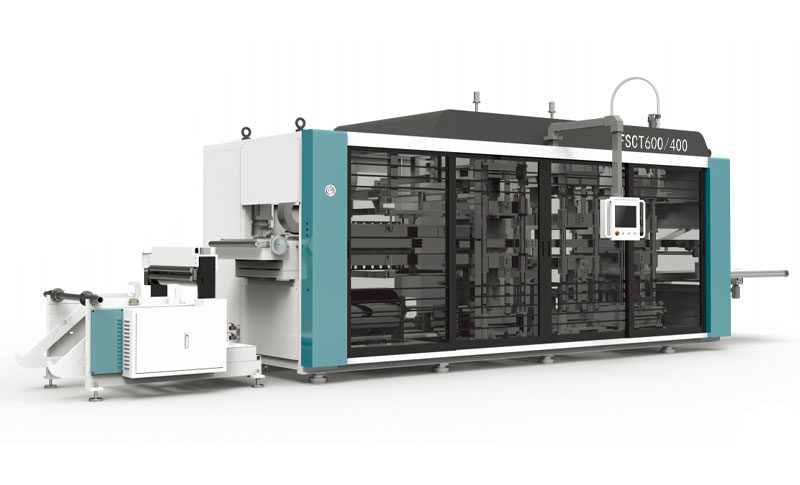
For example, a line producing 1000 cups/min from a 500 kg/h extruder will generate about 8–10 kg/min of scrap (depending on trim waste). If the extruder is oversized to 800 kg/h, the scrap rate may exceed the crusher capacity, forcing line stops. Hence, sizing the extruder first requires a process model of the entire line. A Multi Station Thermoforming Machine can be paired with various extruder configurations to match throughput.
Comparison: Single-Screw vs. Twin-Screw vs. Multi-Layer Co-Extruders
The table below summarizes the comparative strengths and trade-offs of each configuration from a buyer’s perspective:
| Criterion | Single-Screw | Twin-Screw | Multi-Layer Co-Extrusion |
|---|---|---|---|
| Capital Cost | Low | High | Very High (multiple extruders + die) |
| Melt Quality | Good for simple polymers | Excellent for blends and sensitive materials | Depends on layer balance; can be excellent with proper feedback |
| Flexibility | Low: limited to one material | Medium: can process many formulations but one layer | High: can produce multi-material structures, change layer ratios |
| Maintenance Complexity | Low | High (screw wear, gearbox) | Medium-High (multiple screws, die maintenance) |
| Typical Applications | Cups, lids, sheets with no barrier | Masterbatch compounding, medical films | Barrier cups, colored skin + recycled core, decorated sheets |
| Risk Factors | Limited additive incorporation | Higher downtime risk if not properly trained | Layer uniformity sensitive to melt viscosity mismatches |
Buyers must weigh these factors against their product portfolio. A processor focusing solely on standard clear cups may find a single-screw extruder sufficient and economical. Conversely, a producer switching between different multi-layer cup designs may justify the investment in a co-extrusion line despite higher upfront cost.
Frequently Asked Questions
- What is the most important factor when sizing an extruder?
- The required sheet throughput, which must match the downstream thermoforming machine’s consumption rate. Always size for the process first, then select machinery.
- Can I use a single-screw extruder for co-extrusion?
- No, co-extrusion requires at least two separate extruders feeding a common die. A single-screw can be one of them, but the line must have multiple extruders.
- How does screw design affect sheet quality?
- Screw geometry influences melt temperature, pressure stability, and mixing. Barrier screws reduce melt temperature variation, while mixing heads improve color/additive dispersion. For recycled materials, a screw with a mixing section is strongly recommended.
- What is the typical lead time for a custom multi-layer extruder?
- Depending on complexity, lead times range from 12 to 20 weeks. Standard single-screw units may ship in 8–12 weeks. Plan accordingly for line commissioning.
- Should I oversize the extruder for future growth?
- It depends. Oversizing increases energy consumption and screw wear if run at low utilization. A better approach is to spec a machine that can be upgraded (e.g., larger motor, higher L/D barrel), rather than oversizing from the start.
Conclusion
Selecting the right extruder for a plastic cup or sheet line is a strategic decision that requires putting process requirements before machinery capabilities. This comparison has shown that no single extruder type is universally superior; the optimal choice depends on product structure, throughput needs, integration complexity, and budget. By following the decision framework outlined above—starting with product definition, calculating throughput, and evaluating screw and die options—procurement teams can make an informed, objective choice. Whether you opt for a simple single-screw extruder or a multi-layer co-extrusion system, the key is to ensure the extruder is precisely sized for the line’s process parameters, not the other way around.