English
 Pусский
 Español
 عربي
عربي

Sizing Extruder for the Line: Process First, Machinery Second
Article Overview: Compare extruder sizing options for plastic cup lines. Learn how process requirements drive extruder selection, from single-layer to co-extrusion, with a buyer's decision framework.
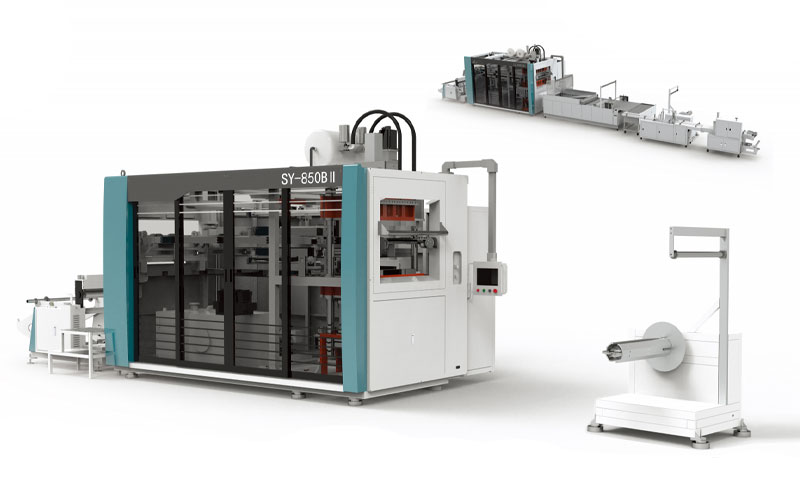
Article Overview: This article provides an objective comparison of extruder options for plastic cup production lines, focusing on the principle that process requirements—output volume, material type, layer structure, and downstream equipment—should dictate extruder selection, not the other way around. It offers an evaluation framework for CTOs, technical architects, and procurement teams to compare single-layer and multi-layer co-extruders, assess technical fit, and understand operational trade-offs. The goal is to help buyers avoid common sizing mistakes and select an extruder that aligns with their production goals.
The Core Decision: Matching Extruder Output to Downstream Demand
The first and most critical step in sizing an extruder is determining the required output rate. This rate must match the consumption of downstream equipment—typically a plastic cup making machine or thermoforming line. An extruder that is undersized will starve the forming process, causing downtime and quality defects. Conversely, an oversized extruder leads to wasted material, higher energy costs, and potential degradation of the melt if the sheet must be recycled.
When comparing extruders, buyers must evaluate nominal throughput (kg/h) against the maximum and average demand of the forming station. For example, a single-screw extruder producing 200 kg/h of PP sheet may be adequate for a cup machine running at 30 cycles per minute with 16-cavity molds. However, if future line speed increases are planned, a slightly larger extruder with a broader operating window may be justified. A common mistake is to size the extruder solely based on peak demand, ignoring the fact that most lines run at 70–85% of rated capacity. The better approach is to use a demand profile that includes typical production scenarios, material changeover times, and shift patterns.
Comparison dimension: Single-layer extruders are simpler and cheaper, but co-extruders allow for multi-layer sheet production with barrier properties (e.g., EVOH layers). A multi-layer co-extruder, such as a three-layer or five-layer system, can produce sheet with better oxygen and moisture barriers, extending product shelf life. The trade-off is higher capital cost and more complex operation. Buyers must decide whether the added value of barrier layers justifies the investment. For commodity cups without special barrier needs, a single-layer extruder is often the most cost-effective choice.
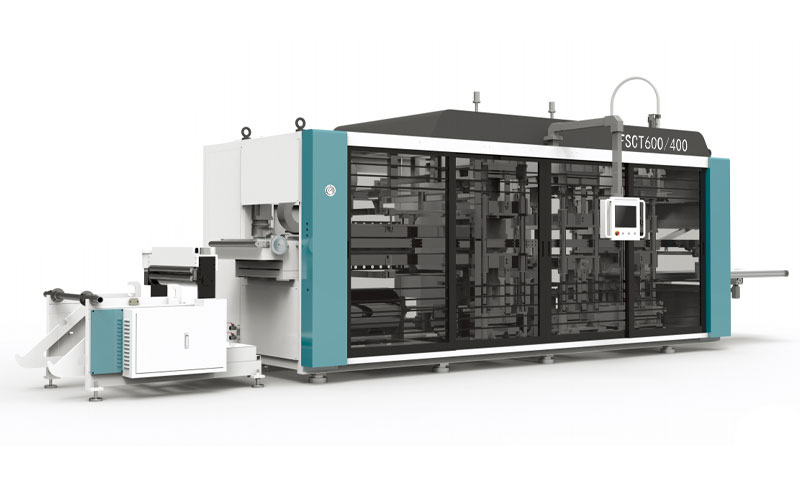
Technical Fit: Extruder Design Parameters That Affect Line Performance
Beyond throughput, several technical parameters distinguish extruder options. Screw design (general-purpose vs. barrier screws), L/D ratio (typically 28:1 to 36:1 for sheet extrusion), and motor power all influence melt quality and stability. For example, a barrier screw provides better melting and mixing, which is critical for achieving uniform sheet thickness in multi-layer co-extrusion. A longer L/D ratio allows for more residence time, improving color dispersion and devolatilization but also increasing the risk of thermal degradation for heat-sensitive materials like PLA.
Heating and cooling zone configuration is another differentiator. Standard extruders may have 4–6 zones; sophisticated co-extruders may have up to 10 zones per extruder to precisely control temperature profiles for each layer. This directly affects the consistency of layer thickness. In multi-layer sheet, a deviation of even 2% in layer thickness can compromise barrier performance or cause curling during thermoforming.
When comparing extruders for technical fit, create a matrix of required materials (PP, PS, PET, PLA) and layer structures. Not all extruders handle high-viscosity or temperature-sensitive materials equally. For instance, a co-extruder designed for PP/EVOH/PP may require specialized screw geometries to handle the high viscosity of EVOH. Buyers should request actual melt temperature stability data and thickness variation statistics (e.g., +/- 1% or +/- 2%) from suppliers.
Example scenario: A processor wants to switch from PS to PLA for biodegradable cups. PLA requires lower processing temperatures and has a narrow processing window. A standard PP-dedicated extruder may cause PLA degradation; a versatile extruder with adaptive temperature control and compatible screw geometry is better suited. Comparing extruders on material flexibility helps avoid future switching costs.

Operational Implications: Running Costs, Maintenance, and Changeover
Extruder choices have long-term operational consequences. Energy consumption varies with motor efficiency, screw design, and insulation. Co-extrusion lines typically use multiple extruders (one per layer), increasing total power demand. For a three-layer line, the main extruder may be 150 kW, with two satellite extruders at 75 kW each—total 300 kW. A single extruder of equivalent sheet capacity might consume only 180 kW but cannot produce multi-layer structures.
Maintenance is another key differentiator. Co-extruders have more components—feedblocks, melt pumps, adapters—that require cleaning during material or color changes. A line running multiple SKUs with frequent changeovers may lose hours per week to purging and cleaning. In contrast, a single extruder with a quick-change screen pack can be turned around faster. However, if most production runs are long (days or weeks), the flexibility of co-extrusion becomes less of a burden.
Material waste during startup and changeover also differs. Co-extruders generate more scrap until layer uniformity stabilizes. Some manufacturers achieve lower scrap rates by using feedback control on layer thickness. When comparing extruders, ask for typical scrap percentages during product changes and normal running. Also consider the ability to regenerate scrap: inline crushers and recycling systems, like those available as auxiliary equipment, can reduce waste costs, but they require floor space and additional investment.
Buyer-side risk: Over-specifying an extruder with high power and multiple layers can lead to underutilized capacity and higher depreciation. Under-specifying can limit future product expansion. A balanced approach is to select an extruder that covers 90% of planned production scenarios, accepting that niche products may be outsourced or produced on a dedicated line later.
The Evaluation Framework: A Step-by-Step Decision Checklist
To systematically compare extruder options, use the following decision framework. It prioritizes process needs over machinery features.
- Define throughput requirements: Gather data on current and projected annual volume, peak monthly demand, and typical run lengths. Calculate required net output in kg/h, accounting for scrap and downtime.
- Determine material and layer requirements: List all resins to be processed (PP, PS, PET, PLA, etc.) and whether multi-layer structures (2–7 layers) are necessary. Identify barrier needs, color changes, and recycling content.
- Assess downstream compatibility: Measure the consumption rate of the multi-station thermoforming machine or cup making line. Check sheet width range and thickness tolerance. The extruder must provide sheet within those specs.
- Evaluate technical specifications: Compare screw design, L/D ratio, motor power, heating zones, and temperature control accuracy among extruders. Request documented melt quality data (e.g., gel count, thickness variation).
- Analyze operational costs: Estimate energy consumption per kg of output, changeover time, scrap rate, and maintenance intervals. Consider the availability of local support and spare parts.
- Future-proofing: Assess whether the extruder can handle new materials or higher output with minimal modifications. A modular co-extruder with extra feed ports may allow adding layers later.
- Total cost of ownership: Combine purchase price, installation, energy, labor, and waste costs over a 5–10 year horizon. Do not let a lower initial price outweigh higher operating costs.
Comparison example: A buyer choosing between a standard single extruder and a three-layer co-extruder for yogurt cup production. The co-extruder enables a white virgin skin layer and a recycled core, reducing material cost by 20% while maintaining food-contact compliance. Even with a 30% higher capital cost, the payback period is 18 months due to raw material savings. This shows that the process goal (cost reduction through recyclate use) drives the machinery choice.
Frequently Asked Questions
How do I calculate the required extruder throughput for my line?
Start with the thermoformer's maximum cycles per minute, multiply by the number of cavities and the weight per cup, then add 3–5% scrap allowance. If the line runs multiple SKUs, use the weighted average demand. Always include a buffer of 10–15% for startup and peak loads.
What are the advantages of multi-layer co-extrusion for plastic cups?
Multi-layer co-extrusion allows combining different materials in one sheet—e.g., a virgin skin for contact surfaces, a recycled core for cost savings, and an EVOH barrier for oxygen protection. This reduces material cost and enhances product performance without separate lamination steps.
How to decide between a dedicated extruder and a flexible multi-purpose extruder?
If over 80% of your production uses the same material and color, a dedicated extruder tuned for that resin offers better melt quality and lower scrap. If you frequently change materials or produce multi-layer structures, a flexible extruder with adjustable screw geometry and wide temperature range is more suitable, but expect higher changeover times and complexity.
What is the impact of extruder L/D ratio on sheet quality?
Higher L/D ratios (above 30:1) provide longer residence time for mixing and devolatilization, improving thickness uniformity and reducing gels. However, they also increase melt temperature and may degrade shear-sensitive materials. For most polyolefins, an L/D of 32:1 is a good balance; for PET or PLA, a shorter L/D (28:1) is preferred to limit thermal exposure.
Should I consider inline extrusion or pre-made sheet purchasing?
Inline extrusion (extruder directly feeding thermoformer) reduces handling and reheating costs, but requires tight integration and a high uptime extruder. Pre-made sheet offers flexibility and lower risk, but adds storage and logistics costs. The decision depends on volume: for high-volume lines with dedicated products, inline extrusion is usually more economical.
Conclusion
Sizing an extruder for a plastic cup line is a strategic decision that should be driven by process requirements, not equipment availability. By comparing extruders on throughput, technical fit, operational costs, and future flexibility, buyers can avoid the twin pitfalls of over- or under-investment. The principle of “process first, machinery second” ensures that the extruder serves the line, not the other way around. Engaging process engineers early in the evaluation and using a structured framework like the one above will lead to a more cost-effective and reliable extrusion system. Ultimately, the best extruder is the one that aligns with your actual production mix, material strategy, and long-term business goals.