English
 Pусский
 Español
 عربي
عربي

A Plain-Language Map of Extruder: Applications, Buyers, and the Gaps Worth Filling
Article Overview: This guide provides procurement managers, sourcing teams, and project engineers with a practical framework for evaluating extruders used in plastic cup manufacturing. It covers extruder types, buyer considerations, RFQ preparation, supplier validation, and common implementation gaps—all aimed at reducing procurement mistakes and improving supplier fit.
Extruders are the backbone of many plastic cup production lines. They convert raw plastic pellets or flakes into a continuous sheet of uniform thickness, which is then fed into a thermoforming machine to create cups, lids, and other containers. Despite their central role, extruders are often treated as a commodity purchase—a mindset that can lead to costly mismatches in output quality, energy consumption, and maintenance needs. For high-intent buyers close to a purchase decision, understanding the nuances of extruder selection is not just a technical exercise; it is a risk-management discipline.
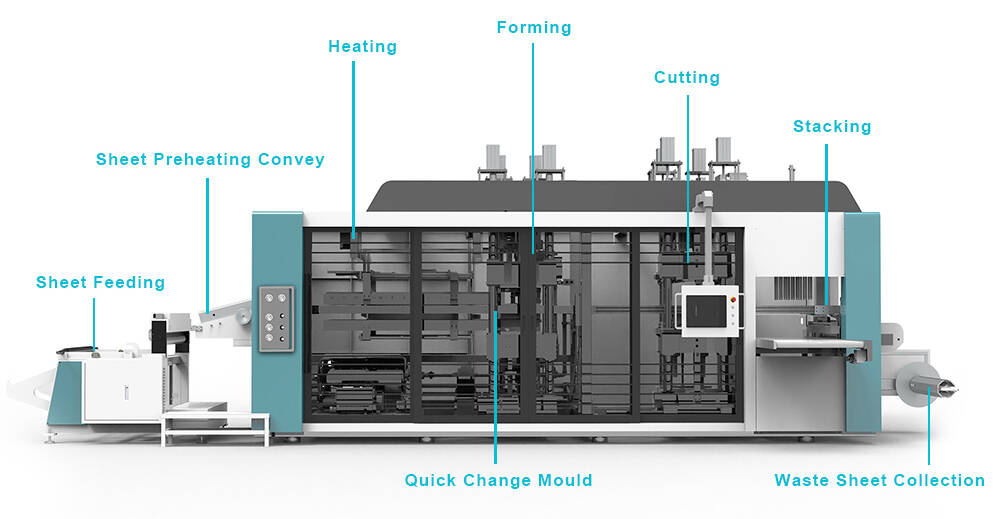
Understanding Extruder Types and Their Role in Plastic Cup Production
Extruders for plastic cup production generally fall into two categories: single-screw extruders and multi-layer (co-extrusion) systems. Single-screw extruders are the most common, processing one material at a time. They are suitable for producing monolayer sheets from materials like polypropylene (PP), polystyrene (PS), or PET. Co-extruders, on the other hand, simultaneously process two or more materials to create a multilayer sheet—each layer contributing properties such as barrier protection, stiffness, or sealability.
For buyers evaluating a plastic sheet extruder, the decision between single-layer and multi-layer depends on the end product. If the cups need to hold carbonated beverages or have a long shelf life, a multi-layer structure with an EVOH barrier may be required. Conversely, for simple cold-drink cups, a monolayer sheet is often sufficient and more cost-effective. It is also worth considering whether your production line will integrate with other equipment, such as a multi-station thermoforming machine, which imposes specific sheet width and thickness tolerances.
Another important distinction is between dedicated extruders and combination lines. Some suppliers offer integrated extrusion-thermoforming systems, which reduce handling but tie you to a single vendor. Others supply stand-alone extruders that can be paired with third-party thermoformers. Your choice should align with your long-term production flexibility and spare parts strategy.
Key Considerations for Procurement Managers When Evaluating Extruders
Procurement managers often focus on upfront price, but extruder total cost of ownership (TCO) involves several factors:
- Output consistency: Variations in sheet thickness directly affect cup quality and scrap rates. Ask for thickness tolerance specifications and verify with sample runs.
- Energy efficiency: Extruders are energy-intensive. Look at specific energy consumption (kWh/kg) and whether the machine includes features like barrel insulation or variable-frequency drives on the main motor.
- Material flexibility: Can the extruder handle recycled content or biodegradable materials? As sustainability regulations tighten, this becomes a long-term asset.
- Automation and controls: Modern extruders offer PLC-based control with recipe storage, which reduces changeover time and operator error. Confirm the control system's compatibility with your existing factory automation.
- After-sales support: Extruder maintenance requires technical expertise. Evaluate the supplier's response time, availability of spare parts, and training programs. Learn more about support capabilities available from various suppliers.
It is also prudent to assess the supplier’s manufacturing depth. Some extruder manufacturers outsource critical components like gearboxes or screws. A supplier that produces its own components—such as at an in-house machining center—may offer better quality control and faster spare part delivery.
Building an RFQ That Reduces Supplier Ambiguity
A well-structured RFQ (request for quotation) is the single most effective tool for getting comparable bids from extruder suppliers. Without clear specifications, suppliers will make assumptions that lead to price and performance mismatches. Include the following in your RFQ:
- Material specifications: List the exact materials (including recycled content percentages) and required output rate in kg/h.
- Sheet dimensions: Width, thickness range, and tolerance. Also specify whether you need a single sheet or a web that will be wound or directly fed.
- Layer structure: If co-extrusion, specify number of layers, layer ratio, and barrier material.
- Utility requirements: Voltage, frequency, cooling water quality, compressed air pressure.
- Quality standards: Define acceptable gel count, black specks, and thickness variation.
- Installation and commissioning: Clarify scope—does the price include installation, on-site training, and initial production run?
- Delivery and payment terms: Lead time, milestones, and retention clauses.
By standardizing these parameters, you enable suppliers to propose solutions that meet your real needs rather than their default offerings. Request references from similar installations and ask for contact details of previous buyers who can share their experience.
Validating Supplier Fit and Implementation Readiness
Once you have shortlisted suppliers based on RFQ responses, move to validation. This step is often rushed, but it can uncover gaps that quotations cannot express. Key validation activities include:
- Factory audit: Visit the supplier’s manufacturing site or arrange a virtual tour. Assess their production capacity, quality control processes, and R&D capabilities.
- Sample production: Request a trial run using your own materials. This is the most reliable way to verify output quality and machine stability.
- Reference calls: Speak with at least three previous buyers. Ask about uptime, ease of maintenance, and responsiveness of the supplier when problems arose.
- Implementation plan review: Ask the supplier to outline the project timeline from order to full production. Identify critical path items such as foundation preparation, electrical connections, and raw material availability.
For buyers who are also considering auxiliary equipment like crushers or stackers, packaging the extruder with compatible upstream and downstream machines can simplify integration. However, be cautious of bundling that limits your ability to source competitive components later. Explore auxiliary equipment options that may pair well with your extruder choice.
Common Gaps in Extruder Purchases and How to Avoid Them
Even experienced procurement teams fall into recurring traps. Here are three gaps worth filling:
Gap 1: Underestimating material changeover costs. If your product mix requires frequent material changes, the extruder's purge time and screw design become critical. A screw optimized for one material may be inefficient for another. Consider investing in a quick-change screw system or a dedicated extruder per material.
Gap 2: Ignoring local service availability. An extruder breaking down in the middle of a shift can halt the entire line. If the supplier's nearest service engineer is 1,000 km away, every hour of downtime multiplies your loss. Negotiate a service level agreement (SLA) with guaranteed response time and local spare parts stock.
Gap 3: Overlooking operator training needs. Modern extruders with advanced PLCs and HMI interfaces require skilled operators. Inadequate training leads to improper parameter settings, poor sheet quality, and increased scrap. Include comprehensive training in the contract and plan for refresher sessions.
By anticipating these gaps, you can address them during the evaluation phase rather than after installation.
Frequently Asked Questions
- Q: What is the typical lead time for a plastic sheet extruder?
- Lead times vary by supplier complexity and customization. Standard models may be available in 8–12 weeks, while multi-layer co-extruders with custom screws or dies can take 16–20 weeks. Always confirm lead time in writing and include penalty clauses for delays.
- Q: How do I determine the right screw diameter for my application?
- Screw diameter is primarily determined by the required output rate and the material's melt flow index. A general rule is that larger diameters give higher output but require more motor power and generate more shear heat. Work with the supplier to calculate the optimal screw design for your specific throughput and material.
- Q: Should I buy a new extruder or a used one?
- Used extruders can be cost-effective but carry higher risk of downtime and unknown wear. If considering used, insist on a full inspection, test run with your material, and a warranty on major components. New extruders offer better energy efficiency, modern controls, and supplier support—critical for high-volume production.
- Q: What maintenance is required for an extruder?
- Routine maintenance includes screw and barrel wear measurement, gearbox oil changes, heater band checks, and screen pack cleaning. Preventive maintenance schedules should be provided by the supplier. Factor these costs into your TCO analysis.
Conclusion
Selecting an extruder for plastic cup production is not a one-size-fits-all decision. It requires a systematic evaluation of your current and future production needs, a clear RFQ that minimizes ambiguity, and rigorous validation of supplier claims. By focusing on total cost of ownership, material flexibility, and implementation support, you can avoid the common gaps that lead to post-purchase regret. For procurement managers and decision-makers, the investment in thorough evaluation pays dividends in production uptime, product quality, and long-term partnership with a capable supplier.
Use the checklist outlined in this article to structure your next extruder procurement project. And when you are ready to discuss specific requirements, contact a qualified supplier for a consultation tailored to your production line.