English
 Pусский
 Español
 عربي
عربي

How to Choose a Plastic Cup Making Machine
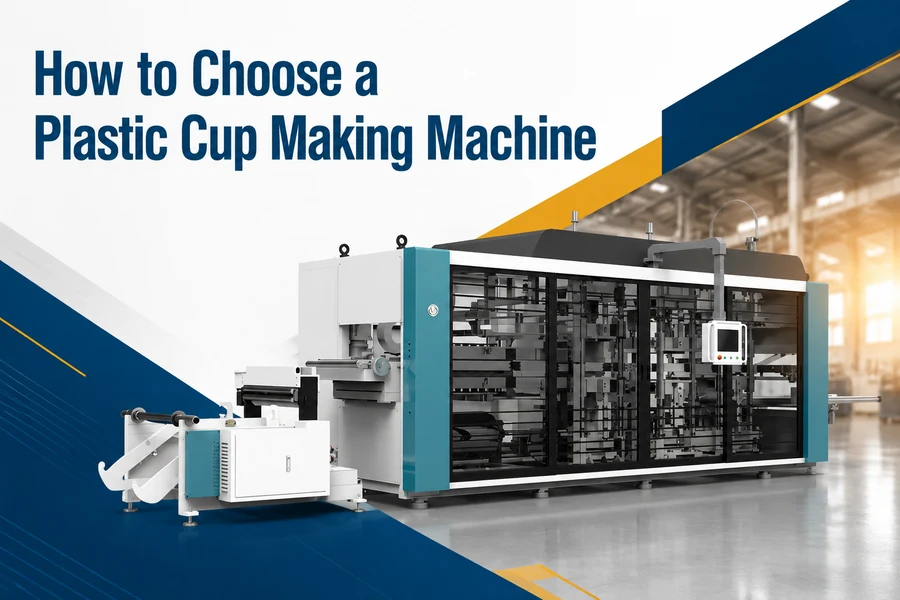
Article Overview: This article helps procurement managers and project engineers evaluate a plastic cup making machine by clarifying key selection factors: output rate, material compatibility (PP/PET/PLA), cup depth limits, and automation level. It provides a decision framework and pre-purchase checklist based on Sayeah Machinery's technical capabilities.
What factors determine the right plastic cup making machine for my production?
Selecting the right plastic cup making machine depends on your target cup specifications, daily output requirements, material choices, and automation needs. A clear match between these factors and machine capabilities prevents costly procurement mistakes.
The primary factors include:
- Output rate: Measured in cycles per hour (e.g., 25-30 cycles/min for multi-station machines). Higher output requires faster forming and stacking systems.
- Cup depth (draw depth): Standard machines handle up to 150 mm; deeper cups (e.g., 700 ml boba cups) require servo plug assist or extended oven options.
- Material compatibility: Machines must support PP, PET, or PLA. PP needs longer heating time; PET requires precise temperature control. Universal machines with adjustable ovens can run multiple materials.
- Automation level: Fully automatic lines include sheet feeding, forming, trimming, and stacking. Semi-automatic machines reduce capital cost but increase labor.
- Mold design: Custom molds for specific cup shapes and sizes affect cycle time and wall thickness uniformity.
Evaluate these factors against your production plan before issuing an RFQ. For example, a startup aiming for 50,000 cups/day may need a high-speed multi-station machine, while a smaller operation might start with a single-station unit.
Can one machine produce both PP and PET cups?
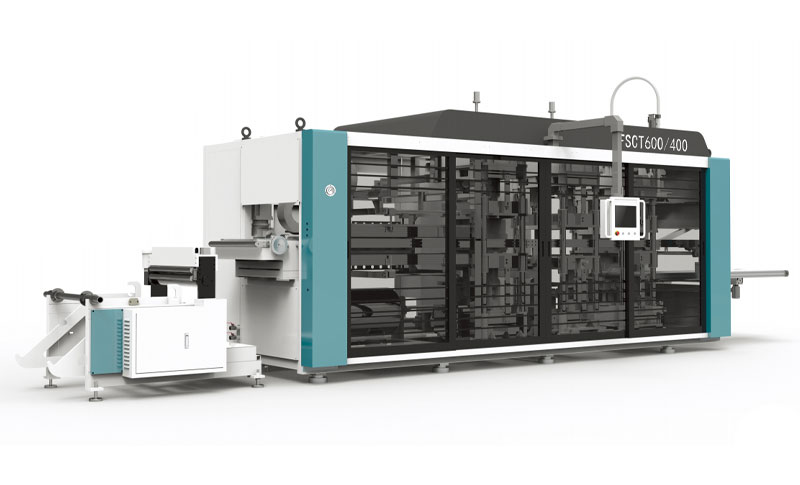
Yes, many modern thermoforming machines, including those from Sayeah, are designed to handle both PP and PET with proper configuration, such as an extended oven option for PP's longer heating requirements.
Material differences affect machine setup:
- PP (polypropylene): Requires a longer heating zone (extended oven) to achieve uniform melt without degrading the material. PP also has a narrower forming temperature window.
- PET (polyethylene terephthalate): Heats faster and is more forgiving, but requires precise cooling to avoid crystallization (hazing).
- PLA (polylactic acid): Biodegradable but heat-sensitive; needs lower oven temperatures and careful handling.
When selecting a machine for mixed-material production, verify that the oven length is adjustable or that an extended oven is available. Also confirm that the heating elements (quartz or ceramic) can be zoned to create different temperature profiles across the sheet. Ask your supplier for a material compatibility matrix or test run results.
Procurement Tip: Include a clause in your RFQ requiring the supplier to demonstrate successful production of both PP and PET cups using the same machine with the specified options. Request process parameters (oven temperature profile, cycle time) for each material.
What is the maximum cup depth for a standard thermoforming machine?
Standard cam-driven thermoforming machines typically achieve a maximum cup depth of 100–150 mm. For deeper cups (up to 200 mm or more), a machine with servo plug assist and an extended forming station is required.
Draw depth is limited by the material's ability to stretch without thinning excessively. Key considerations:
- Standard machines: Use mechanical cams and vacuum-only forming. Suitable for shallow cups (e.g., 50–100 ml espresso cups).
- Servo plug assist: A servo-driven plug pushes the heated sheet into the mold cavity before vacuum is applied, enabling deeper draws with more uniform wall thickness. This is essential for cups over 150 mm tall.
- Extended oven: Allows longer heating time for deep draws, preventing material tearing.
When evaluating a machine, request the maximum draw depth with and without servo assist. Also check the mold stroke length and plug dimensions. For example, Sayeah offers extended 750 series for cups deeper than 180 mm. If your product line includes both shallow and deep cups, consider a machine with a servo plug assist option to maintain flexibility.
Decision framework for evaluating suppliers
Use the following structured approach to compare machine suppliers and reduce procurement risk.
Step 1: Define product specifications
List your target cup dimensions (diameter, height, wall thickness), material(s), and daily output volume. This forms the basis for machine sizing.
Step 2: Match machine capabilities
Compare supplier specifications against your requirements: output rate, draw depth, material compatibility, oven length, and automation level. Request technical datasheets and test reports.
Step 3: Evaluate customization options
Determine if the supplier offers extended ovens, servo plug assist, or custom mold design. These options affect machine cost and lead time.
Step 4: Assess after-sales support
Check warranty terms (e.g., 12 months), installation and training services, spare parts availability, and technical support response times. For example, Sayeah provides 15 days on-site commissioning and training.
Step 5: Request a reference visit or test run
Visit a production facility or request a trial run with your molds and materials. Verify that the machine achieves the claimed output and quality.
Pre-purchase checklist
Before placing an order, verify the following items with your supplier:
- Output rate
- Confirm cycles per minute and actual cups per hour for your specific cup size and material.
- Material compatibility
- Ensure the machine can run all intended materials (PP, PET, PLA) with recommended options.
- Draw depth
- Verify maximum cup depth with standard and optional configurations.
- Heating system
- Check oven type (quartz/ceramic), number of heating zones, and ability to adjust temperature profile.
- Automation level
- Clarify whether sheet feeding, cup stacking, and trimming are integrated or require separate equipment.
- Mold design
- Discuss mold material, cooling channels, and expected mold life. Request a mold design proposal.
- Warranty and support
- Document warranty period, spare parts pricing, and on-site service terms.
- Certifications
- Confirm CE, ISO 9001, or other applicable standards (e.g., Sayeah holds CE and ISO 9001).
FAQ
What is the typical lead time for a plastic cup making machine?
Lead times vary by configuration and supplier. Standard machines may ship in 30–60 days; customized machines with extended ovens or servo assist can take 60–90 days. Always confirm the delivery schedule in your purchase contract.
Can I use the same mold for PP and PET cups?
Generally yes, but mold temperature control and cooling design may need adjustment. PP requires more cooling time, so mold cooling channels must be efficient. Discuss with your mold maker and machine supplier.
What is the difference between a single-station and multi-station machine?
Single-station machines form one cup per cycle, suitable for low to medium output. Multi-station machines (e.g., 4-station) perform forming, trimming, and stacking simultaneously, achieving higher output (up to 30 cycles/min). Multi-station is preferred for high-volume production.
Do I need an extruder to make plastic cups?
No, you can purchase pre-made plastic sheet rolls. However, adding an in-house sheet extruder reduces material cost and gives you control over sheet quality and color. Many suppliers, including Sayeah, offer turnkey lines with extruders.
Conclusion: Selecting Your Plastic Cup Making Machine
Choosing a plastic cup making machine requires a systematic evaluation of output, material compatibility, cup depth, and automation. By following the decision framework and pre-purchase checklist in this guide, procurement managers can issue informed RFQs and avoid common pitfalls. For further technical details, download the product catalog from Sayeah's downloads page or consult their FAQ section for warranty and support information.